CA-ROTEL World Religions
Chapter 12: Christian Ethics, Rituals and Contemporary Life
On this page — 17 sections
- 1. Following Jesus: love, conduct and the heart
- 2. Faith, grace and a life of service
- 3. Christianity, injustice and reform
- 4. Gathering for worship: word, meal and community
- 5. Sacraments, mysteries and ordinances
- 6. Prayer, saints and sacred places
- 7. Living through the Christian year
- 8. Life passages, care and Christian hope
- 9. North America: churches, revivals and religious choice
- 10. Black churches, independence and public leadership
- 11. Liberal Christianity, fundamentalism and evangelicalism
- 12. Christian communities in the United States
- 13. Catholic renewal and relationships with other religions
- 14. A worldwide religion with changing centers
- 15. Christianity today in the United States
- 16. Readings and questions
- Primary readings
1. Following Jesus: love, conduct and the heart
Christian worship and ethics enter family meals, congregational services, charitable work and arguments over public responsibility. Catholic, Orthodox, Protestant and other communities organize these activities differently. The chapter begins with scriptural sources, then follows practices and modern institutions, especially in the United States.
Christian ethics grows from Jewish scripture. The commands to love God and one’s neighbor come from Deuteronomy 6:5 and Leviticus 19:18. Jesus’s teaching in the Gospels belongs within Jewish debate about faithful conduct; it should not be presented as the discovery of love in a previously loveless religion. Christians interpret these commands through the life, death and resurrection of Jesus and through the Spirit’s work in the community.
John Mack, in Tim McKenzie, ed.. World Religions, Christianity. Source · CC BY-NC-SA 4.0.
Jesus taught that if a person lives a life of love for God and for other people, then this person fulfills the requirements of the Law of Moses. The Gospels record that a Jewish legal scholar once asked Jesus which of the many Old Testament commandments was the most important.
John Mack, in Tim McKenzie, ed.. World Religions, Christianity. Source · CC BY-NC-SA 4.0.
Jesus’s most detailed moral teachings in the Gospels are found in the Sermon on the Mount (as found in Matthew 5-7). In the Sermon on the Mount, Jesus taught that morality is not merely a matter of keeping the law—it also is a matter of honoring the spirit of the law in one’s heart.
Matthew places the Sermon on the Mount in chapters 5–7. Its opening blessings, called the Beatitudes, honor people the world may overlook: the meek, the merciful, those who mourn and those who work for peace. They also promise comfort and vindication from God. The sermon then moves from outward behavior to motives, from relations with neighbors to prayer, money and trust.
American Standard Version translation committee (1901); digital text supplied by bible-api.com. The Holy Bible, American Standard Version. Source · Public domain in the United States.
Matthew 5:3 Blessed are the poor in spirit: for theirs is the kingdom of heaven.
Matthew 5:4 Blessed are they that mourn: for they shall be comforted.
Matthew 5:5 Blessed are the meek: for they shall inherit the earth.
Matthew 5:6 Blessed are they that hunger and thirst after righteousness: for they shall be filled.
Matthew 5:7 Blessed are the merciful: for they shall obtain mercy.
Matthew 5:8 Blessed are the pure in heart: for they shall see God.
Matthew 5:9 Blessed are the peacemakers: for they shall be called sons of God.
Matthew 5:10 Blessed are they that have been persecuted for righteousness` sake: for theirs is the kingdom of heaven.
Matthew 5:11 Blessed are ye when [men] shall reproach you, and persecute you, and say all manner of evil against you falsely, for my sake.
Matthew 5:12 Rejoice, and be exceeding glad: for great is your reward in heaven: for so persecuted they the prophets that were before you.
The Sermon on the Mount examines anger and intention alongside prohibited actions. It asks for reconciliation before hostility produces further harm. Its teaching on giving, fasting and prayer also contrasts devotion with a display designed to win admiration.
American Standard Version translation committee (1901); digital text supplied by bible-api.com. The Holy Bible, American Standard Version. Source · Public domain in the United States.
Matthew 5:43 Ye have heard that it was said, Thou shalt love thy neighbor, and hate thine enemy:
Matthew 5:44 but I say unto you, love your enemies, and pray for them that persecute you;
Matthew 5:45 that ye may be sons of your Father who is in heaven: for he maketh his sun to rise on the evil and the good, and sendeth rain on the just and the unjust.
Matthew 5:46 For if ye love them that love you, what reward have ye? do not even the publicans the same?
Matthew 5:47 And if ye salute your brethren only, what do ye more [than others?] do not even the Gentiles the same?
Matthew 5:48 Ye therefore shall be perfect, as your heavenly Father is perfect.
Love of enemies and refusal of revenge are demanding instructions, and Christians disagree about how they apply to government, military service or self-defense. Historic peace churches, including Mennonites and Quakers, have developed traditions of nonviolence. Catholic and many Protestant thinkers have defended a just-war tradition that sets moral limits on the decision to fight and on conduct during war. These approaches differ, but neither makes every use of violence morally acceptable.
Jesus’s stories also ask who receives care. In Luke 10:25–37, a traveler is robbed, wounded and left beside the road. A priest and a Levite pass by. A Samaritan, a member of a community often regarded with hostility by the story’s Jewish hearers, tends the wounds, transports the injured man and pays for his lodging. The question changes from identifying the people one must count as neighbors to acting as a neighbor to someone in need. The complete story appears in the reader.
Matthew 25:31–46 places feeding the hungry, welcoming strangers, clothing those in need and visiting the sick and imprisoned within a scene of judgment. These are practical acts rather than declarations of sympathy. Christians have drawn on this passage in founding hospitals, shelters and relief organizations. The same passage also raises questions about exclusion, judgment and the failure of professing Christians to do what their scriptures require.
2. Faith, grace and a life of service
The New Testament does not reduce moral life to one list. Paul describes Christians as members of one body with different responsibilities. Romans 12 joins worship to transformed conduct: use gifts to serve, practice hospitality, refuse revenge and overcome evil with good. In 1 Corinthians 13, love gives value to impressive speech, religious knowledge and even self-sacrifice. The letter addresses a divided congregation; its account of love is broader than its familiar use at weddings.
American Standard Version translation committee (1901); digital text supplied by bible-api.com. The Holy Bible, American Standard Version. Source · Public domain in the United States.
Romans 12:9 Let love be without hypocrisy. Abhor that which is evil; cleave to that which is good.
Romans 12:10 In love of the brethren be tenderly affectioned one to another; in honor preferring one another;
Romans 12:11 in diligence not slothful; fervent in spirit; serving the Lord;
Romans 12:12 rejoicing in hope; patient in tribulation; continuing stedfastly in prayer;
Romans 12:13 communicating to the necessities of the saints; given to hospitality.
Romans 12:14 Bless them that persecute you; bless, and curse not.
Romans 12:15 Rejoice with them that rejoice; weep with them that weep.
Romans 12:16 Be of the same mind one toward another. Set not your mind on high things, but condescend to things that are lowly. Be not wise in your own conceits.
Romans 12:17 Render to no man evil for evil. Take thought for things honorable in the sight of all men.
Romans 12:18 If it be possible, as much as in you lieth, be at peace with all men.
James 2 challenges a congregation that honors a wealthy visitor while humiliating a poor one. It also asks what faith accomplishes when someone offers a blessing but withholds food and clothing. Its argument is not that God’s grace can be purchased by accumulating charitable acts. It insists that a claimed faith must become visible in conduct. Read James beside Paul’s letters rather than assuming one passage exhausts every Christian account of salvation.
Christian traditions organize moral reasoning in several ways. Some emphasize direct obedience to scripture and imitation of Jesus. Others also give a large role to church teaching, inherited practices and reason. Catholic natural-law reasoning asks what promotes human flourishing in light of the kind of beings humans are. Traditions of virtue emphasize learning habits such as courage, honesty, patience and generosity. Conscience matters, but churches often insist that it needs education and self-examination. These approaches can overlap within the same community.
Moral formation also happens through ordinary practices: apologizing, forgiving, caring for children and older people, sharing money, visiting someone alone and telling the truth when it is costly. Monastic rules, sermons, religious education and spiritual direction provide more formal instruction. Christian accounts of sin include failures of desire and action, but also the need for repentance and repair. Forgiveness need not mean denying an injury or allowing abuse to continue.
3. Christianity, injustice and reform
Christian institutions have supported both resistance to oppression and systems that sustained it. Enslavers appealed to selected biblical passages and sponsored religious instruction intended to produce obedience. Enslaved Christians and abolitionists also read the Bible, emphasizing liberation, the equal worth of persons and the wrong of treating human beings as property. Saying that Christianity influenced American history therefore does not settle whether that influence served justice in a particular case.
Frederick Douglass published his Narrative in 1845 after escaping slavery. In its Appendix he distinguishes the Christianity he affirms from churches that supported enslavement. The reader includes sustained prose from that argument.
Frederick Douglass (1845). Narrative of the Life of Frederick Douglass, an American Slave, Written by Himself: Appendix. Source · Public domain in the United States.
Such is, very briefly, my view of the religion of this land; and to avoid any misunderstanding, growing out of the use of general terms, I mean by the religion of this land, that which is revealed in the words, deeds, and actions, of those bodies, north and south, calling themselves Christian churches, and yet in union with slaveholders. It is against religion, as presented by these bodies, that I have felt it my duty to testify.
The late nineteenth- and early twentieth-century Social Gospel movement argued that Christian responsibility extended to industrial poverty, dangerous work and unjust social arrangements. Walter Rauschenbusch was an influential voice. Catholic social teaching likewise addressed labor, wages, property and the obligations of employers and governments; Leo XIII’s Rerum novarum appeared in 1891. Charity could meet an immediate need, while reform asked why that need repeatedly arose. Christians disagreed about the proper role of government, markets and voluntary organizations in answering it. Rerum novarum.
OpenStax contributors. Introduction to Sociology 3e, §15.3 Religion in the United States. Source · CC BY-NC-SA 4.0.
Liberation theology began as a movement within the Roman Catholic Church in the 1950s and 1960s in Latin America, and it combines Christian principles with political activism. It uses the church to promote social change via the political arena, and it is most often seen in attempts to reduce or eliminate social injustice, discrimination, and poverty.
OpenStax contributors. Introduction to Sociology 3e, §15.3 Religion in the United States. Source · CC BY-NC-SA 4.0.
Although begun as a moral reaction against the poverty caused by social injustice in that part of the world, today liberation theology is an international movement that encompasses many churches and denominations. Liberation theologians discuss theology from the point of view of the poor and the oppressed, and some interpret the scriptures as a call to action against poverty and injustice.
Liberation theology asks what Christian teaching means when read from the lives of people who experience poverty and domination. Latin American theologians such as Gustavo Gutiérrez made this question central. Black theology in the United States, associated with figures including James Cone, confronted racism in church and society. Feminist theologians questioned women’s exclusion from religious authority; womanist theology drew particular attention to Black women’s lives, labor and survival. These movements have distinct histories and sometimes criticize one another. They do not represent the position of every church.
Black congregations also provided institutions, meeting places, leadership and language for the U.S. civil rights movement. Martin Luther King Jr., a Baptist minister, joined biblical images and Christian nonviolence to demands for an end to racial segregation. Other Christians resisted that movement, while some supported it only cautiously. Church membership by itself therefore did not determine a person’s response to racial injustice. King Institute: nonviolence.
4. Gathering for worship: word, meal and community
John Mack, in Tim McKenzie, ed.. World Religions, Christianity. Source · CC BY-NC-SA 4.0.
Christians observe several sacred times each year. The most basic unit of sacred time is Sunday, or the Lord’s Day. Sunday is sacred to Christians because they believe that Jesus was resurrected from the dead. Sunday is observed as a day of worship and often as a day of rest.
Sunday observance is widespread. Seventh-day Adventists keep the seventh-day Sabbath on Saturday. Congregations differ in the order of scripture, preaching, song, prayer and Communion, and in who may lead.
John Mack, in Tim McKenzie, ed.. World Religions, Christianity. Source · CC BY-NC-SA 4.0.
Many Christian groups observe a liturgy. This liturgy may be as simple as the order of events in a worship service or as detailed as a yearly calendar of biblical texts, songs, and holidays to emphasize various aspects of the Christian faith. Some Liturgies observe a 3-year cycle. No standardized liturgy applies to all Christians, and not all churches follow a liturgical plan.
A liturgy is an ordered form of worship. In Catholic Mass and Orthodox Divine Liturgy, inherited prayers, gestures and the Eucharist hold a central place. Anglican and many Lutheran services preserve related patterns. Other Protestant services give a longer place to preaching, congregational song or testimony. A congregation that avoids a printed liturgy still has recognizable habits and an order of service. A choir, organ, drum, guitar, spoken response or period of silence can each help shape participation; no one sound represents all Christian worship.
Justin Martyr’s First Apology, written in the second century, describes Sunday gatherings, readings from prophets and apostles, instruction, common prayer, the Eucharistic meal and assistance for people in need. His account is evidence for practices he wanted to explain and defend, rather than a transcript of every Christian service. It also makes worship and care for neighbors part of the same gathering.
Justin Martyr; historical translation in Alexander Roberts and James Donaldson, eds., Ante-Nicene Fathers, Volume I (1885). First Apology, chapters 65–67. Source · Public-domain historical translation.
And we afterwards continually remind each other of these things. And the wealthy among us help the needy; and we always keep together; and for all things wherewith we are supplied, we bless the Maker of all through His Son Jesus Christ, and through the Holy Ghost. And on the day called Sunday, all who live in cities or in the country gather together to one place, and the memoirs of the apostles or the writings of the prophets are read, as long as time permits; then, when the reader has ceased, the president verbally instructs, and exhorts to the imitation of these good things. Then we all rise together and pray, and, as we before said, when our prayer is ended, bread and wine and water are brought, and the president in like manner offers prayers and thanksgivings, according to his ability, and the people assent, saying Amen; and there is a distribution to each, and a participation of that over which thanks have been given, and to those who are absent a portion is sent by the deacons. And they who are well to do, and willing, give what each thinks fit; and what is collected is deposited with the president, who succours the orphans and widows and those who, through sickness or any other cause, are in want, and those who are in bonds and the strangers sojourning among us, and in a word takes care of all who are in need. But Sunday is the day on which we all hold our common assembly, because it is the first day on which God, having wrought a change in the darkness and matter, made the world; and Jesus Christ our Saviour on the same day rose from the dead. For He was crucified on the day before that of Saturn (Saturday); and on the day after that of Saturn, which is the day of the Sun, having appeared to His apostles and disciples, He taught them these things, which we have submitted to you also for your consideration.
Justin’s “president” is the person presiding over worship, and “memoirs of the apostles” refers to Gospel writings. His later claim that demons imitated Christian practice in Mithraic rites is part of his religious polemic.
5. Sacraments, mysteries and ordinances

Wikipedia for Schools, Christianity. World Religions, Symbols, Scriptures and Rituals; attribution (43). Source · CC BY-SA 3.0.
In Christian belief and practice, a sacrament is a rite, instituted by Christ that mediates grace, constituting a sacred mystery. The term is derived from the Latin word sacramentum , which was used to translate the Greek word for “mystery.” Views concerning both “what rites are sacramental,” and “what it means for an act to be a sacrament” vary among Christian denominations and traditions.
A sacrament is not simply any meaningful custom. In sacramental traditions it is an action through which God gives grace. Many Protestants use the term ordinance to stress a practice commanded by Christ. The difference in vocabulary can signal different beliefs, although it does not by itself describe everything a congregation believes about the action.
| Tradition | Common description |
|---|---|
| Roman Catholic | Seven sacraments: baptism, confirmation, Eucharist, penance/reconciliation, anointing of the sick, holy orders and matrimony. |
| Eastern Orthodox | The language of holy mysteries is central. The same seven rites are commonly named, but the church’s sacramental life is not always treated as exhausted by a fixed list. |
| Many Protestant churches | Baptism and the Lord’s Supper are the two principal sacraments or ordinances. Confirmation, marriage, ordination and other rites may remain important without receiving the same classification. |
| Quakers and Salvation Army | Do not ordinarily practice outward water baptism or the Eucharistic meal as required rites; emphasize the spiritual reality to which those actions point. |
Wikipedia for Schools, Christianity. World Religions, Symbols, Scriptures and Rituals; attribution (43). Source · CC BY-SA 3.0.
Baptism is the ritual act, with the use of water, by which a person is admitted to membership of the Church. Beliefs on baptism vary among denominations.
Baptism draws on the New Testament accounts of John baptizing Jesus and on the early Christian practice of initiating converts. Water can signify cleansing, new birth and participation in Christ’s death and resurrection. Catholic, Orthodox and many Protestant churches baptize infants as well as older converts. Baptists and many other evangelical communities reserve baptism for those able to profess faith. Immersion, pouring and sprinkling are different methods; the method cannot be inferred simply from the age of the person baptized. Orthodox infant baptism, for example, commonly involves immersion.
The Eucharist, also called Holy Communion or the Lord’s Supper, recalls Jesus’s final meal with his disciples. Churches use bread and wine, or in some communities grape juice, with prayer and the words of institution. Paul’s account in 1 Corinthians 11 links the meal to the death of Jesus, but it also condemns a divided gathering in which some go hungry while others consume abundantly. A discussion of Communion that ignores those inequalities misses part of the passage.

| Understanding | What it affirms |
|---|---|
| Catholic transubstantiation | The substance of bread and wine becomes Christ’s body and blood, while their observable appearances remain. The Mass is understood as participation in Christ’s one sacrifice, not another crucifixion. |
| Orthodox real presence | The gifts truly become Christ’s body and blood; the change is approached as a divine mystery. |
| Lutheran real presence | Christ’s body and blood are truly given with the bread and wine. Lutheran teaching does not simply adopt the Catholic explanation of transubstantiation. |
| Reformed approaches | Often stress real spiritual participation in Christ through the Holy Spirit rather than a bodily presence located in the elements. |
| Memorial approaches | Emphasize remembrance, thanksgiving, obedience and the gathered community’s proclamation of Christ’s death. Common in many Baptist and other evangelical churches. |
These differences affect practice. Some churches invite all baptized Christians or all professing believers; others restrict reception according to church membership and shared belief. Frequency ranges from daily or weekly celebration to monthly, quarterly or other schedules. A visitor should not assume that every congregation follows the same invitation.
6. Prayer, saints and sacred places

Christian prayer includes praise, thanksgiving, confession, petition and intercession for others. It can use a fixed text or words composed at the moment. The Lord’s Prayer, taught in Matthew 6 and Luke 11 in somewhat different forms, is shared across many traditions. Christians may pray together in church, privately, during household meals or through daily offices that distribute prayer across the day.
Wikipedia for Schools, Christianity. World Religions, Symbols, Scriptures and Rituals; attribution (43). Source · CC BY-SA 3.0.
In subsequent Christian traditions, certain physical gestures are emphasized, including medieval gestures, such as genuflection or making the sign of the cross. Kneeling, bowing and prostrations are often practiced in more traditional branches of Christianity.
Wikipedia for Schools, Christianity. World Religions, Symbols, Scriptures and Rituals; attribution (43). Source · CC BY-SA 3.0.
Intercessory prayer is prayer offered for the benefit of other people. There are many intercessory prayers recorded in the Bible, including prayers of the Apostle Peter on behalf of sick persons [Acts 9:40] and by prophets of the Old Testament in favor of other people [1Ki 17:19–22]. In the New Testament book of James no distinction is made between the intercessory prayer offered by ordinary believers and the prominent Old Testament prophet Elijah [Jam 5:16–18]. The effectiveness of prayer in Christianity derives from the power of God rather than the status of the one praying.
Wikipedia for Schools, Christianity. World Religions, Symbols, Scriptures and Rituals; attribution (43). Source · CC BY-SA 3.0.
The ancient church, in both Eastern Christianity and Western Christianity, developed a tradition of asking for the intercession of (deceased) saints, and this remains the practice of most Eastern Orthodox, Oriental Orthodox, Roman Catholic, and some Anglican churches.
Catholic and Orthodox Christians distinguish the worship owed to God from the honor given to saints and sacred images. Asking a saint for intercession is understood as asking that saint to pray to God. Many Protestants object that such practices lack biblical warrant or distract from Christ’s unique mediation; they may still honor earlier Christians as examples of faith. The disagreement should be described in the terms participants use rather than assuming either that Catholics worship Mary as a goddess or that Protestants have no interest in Christian history.
Mary has a prominent place in Catholic and Orthodox devotion as the mother of Jesus and an example of faithful response. The rosary combines repeated prayers with meditation on events in the lives of Jesus and Mary. Pilgrimage joins bodily travel to devotion: Christians visit places associated with Jesus, saints or accounts of visions and healing. Jerusalem, Assisi, Lourdes and the shrine of Our Lady of Guadalupe in Mexico illustrate different kinds of sacred destination. A pilgrimage may express repentance, gratitude, a request for help or belonging to a community. None of these forms is universal to all Christians.
7. Living through the Christian year
Wikipedia for Schools, Christianity. World Religions, Symbols, Scriptures and Rituals; attribution (43). Source · CC BY-SA 3.0.
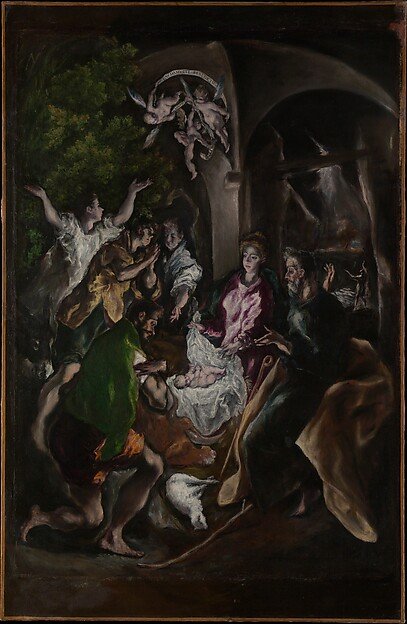
Roman Catholics, Anglicans, Eastern Christians, and traditional Protestant communities frame worship around a liturgical calendar. This includes holy days, such as solemnities , which commemorate an event in the life of Jesus or the saints, periods of fasting such as Lent , and other pious events, such as memoria or lesser festivals commemorating saints.
Christian groups that do not follow a liturgical tradition often retain certain celebrations, such as Christmas, Easter, and Pentecost. A few churches make no use of a liturgical calendar.
| Season or day | Common focus |
|---|---|
| Advent | Preparation for Christmas and expectation of Christ’s coming. In many Western churches, the four Sundays before Christmas. |
| Christmas and Epiphany | Jesus’s birth and manifestation; Epiphany traditions emphasize the Magi, Jesus’s baptism or related themes. |
| Lent | Repentance, prayer, fasting and giving before Easter. Forty days is a central symbolic number, with counting practices varying. |
| Holy Week | Palm Sunday recalls Jesus’s entry into Jerusalem; Holy/Maundy Thursday the final meal; Good Friday the crucifixion. |
| Easter / Pascha | Celebration of the resurrection, beginning a season of joy rather than only a single Sunday. |
| Pentecost | The coming of the Holy Spirit in Acts 2, celebrated fifty days after Easter. |
The calendar teaches through repetition. A child may learn the story of Jesus through candles, songs, processions, fasting and feasts before studying a formal account of doctrine. Catholic Stations of the Cross invite reflection on the Passion through a sequence of scenes. Passion plays dramatize the story, but their history also includes presentations that encouraged anti-Jewish hostility. Responsible interpretation refuses to turn a Gospel narrative into collective blame against Jewish people.
Different calendars and rules for calculating Easter mean that Christians do not always celebrate the same feast on the same civil date. Many Orthodox churches use an older calendar for fixed feasts; practices vary among jurisdictions. An Orthodox Christmas celebration on January 7 corresponds to December 25 on the Julian calendar in the present period. Some Orthodox churches instead observe Christmas on December 25 of the civil calendar. A simple contrast between “the Western date” and “the Eastern date” hides this diversity.
8. Life passages, care and Christian hope
Confirmation invokes the Spirit and affirms baptismal commitment in many Western churches, but its age and relation to first Communion vary. Orthodox chrismation normally follows baptism, including infant baptism, and infants can receive Communion. There is no universal Christian confirmation ceremony at age twelve.
Christian marriage is commonly celebrated through promises before God and witnesses. Catholic and Orthodox churches treat it sacramentally; Protestant churches vary in their terminology. Churches differ over divorce, remarriage and same-sex marriage. They also differ over eligibility for ordination. Holy orders concerns ordained ministry; it is not a rite every Christian is expected to receive. Anointing of the sick offers prayer and care during serious illness and is not restricted to the final minutes before death.
John Mack, in Tim McKenzie, ed.. World Religions, Christianity. Source · CC BY-NC-SA 4.0.
Christians believe that the choices individuals make regarding God and God’s grace in this life will have eternal consequences in the afterlife. These consequences are often symbolized as heaven and hell, representing two vastly different destinies. Some Christians also believe in purgatory, a transitional state between earthly life and heavenly union.
Funeral rites may include scripture, prayer, a sermon or homily, hymns, remembrance and burial or another disposition of the body. Christian hope traditionally includes resurrection and renewed life with God, not only an immortal soul escaping the body. Catholic purgatory is understood as purification of those destined for union with God, not a second chance after a final rejection of God. Christians disagree about the character and duration of hell, the fate of those outside their faith and the language appropriate for describing life after death. Grief and hope can coexist in the same funeral service.
9. North America: churches, revivals and religious choice
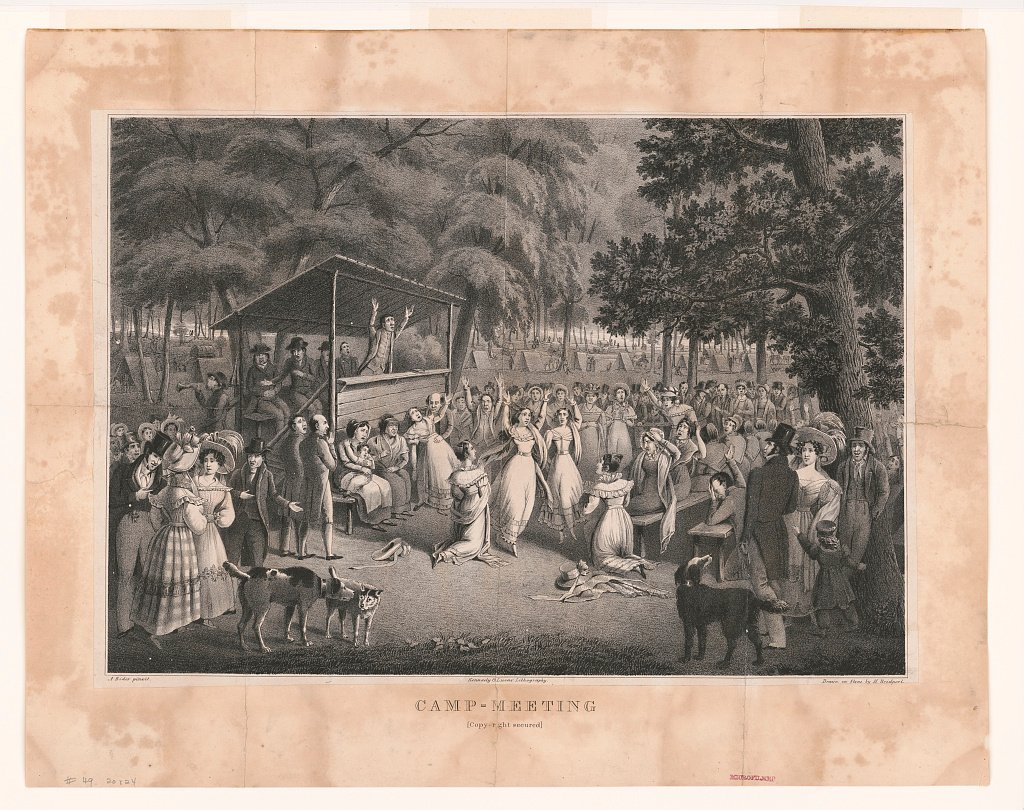
Christianity in North America did not begin as one unified national church. Spanish and French Catholic missions, English Protestant colonies, Indigenous communities, enslaved Africans and later migrants all helped shape it. Missions brought education and religious exchange, but also formed part of colonial projects that attacked Indigenous cultures and authority. Religious liberty was uneven: some colonies maintained established churches or restricted dissenters, while others offered broader toleration. The American founding generation included several kinds of Christians as well as people influenced by Deism and Enlightenment criticism. Calling all the founders Deists is inaccurate.
The U.S. constitutional settlement prohibited a national religious establishment and protected religious exercise. It did not remove religion from public life or settle every dispute about church and government. Voluntary congregations competed for adherents, supported schools and missions and developed networks beyond a single locality. The distinction between an established church and a voluntary association is important for understanding the growth of American denominations.
OpenStax contributors. U.S. History, §13.1 An Awakening of Religion and Individualism. Source · CC BY-NC-SA 4.0.
The reform efforts of the antebellum era sprang from the Protestant revival fervor that found expression in what historians refer to as the Second Great Awakening. (The First Great Awakening of evangelical Protestantism had taken place in the 1730s and 1740s.) The Second Great Awakening emphasized an emotional religious style in which sinners grappled with their unworthy nature before concluding that they were born again, that is, turning away from their sinful past and devoting themselves to living a righteous, Christ-centered life.
The First Great Awakening of the 1730s and 1740s included preachers such as Jonathan Edwards and George Whitefield. They urged hearers to experience conversion rather than rely on inherited membership. The Second Great Awakening, beginning around the turn of the nineteenth century, expanded revival practice through camp meetings, itinerant preaching and growing Baptist and Methodist networks. Revivalists disagreed about predestination; personal conversion did not make every evangelical an opponent of Calvinism.
OpenStax contributors. U.S. History, §13.1 An Awakening of Religion and Individualism. Source · CC BY-NC-SA 4.0.
The burst of religious enthusiasm that began in Kentucky and Tennessee in the 1790s and early 1800s among Baptists, Methodists, and Presbyterians owed much to the uniqueness of the early decades of the republic. These years saw swift population growth, broad western expansion, and the rise of participatory democracy. These political and social changes made many people anxious, and the more egalitarian, emotional, and individualistic religious practices of the Second Great Awakening provided relief and comfort for Americans experiencing rapid change. The awakening soon spread to the East, where it had a profound impact on Congregationalists and Presbyterians. The thousands swept up in the movement believed in the possibility of creating a much better world. Many adopted millennialism, the fervent belief that the Kingdom of God would be established on earth and that God would reign on earth for a thousand years, characterized by harmony and Christian morality. Those drawn to the message of the Second Great Awakening yearned for stability, decency, and goodness in the new and turbulent American republic.
The Second Great Awakening also brought significant changes to American culture. Church membership doubled in the years between 1800 and 1835. Several new groups formed to promote and strengthen the message of religious revival. The American Bible Society, founded in 1816, distributed Bibles in an effort to ensure that every family had access to the sacred text, while the American Sunday School Union, established in 1824, focused on the religious education of children and published religious materials specifically for young readers. In 1825, the American Tract Society formed with the goal of disseminating the Protestant revival message in a flurry of publications.
OpenStax contributors. U.S. History, §13.1 An Awakening of Religion and Individualism. Source · CC BY-NC-SA 4.0.
In the Northeast, Presbyterian minister Charles Grandison Finney rose to prominence as one of the most important evangelicals in the movement (Figure 13.4). Born in 1792 in western New York, Finney studied to be a lawyer until 1821, when he experienced a religious conversion and thereafter devoted himself to revivals. He led revival meetings in New York and Pennsylvania, but his greatest success occurred after he accepted a ministry in Rochester, New York, in 1830. At the time, Rochester was a boomtown because the Erie Canal had brought a lively shipping business.
Methodist circuit riders traveled among settlements that could not support a resident minister. Baptist congregations also expanded through local preaching and networks of believers. Revival meetings made Christian commitment a public decision, often marked by testimony, prayer and a changed way of life. Religious participation could create new opportunities for laypeople, but it did not automatically abolish inequalities of race, gender or class.
10. Black churches, independence and public leadership
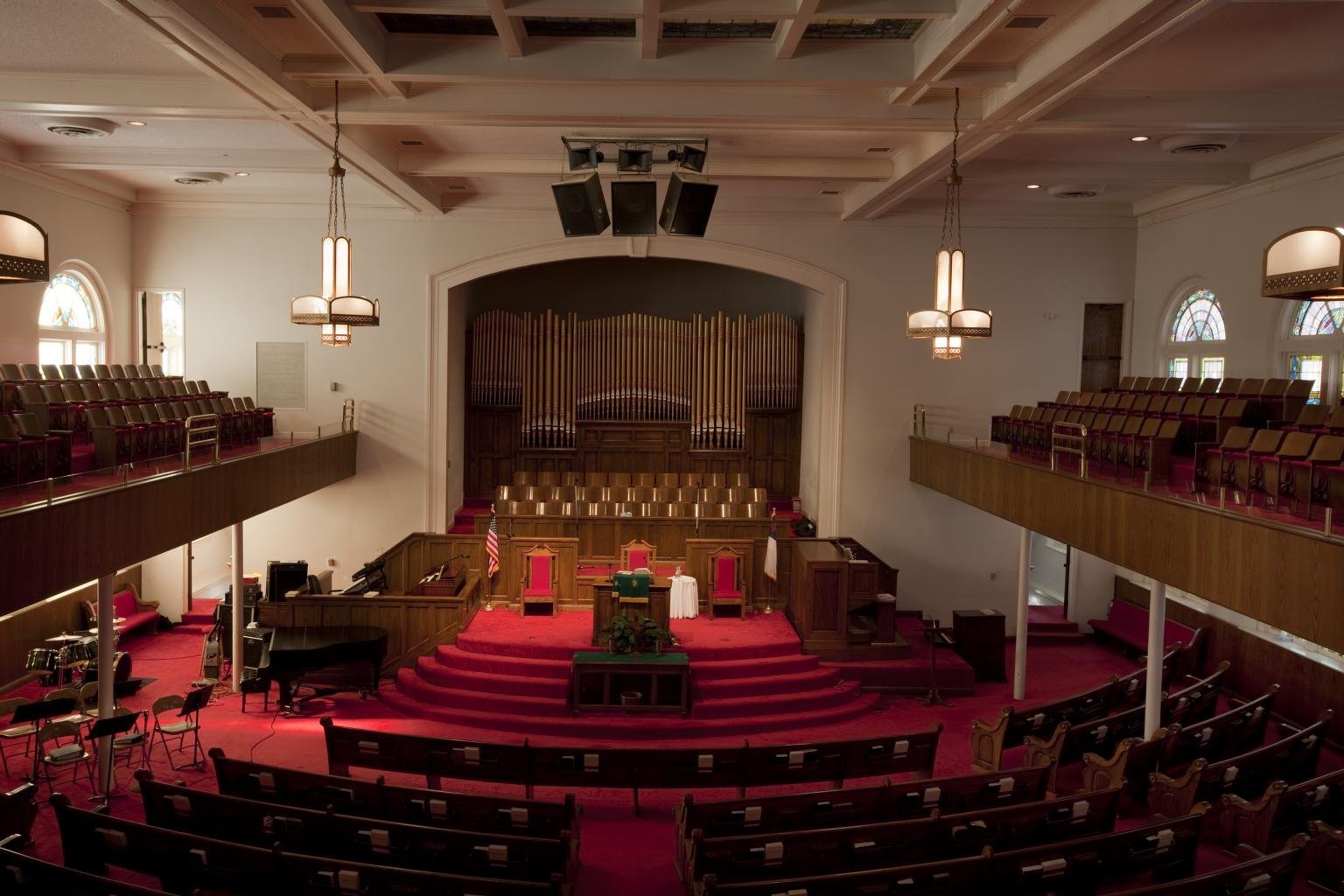
Black Christians built communities under slavery and in freedom, drawing on the Bible, African cultural inheritances and their own experience. Worship, preaching, music and mutual aid helped sustain lives constrained by racial oppression. White-controlled churches often segregated Black participants or limited their leadership. Independent institutions offered greater authority over worship, education and community resources.
Richard Allen founded Philadelphia’s Mother Bethel congregation in 1794; the African Methodist Episcopal Church was organized as a denomination in 1816. The distinction matters because the local congregation and the wider church did not begin in the same year. Other Black Methodist and Baptist bodies developed their own histories. “The Black church” is a useful collective expression, but it should not make these organizations, or every Black Christian’s beliefs, sound identical.
The church could serve as a place for literacy, fundraising, organizing and political discussion as well as worship. During the civil rights movement some congregations sheltered meetings and supported protests; others worried about reprisals or disagreed over tactics. Black Catholics, Pentecostals and members of predominantly white denominations also belong in the account. AME Church history. Douglass’s critique in the primary reader makes the central question concrete: how should the conduct of a Christian institution be judged against its professions?
11. Liberal Christianity, fundamentalism and evangelicalism
OpenStax contributors. U.S. History, §13.1 An Awakening of Religion and Individualism. Source · CC BY-NC-SA 4.0.
Beginning in the 1820s, a new intellectual movement known as transcendentalism began to grow in the Northeast. In this context, to transcend means to go beyond the ordinary sensory world to grasp personal insights and gain appreciation of a deeper reality, and transcendentalists believed that all people could attain an understanding of the world that surpassed rational, sensory experience. Transcendentalists were critical of mainstream American culture. They reacted against the age of mass democracy in Jacksonian America—what Tocqueville called the “tyranny of majority”—by arguing for greater individualism against conformity. European romanticism, a movement in literature and art that stressed emotion over cold, calculating reason, also influenced transcendentalists in the United States, especially the transcendentalists’ celebration of the uniqueness of individual feelings.
Emerson had been a Unitarian minister. Transcendentalism grew into a wider intellectual movement associated with him and Thoreau. Historical Unitarians rejected the Trinity; Universalists emphasized universal salvation. Contemporary Unitarian Universalism includes Christian and non-Christian participants.
In the nineteenth and early twentieth centuries, biblical criticism, evolutionary science, industrialization and changing moral expectations provoked debate. Liberal Protestant theologians often welcomed historical study of scripture and sought ways to understand Christianity alongside modern knowledge. Some emphasized Jesus’s ethical teaching and social reform. This did not mean that every liberal Christian rejected all doctrine, prayer or belief in God.
Fundamentalism defended what its proponents regarded as indispensable Christian truths against theological modernism. The name is associated with The Fundamentals, a series of essays published between 1910 and 1915. Biblical authority, miracles and the saving work of Christ became major points of conflict. Fundamentalism has its own history of separation, institutions and public campaigns; it is not a precise synonym for every conservative Christian.
Evangelicalism is broader. Common emphases include personal conversion, the authority of the Bible, Christ’s saving death and active witness through mission or service. An evangelical may belong to a Baptist, Methodist, Presbyterian, Pentecostal or independent congregation, among others. These emphases do not establish one form of church government, one musical style or one political position. Contemporary evangelical identity also has racial and national meanings that do not always map neatly onto theological definitions.
12. Christian communities in the United States
| Family or movement | Features that help distinguish it |
|---|---|
| Lutheran | Reformation heritage; justification by grace through faith; preaching and sacraments. |
| Reformed / Presbyterian | Reformed theology; many Presbyterian churches governed through elders and regional assemblies. |
| Anglican / Episcopal | Bishops and common prayer; a range of Catholic and Protestant theological emphases. |
| Methodist / Wesleyan | Heritage of John and Charles Wesley; holiness, disciplined discipleship and social responsibility. |
| Baptist | Believer’s baptism and substantial authority in the local congregation; considerable theological and organizational diversity. |
| Pentecostal / charismatic | Emphasis on the Holy Spirit, spiritual gifts and experiential worship; found in several organizational forms. |
| Nondenominational | Congregations independent of a formal denomination; many retain evangelical or Pentecostal beliefs and networks. |
These labels cross other categories. A church can be both Baptist and evangelical, or Presbyterian and part of the mainline Protestant world. Mainline commonly refers to historically influential Protestant bodies such as Episcopal, Presbyterian, Methodist and some Lutheran, Reformed and Baptist organizations. It does not mean that every member shares a single liberal theology. Church government also differs: bishops exercise oversight in episcopal systems, elders and assemblies in presbyterian systems, and local congregations in congregational systems. Actual arrangements include variations and combinations.
Catholic life has been shaped by migration from Ireland, Germany, Italy, Poland, Latin America, Asia and elsewhere, as well as by communities with much older roots in North America. Parishes support schools, charitable institutions, sacramental life and devotional associations. Eastern Catholic churches have their own liturgical traditions while remaining in communion with Rome. Catholicism should not be reduced to the customs of one immigrant group.
Eastern Orthodox and Oriental Orthodox churches likewise sustain liturgical life, fasting, sacred images and community institutions in the United States. Their histories include migration from the eastern Mediterranean, eastern Europe, Africa and Asia. They are distinct families, as explained in Chapter 11. Neither can be adequately described as Roman Catholicism with a different administrative leader.
Pentecostalism emerged in the early twentieth century from currents including the Wesleyan Holiness movement. The Azusa Street revival in Los Angeles, beginning in 1906 under the leadership of William J. Seymour, was an important center of its spread. Pentecostals emphasize the Spirit’s activity through gifts such as tongues, prophecy and healing. Particular churches differ in how they understand baptism in the Holy Spirit; the Assemblies of God, for example, teaches speaking in tongues as its initial physical evidence. The later charismatic movement brought similar emphases into Catholic and established Protestant churches. Assemblies of God statement.
Joseph Smith organized the Church of Jesus Christ of Latter-day Saints in 1830. It accepts additional scriptures, including the Book of Mormon. After persecution and migration, Brigham Young led many followers to the Great Salt Lake valley. Temple ordinances and enduring family relationships are important to its practice. Latter-day Saints identify as Christian, while their account of Father, Son and Holy Ghost differs from Nicene teaching. That difference explains why other churches sometimes dispute the classification. Official account of the Godhead
Seventh-day Adventism grew from nineteenth-century expectations of Christ’s return. It observes Saturday as Sabbath and emphasizes health and education. Alongside other restorationist movements, it challenged inherited accounts of scripture, authority and church membership. Adventist statement on Sabbath
13. Catholic renewal and relationships with other religions
Wikipedia for Schools, Christianity. World Religions, The Church and Christian Theology; attribution (43). Source · CC BY-SA 3.0.
On 11 October 1962, Pope John XXIII opened the Second Vatican Council, the 21st Ecumenical Council of the Catholic Church . The council was “pastoral” in nature, emphasizing and clarifying already defined dogma, revising liturgical practices, and providing guidance for articulating traditional Church teachings in contemporary times. The council is perhaps best known for its instructions that the Mass may be celebrated in the vernacular, as well as in Latin.
The Second Vatican Council met from 1962 to 1965. Its reforms encouraged the active participation of laypeople and expanded use of local languages in worship without abolishing Latin. It promoted ecumenical relationships and reexamined the church’s dealings with non-Christian religions. In Nostra aetate, the council rejected collective Jewish guilt for Jesus’s death and condemned antisemitism. This was a significant institutional statement with consequences for teaching and interreligious relations. Nostra aetate, especially §4.
Catholic debates concern liturgy, authority, family life and the relation between official teaching and local practice. Revelations of clerical abuse and concealment have also raised urgent questions of accountability and justice for survivors.
Francis’s papacy lasted from 2013 to 2025 and placed strong emphasis on poverty, migration, environmental responsibility and a more consultative church. Leo XIV was elected on May 8, 2025, succeeding Francis. Vatican report of the election.
14. A worldwide religion with changing centers
Christian communities existed in Africa and Asia long before European colonial missions. Later missions established churches, schools and hospitals, sometimes tied closely to empire. Converts also translated texts, trained leaders and founded institutions of their own.
Pew Research Center’s estimates for 2020, published in 2025, place about 31% of the world’s Christians in sub-Saharan Africa, 24% in Latin America and the Caribbean, and 22% in Europe. Sub-Saharan Africa surpassed Europe between 2010 and 2020. These are dated population estimates, not a count of worship attendance or a description of every believer’s practice. Pew: Christian population change.
The phrase Global South draws attention to the growing importance of African, Latin American and parts of Asian Christianity, but it does not name one theology. Catholic, Protestant, Pentecostal, Orthodox and independent communities coexist, sometimes within the same city. Migration also carries their worship into Europe and North America. A congregation in the United States may therefore belong to a network whose leaders, resources and missionary ambitions are centered elsewhere.
Ecumenism seeks better relationships and, in some cases, visible unity among Christians. It can involve theological dialogue, common prayer where permitted, shared service and cooperation between churches. It differs from interreligious dialogue with Jews, Muslims, Hindus, Buddhists and others. Both kinds of relationship can coexist with serious disagreement. Cooperation does not require pretending that differences over Eucharist, ministry or authority have disappeared.
15. Christianity today in the United States
In Pew’s 2023–24 Religious Landscape Study, released in 2025, 62% of U.S. adults identified as Christian and 29% as religiously unaffiliated. The unaffiliated category includes atheists, agnostics and people who describe their religion as nothing in particular; it does not mean that all reject every spiritual belief. Christian identification has declined over the longer term. The survey measures identity, which is different from membership records, regular attendance or agreement with a creed. Pew: Religious identity in the United States.
OpenStax contributors. Introduction to Sociology 3e, §15.3 Religion in the United States. Source · CC BY-NC-SA 4.0.
A megachurch is a Christian church that has a very large congregation averaging more than 2,000 people who attend regular weekly services.
Large congregations can provide extensive music, education, media, counseling and service programs. Small churches may offer close personal ties and local continuity. Congregation size alone tells little about theology or the quality of accountability. Radio, television, livestreaming and social media extend religious teaching beyond a building; they also raise questions about celebrity leadership, finances and the relationship between an audience and a community that takes responsibility for its members.
Christians participate on several sides of public debates about poverty, migration, racism, war, abortion, sexuality, gender and environmental policy. Their disagreements involve how scripture is interpreted, which authorities are trusted, how moral principles apply and whose experience receives attention. A denominational statement does not always predict an individual member’s opinion. Nor should the political behavior of one national or racial group be treated as Christianity’s worldwide position.
People leave churches for different reasons, including disbelief, institutional distrust, ethical disagreement or loss of social ties. Others remain through conviction, family history or communal responsibilities. Survey categories identify affiliation; interviews and local evidence help explain these choices.
16. Readings and questions
The primary reader embeds the complete Sermon on the Mount, the Good Samaritan, the judgment scene in Matthew 25, Romans 12, James 2, Paul on the Lord’s Supper and love, Justin’s account of early worship, and sustained prose from Douglass’s Appendix. Read these as texts addressed to particular audiences, then ask how later Christians have used them.
- How does Jesus’s Jewish setting help explain the commands to love God and neighbor?
- In Matthew 5–7, identify one teaching about motives, one about possessions and one about relations with enemies. What practical change does each demand?
- Compare Romans 12 and James 2. How does each connect belief to the treatment of others?
- Why does Paul criticize the Corinthians’ meal? How does that criticism change an account of Communion concerned only with the bread and wine?
- What can Justin’s description tell us about second-century worship? What are the limits of using one apologetic account?
- Compare two Christian understandings of baptism or the Eucharist without reducing either to a caricature.
- How do a calendar, bodily gesture and household practice teach religion in ways a creed alone cannot?
- What is Douglass’s distinction between Christianity and its American practice? Which evidence does he offer?
- Explain how evangelical, Baptist, mainline and nondenominational name different kinds of affiliation.
- Why must the date, population and question asked be stated when using a religious survey?
- Choose a U.S. congregation and identify the local, national and international histories that might shape its worship.
Primary readings
Read the primary texts for Chapter 12. This separate page contains the assigned passages, translation credits and reading questions.