CA-ROTEL · World Religions
Chapter 1: Studying Religion
Questions, methods, lived practices, and a first encounter with religious diversity
On this page — 15 sections
- Learning goals
- In this chapter
- 1. What does it mean to study religion?
- 2. Why is religion difficult to define?
- 3. Explanations, perspectives, and the history of the field
- 4. Religion is something people do
- 5. Sacred space, memory, and belonging
- 6. Meeting traditions around the world
- 7. Beyond a list of major world religions
- Further tools: perspectives, dimensions, and public questions
- 8. Comparing without flattening differences
- 9. Putting the tools to work
- 10. Working vocabulary
- Primary readings
- Sources and reuse
Learning goals
- Distinguish academic inquiry from a personal or theological judgment about religious truth.
- Compare functional and substantive definitions of religion.
- Use several scholarly perspectives while recognizing their historical limitations.
- Recognize religion in practice, space, story, community, and ethical life.
- Identify introductory features of several traditions without treating their members as identical.
- Support a comparison with specific evidence and explain its limits.
1. What does it mean to study religion?
People enter a course on religion with different commitments and experiences. Some belong to a religious community; others have left one, or have little contact with organized religion. Studying religion asks all of us to examine evidence about what people believe and do, including claims we do not share.
Amanda Zunner-Keating, Madlen Avetyan, and Ben Shepard, Theoretical Approaches Toward the Study of Religion, reproduced in Tim McKenzie, ed., World Religions. Chapter license and attribution: CC BY-NC 4.0. Read source · CC BY-NC 4.0.
Before we begin our discussion on the approaches that anthropologists and other social scientists use when they study religion, it’s important to understand that these disciplines are not interested in the truth or falsity of any given religion (Guest 2020, 61). Due to the very nature of religious phenomena as faith-based and scientifically unprovable, there is no way to examine which religions are “true” or “false,” or which types of magic “work” or “do not work.”
We are similarly not here to judge which religions are better or worse, because all religions make sense within their own culturally-specific contexts. So, as we examine the different beliefs that exist across world religions, it’s essential that you approach each with an open mind. Try to separate your own religious beliefs from your study of other religions and do not measure them against your own culturally-specific standards.
A believer may describe a text as revealed by God. A historian asks when it circulated and how it was transmitted. A theologian may ask what a community should believe about God; an anthropologist may investigate how prayer shapes relationships. Each question calls for appropriate evidence. Historical research can examine the circulation of a scripture without deciding whether its revelation came from God.
Sources, participants, and evidence

A sacred text cannot tell us everything about the people who read it. Interviews, buildings, songs, letters and objects can reveal practices or disagreements that formal teachings leave out. A primary source comes from the people or setting under study; a secondary source interprets that evidence. Both require scrutiny: who produced the source, for whom, and for what purpose?
2. Why is religion difficult to define?
Many people first associate religion with a belief in God, a holy book, and a building for worship. That starting point may fit some communities better than others. A definition is useful when it helps us ask better questions; it becomes a problem when it hides practices that do not resemble our own.
Tim McKenzie, Introduction to the Study of World Religions, World Religions; copyright-page license CC BY 4.0. The book attribution page leaves an editorial question about this introduction unresolved. Read source · CC BY 4.0.
Drive around Springfield, Illinois, and one will notice statues, namesake businesses and other locations devoted to honoring its most famous former resident: Abraham Lincoln. […] People come from around the world to visit his grave, his home, his former office, and other significant sites in the slain Civil War leader’s pre-presidential life.
If you were to arrive in Springfield unable to fully speak the language and unaware of who Lincoln was, you might be inclined to believe that Lincoln was a great religious leader. Perhaps the people of Springfield worship this man, bringing flowers to his grave, speaking of his martyrdom, printing his image on currency and coins, and engaging in rituals of rubbing the nose on a bust of his head or walking in his footsteps. Residents of Springfield, however, would scoff at the idea that any of this is about worship or religion. This is just a respected leader, and his adopted hometown is happy to welcome visitors to learn about Lincoln’s contribution to the history of the United States.
Perhaps we can look at sports as a cultural concept similar to religion. Sports occupy a major place in our culture. There is clothing. There are events. There are rituals that fans and players perform. The rituals include painting one’s face and body, dressing in team garb, doing pushups when touchdowns are scored or using other hand gestures and actions. Sports have their own terminology. They demand true fans stop what they’re doing to watch the game. They have buildings (arenas or school gyms and playing fields) built to house them and their adherents. Sports are a big part of American culture. They’re a big part of a lot of cultures. No one bothers to create a distinct concept of “Sportsism” or other defining aspect of what it is to be engaged in Sports. It just is part of what it is to be a person and a society. And to a large degree, religion was that, too.
Once you create a concept of religion as its own unique part of culture, then you have to ask the question of how is it different from other aspects of culture. Taking on the analog of sports, one can list the key aspects of what makes sports unique, but one will bring one’s own perspective and experience. The person defining Sportsism might think of baseball or American football, but if they were elsewhere, they might think about dogsledding, cricket, or soccer (aka football). The aspects of what the sport is, how one engages it, how one makes it a part of one life or how one watch it will change depending on the sport chosen. So, one you develop a definition of what Sportsism, it will come from the unique perspective and experience of the person defining it.
Florida State College at Jacksonville, ATD World Religions; copyright Lumen Learning; original content, attribution key (1). Read source · CC BY 4.0.
In aiming to properly define religions, scholars have traditionally fallen into one of two schools: The Functionalist school and The Substantive school. The Functionalist school aims to define religion based on how religion functions for believers.
In contrast to this school of thought, the Substantive camp argues that religion is best defined by the elements or “substances” that comprise it. Here, one might think about symbols, rituals, beliefs, etc.
In more recent years, scholars have come to see religion as a complex organism, which cannot be reduced to its functionality or its substances. Therefore, the best definitions often comprise a mixture of the two, noting that religion includes both tangible and intangible elements. With that said, we will explore briefly the functions and substances that comprise religion to better capture the elements that define religion. (1)
A functional definition asks what religion does, such as consoling mourners or sustaining a community. A substantive definition asks about its content, such as sacred beings, stories or practices. The Lincoln and sports examples show why neither approach produces an uncontested boundary around religion.
3. Explanations, perspectives, and the history of the field
Historians study change over time; anthropologists investigate cultural life; sociologists examine institutions and social relations; philosophers test arguments and concepts. The selections below introduce several influential approaches and the disagreements they have prompted.
Learning to question the scholar as well as the subject
Amanda Zunner-Keating, Madlen Avetyan, and Ben Shepard, Theoretical Approaches Toward the Study of Religion, reproduced in Tim McKenzie, ed., World Religions. Chapter license and attribution: CC BY-NC 4.0. Read source · CC BY-NC 4.0.
In the next sections of this chapter, we explore key questions and interpretive frameworks that anthropologists use when they study religion across human cultures. Themes we outline here reflect centuries of discussion and heated debate among social scientists. One of these social scientists was Edward Burnett Tylor, an early British anthropologist who lived from 1832 – 1917. Born in England as a member of a religious minority group called Quakers (a branch of the Christian faith), he grew up to view religions as cultural structures rather than systems of belief. This view prepared him to be one of the world’s first scholars on the matter of religion (Moore 2019, 4).
Please note that Tylor’s work was problematic in many ways. His most famous work, “Primitive Cultures” refers to non-European societies as “lower races” and “savages,” and he held the belief that societies evolve toward an inevitable form: “civilization.” This idea shaped his conception of human cultural variation, our collective history, and our future.
Tylor wrote extensively on the languages that he encountered abroad and labeled some forms of language as “degenerative” (Moore 2019, 5). He also strove to identify distinct ‘races’ of humans, and argued that members of these different groups were fundamentally different from one another in terms of their physical, intellectual, and ethical abilities (King 2020, 38-39; Stein and Stein 2010, 17). Similarly, he considered many non-European cultural practices to be “child-like” behaviors (Durkheim 2008, 50).
Reed pointed out that biological evolution does not translate to cultural life and cannot be used to explain cultural changes over time. Biological anthropologists know that evolution happens in organisms because it’s demonstrated in the fossil record, can be witnessed in some organisms within a human lifespan, and is evident in the biological diversity of life. Conflating biological processes with cultural trends sometimes manifests in social Darwinism, which argues that the most powerful in a society should always maintain the power. This pseudo-scientific belief has led to human rights abuses throughout human history and must similarly be critiqued when it is present in anthropological history.
Researchers can mistake their own society’s assumptions for universal standards. Participation may give an insider knowledge that an outside observer lacks; distance may help an observer notice an overlooked pattern. Neither position settles an argument. The evidence still has to support the interpretation, and one participant cannot speak for an entire tradition.
Comfort, uncertainty, and human needs
Amanda Zunner-Keating, Madlen Avetyan, and Ben Shepard, Theoretical Approaches Toward the Study of Religion, reproduced in Tim McKenzie, ed., World Religions. Chapter license and attribution: CC BY-NC 4.0. Read source · CC BY-NC 4.0.
Functionalists argue that human cultural forms serve a particular function typically aimed at facilitating survival or procreation (but, not limited to these functions). Functionalists ask themselves, “what is the function of this cultural belief or practice?” and then strive to make sense of the practice holistically. When we ask, “what is religion,” we can refer to answers proposed by two social scientists who we have already discussed and who have applied functionalism to this question.
Bronislaw Malinowski, an early functionalist who we encountered in Chapter 1, argued in a way that is somewhat similar to Marx’s argument (see above): religions offer comfort and control to people. Malinowski argued that religion helps people meet basic human needs: a need for control and certainty in an otherwise uncertain world (Stein and Stein 2010, 19-20). Whereas Marx argued that religion comforts people in the face of their societal oppression, Malinowski argued that religion comforts us and gives us a sense of control in the face of a natural world that is, in reality, completely out of our control.
In other words, human beings are likely to rely on magic and religions in times where we have little control over our circumstances. In contrast, on occasions where we can count on our skills, abilities or knowledge to assure a good outcome, we are likely to rely on those rather than turning to the supernatural to assist us. In Malinowski’s view, this reveals the reality that religions function to fill a gap in human life by creating a sense of control and comfort.
Community and social solidarity
Amanda Zunner-Keating, Madlen Avetyan, and Ben Shepard, Theoretical Approaches Toward the Study of Religion, reproduced in Tim McKenzie, ed., World Religions. Chapter license and attribution: CC BY-NC 4.0. Read source · CC BY-NC 4.0.
In contrast, within modern societies (here Durkheim was referring mostly to the European societies of his day), social life was highly differentiated. In other words, modern societies featured a variety of different professions, interest groups, and social classes. For Durkheim, it was clearly not the case that all adult members of French society in the 1890s lived in similar ways. In particular, ‘modern’ societies featured a division of labor, meaning that not all members worked at similar tasks on a daily basis.
Durkheim likened a society to a living organism, and suggested that the differentiated groups within so-called ‘modern’ societies could be thought of as distinct organs inside a living body (Jarvie 1973). Each social class and professional group produced goods or performed tasks that somehow helped the organism – the society itself – to survive. Groups within a society – unique “organs” – then exchanged the products of their labor with others so that all members of the society could efficiently meet their own needs.
Certainly, this “organic” view was an optimistic way of understanding how society and economy work. For example, you might find it easy to think of professions or perhaps entire social classes that you feel actually do not provide a benefit to anyone but themselves, let alone their entire society. Karl Marx would have agreed, and the overly optimistic nature of Durkheim’s ideas and of functionalism in general are certainly legitimate critiques.
Religion in modern societies (those that feature a division of labor) thus serves a different function than it did in ancient ones, now creating what Durkheim called organic solidarity – a sense of common identity or common interest among the different organs of a differentiated society.
Durkheim’s theory of religion and its functions exemplifies the kind of linear thinking outlined earlier in the section on Edward Burnett Tylor’s evolutionist ideas. Durkheim accepted a view we saw in Tylor’s work, that all societies develop along similar trajectories, from one type to the next in a series of universal stages. Building on this framework, Durkheim proposed that as transitions between these universal stages occurred, religious beliefs would have automatically changed too, thus enabling human groups to adapt to the new challenges they faced by keeping increasingly differentiated groups working together, toward a common goal.
Power and material life
Amanda Zunner-Keating, Madlen Avetyan, and Ben Shepard, Theoretical Approaches Toward the Study of Religion, reproduced in Tim McKenzie, ed., World Religions. Chapter license and attribution: CC BY-NC 4.0. Read source · CC BY-NC 4.0.
Among other things, historian Karl Marx is well-known for writing The Communist Manifesto along with Friedrich Engels in 1848. The Manifesto is a critique of the capitalist system of production that, in what came to be known as the Marxist view, commodifies workers for the benefit of those who possess far greater wealth. Marx and Engels’ works examined the historical evolution of modern economic systems and highlighted the power imbalances within capitalism. In doing so, they also laid out a holistic model of how political and economic forces have interacted with belief systems and even with religion over time.
Marx once described religion as the opium of the people which is a commonly cited and commonly misunderstood quote. Many dictatorial regimes have, historically, misappropriated this Marxist argument to justify a violent crackdown on religion in their countries. At the time of Marx’s claim, opium was legal and was widely used to relieve pain. So, he was not arguing that religion was some kind of addictive drug that causes people to behave in an unreasonable manner. Rather, he was arguing that religion was a comfort to people who were suffering (Stein and Stein 2010, 18).
Within the field of anthropology, Marx and Engels’ influence resulted in a new theoretical approach toward the study of culture which we call the Marxist Approach (Kuper 2014, 182-183). The Marxist Approach examines power imbalances that exist within and across cultures. Specifically, the Marxist Approach considers how material conditions (or, the production of things that people need to survive) lead to the spread, or elimination, or maintenance of particular cultural trends, beliefs and traditions.
Symbols and meaning
Amanda Zunner-Keating, Madlen Avetyan, and Ben Shepard, Theoretical Approaches Toward the Study of Religion, reproduced in Tim McKenzie, ed., World Religions. Chapter license and attribution: CC BY-NC 4.0. Read source · CC BY-NC 4.0.
Geertz argued that our religions shape our reality and our sense of community. In this way, religion creates meaning in our lives. Anthropologists closely examine the symbolic nature of religious life in order to better understand these elements.
Try bringing these approaches to the same event. At a funeral, one researcher might study how mourners find comfort, another how a community renews its bonds, and another who is permitted to lead the ceremony. A fourth might ask how a song or object makes an idea about death feel present. These questions overlap. Their usefulness depends on what they help us understand in a particular setting.
4. Religion is something people do

Religious life includes preparing a festival meal, teaching a child to pray, tending a grave and deciding who may lead a ceremony. Such ordinary work helps sustain a tradition. It can reveal responsibilities that a formal statement of belief never mentions.
Art, sound, and the senses
Florida State College at Jacksonville, ATD World Religions; copyright Lumen Learning; original content, attribution key (1). Read source · CC BY 4.0.
One significant area of study in the humanities is that of art and art history. The art of a given culture or time period can speak volumes about the beliefs, religious or otherwise, of the people in that culture. Therefore, the intersection of art and religion is fertile ground for study. Art can evoke or enhance a religious experience. The reason for this is the emotional relationship between our senses, the world around us, and our beliefs. We may learn cognitively, but we engage with the world sensually. Our senses interact with, affect, and inform, our perceptions of the world around us. Art and religion then, are products of the sensually perceived world.
Music is perhaps the more prevalent artistic form for religious expression. The great songs of the faith carry meaning, which spoken words or visual symbols cannot; Gregorian chants, George Frideric Handel’s (1685–1759) “ Messiah ,” and Johann Sebastian Bach’s (1685–1750) various chorales and organ pieces represent the traditional high holy church music. However, many more examples abound beyond what is considered specifically church music. Bluesy gospel hymns, Polynesian choirs singing songs like “ God Yu Tekkem Laef Blong Mi ,” the chanting and humming of Buddhist monks, even the Muslim call to prayer, can all be considered sacred forms of music. Each of these styles is capable of transporting, and transfixing, the listener to the presence of the divine.
The architecture of a place of worship reflects the theology of the people. Iconography rich cathedrals for Orthodox Christians, solitary monasteries for Buddhist monks, and shrines to house the kami of the Shinto, each reflect the theology and praxis of the religion they represent.
Writing is likely the most portable of the artistic expressions. Literature not only connects its reader to their beliefs through the use of imagination but also works as a means of transmitting those beliefs for others. We can look at an ancient text from the Middle East and understand the emotion, original intent, and ideas of the writer. Most religions throughout the world rely on written sacred texts for the transmission of their beliefs and praxis. (1)
The source describes the Muslim call to prayer as sacred music. Many practitioners distinguish the call to prayer and Qur’anic recitation from music. The difference in vocabulary matters: a researcher’s category may not be the one participants use.
Ritual and repeated action

A ritual is a patterned action that carries meaning beyond its immediate physical result. Washing, eating, walking, bowing, speaking, and keeping silence can all take ritual forms. Some rites mark a transition such as birth, marriage, initiation, or death; others recur daily or seasonally. Repetition can preserve memory and create belonging, while disagreement over a ritual can expose questions of authority. Observe both the prescribed form and what participants actually do.
5. Sacred space, memory, and belonging

Jody L Ondich, World Religions: the Spirit Searching, Sacred Spaces. Read source · CC BY-NC-SA 4.0.
We all live in a specific place on the planet, and where we live impacts, in visible and not so visible ways, the ways that we interact with the world, with other people, and with our internal self. The child raised in prairie or tundra spaces may find the deep forest intimidating or enclosing. The child from the seaside may long for water in ways that the desert dweller may not completely understand.
So the concept of Sacred Space will change from people to people, during history, dependent on location, belief and lifestyle. This unit will attempt to help us think about the concepts that make a space Sacred.
Religions of the world use varied places and settings for rituals, worship, burial, and other activities. Some of these spaces become more universal in use, as a church or synagogue or mosque might become, in many ways, a community center. AA might meet there, exercise groups gather, pre-schools find housing, clinics, tutoring centers, counseling centers –all of these may use a sacred space as well as the original congregation of people who built it. Some are much more restricted in their use. A monastery is not going to be open to the public, but lived in solely by the Buddhist monks or Catholic monks who dwell there. A labyrinth is limited in use to the walking of it–this is not a park, nor a playground.
Places become sacred because of their use, their intent, their functions. As we look at various religions, we will be looking at various ways that religions uses particular kinds of spaces. We also will see, in news articles, in research, in social media and in reflections that you create, the ways that spaces become sacred and why they become sacred.
A place of worship may also house a school, offer shelter or commemorate an event. Its significance depends partly on who uses it and what happens there. A visitor needs evidence about those uses as well as an impression of the building.
6. Meeting traditions around the world
The following portraits introduce traditions encountered later in the book. They give examples of religious life without attempting to describe every member of a community. The same tradition may take different forms across regions and generations.
Judaism: covenant, text, and interpretation
Jewish life joins worship of one God with covenant, inherited law and interpretation. The Torah comprises the first five books of the Hebrew Bible. The Mishnah collects early rabbinic teachings; the Talmuds preserve further discussion of them. Chapters 9 and 10 trace these traditions through their history and continuing practice.
John Mack and Jody L Ondich; adapted in Tim McKenzie, ed., World Religions. Judaism. Read source · CC BY-NC-SA 4.0.
In addition to the Mishnah, many Jews also recognize the validity of the Talmud. The Talmud is a systematic treatment of the Law of Moses. It is arranged like a legal brief: a law is cited from the Torah, and the opinions of various prominent rabbis are listed. Readers are able to study the various (and sometimes conflicting) interpretations and come to their own conclusions.
Based on this early history, Judaism did not arise in the context of a stable regional government nor has it remained unchanged throughout its history. Judaism has evolved through cultural and national changes and continues to do so today. Though it is quite ancient, Judaism remains a faith in transition.
Christianity: Jesus, community, and diverse churches
Jody L Ondich, World Religions: the Spirit Searching, Christianity. Read source · CC BY-NC-SA 4.0.
In the beginning of the movement that became Christianity, the earliest followers were not actually “Christians”. They were Jewish, loyal followers of the rabbi Jesus, and, especially at the very beginning of the movement, were focused on reforming Judaism. They talked to anyone who would listen, instructing their fellow Jews on the ideas taught by Jesus, this itinerant rabbi whom they eventually came to believe was the longed for messiah from numerous Hebrew prophecies.
Jesus did not write his message down in any way during his lifetime, nor did others who were immediate followers write about him during his ministry. Written materials started emerging in letters and gospels about 25-30 years after his lifetime.
Today Christianity has three major divisions, each possessing its own branches: the Catholic Church, Orthodox Christian churches, and Protestant churches. Within this broad framework, created by disagreement over tradition, belief and belief, are contained literally hundreds of smaller groups.
John Mack and Jody L Ondich; adapted in Tim McKenzie, ed., World Religions. Christianity. Read source · CC BY-NC-SA 4.0.
Christianity recognizes significant life-cycle events as sacred times. Birth may be celebrated with a service of dedication during which the parents vow to raise the child as a Christian, or with baptism, a ceremony during which the child is seen as part of the Christian community. Coming-of-age rituals are marked as well. The Roman Catholic Church, and many other denominations, observe a confirmation service during which a boy or girl of about 12 years of age is confirmed as a full member of the church. This is similar to a Jewish bar mitzvah (for boys) or bat mitzvah (for girls). In Christianity, marriage is endowed with special religious significance. In the Roman Catholic and Orthodox Churches, for example, marriage is seen as a sacrament, an act that signifies the grace of God on a person. Other significant life- cycle events include ordination to the ministry or the priesthood and death.
A description of Christian baptism needs to identify the church concerned. Some baptize infants; others require a personal profession of faith. Confirmation also varies in age and meaning: Orthodox chrismation normally follows baptism, including infant baptism. Jewish bar and bat mitzvah mark responsibility for commandments; the comparison in the source concerns a life transition, rather than equivalent beliefs about grace or church membership.
Islam: revelation and a practiced way of life
John Mack and Jody L Ondich; adapted in Tim McKenzie, ed., World Religions. Islam. Read source · CC BY-NC-SA 4.0.
Muslims consider Muhammad (570 C.E to 632 C.E) the final messenger in a series of prophets sent by God to humanity. In addition to Abraham, these prophets include many other figures important in the Jewish and Christian traditions, such as Noah, Moses, and Jesus. In Muslim belief, all prophets are solely human, not divine. However, the importance of Muhammad to Muslims should not be underestimated. He was the religious and political leader of the early Muslim community, and even today — 14 centuries after his death — his life is considered an example for all Muslims to follow. Muslims consider Muhammad to be the ideal human. And although he was a prophet, in many respects he lived an ordinary life. He had a family, earned a living, and was active in his community.
What does it mean to be a practicing Muslim? The best way to answer this question is to discuss the Five Pillars of Islam. The five pillars form the structure through which Muslims express their faith and obey Allah. The five pillars are specific actions which, when carried out, bring righteousness. Devout Muslims generally aim to observe all of the pillars, but as with every religious tradition, there are variations in levels of observance.
Hindu traditions: many paths and the question of liberation

Samsara names the cycle of rebirth; moksha concerns release from it. Hindu thinkers disagree about what liberation involves and how it is attained. Chapters 2–4 follow these questions through teachings, divine figures and stories.
Buddhist traditions: a search prompted by suffering
John Mack and Jody L Ondich; adapted in Tim McKenzie, ed., World Religions. Buddhism. Read source · CC BY-NC-SA 4.0.
One day, according to tradition, Siddhartha ventured out of his life of seclusion and into a nearby village. There he saw the four sights, which thrust him into his spiritual quest. He saw an old man, bent over with age, carrying a bundle of firewood. As he journeyed further, he saw a dying man crippled with disease. Next, he saw the funeral procession of a dead man. Finally, at the side of the road, he saw a holy man meditating. These four sights so moved Siddhartha that he left his life of luxury, his wife, and son, and he became a disciple of several Hindu gurus. He devoted his life to meditation and study. While meditating under a tree at Bodh Gaya, India, Siddhartha experienced enlightenment with a sudden revelation of the truth. The year of this event is uncertain, but Siddhartha was approximately 35 years old when he experienced enlightenment. He then formulated his primary doctrines: the Four Noble Truths and the Noble Eightfold Path. He began to preach his doctrines and to engage in conversation with Hindu sages and gurus. Siddhartha became known as Buddha, or the “blessed one.” To his followers, was seen as a guide to enlightenment.
The story of the four sights frames religious inquiry as a response to aging, illness, and death. It is a traditional narrative about a life, not a modern eyewitness biography. The source glosses Buddha as the blessed one; awakened one is a more precise guide to the title. In later chapters, we will distinguish the Four Noble Truths, the Eightfold Path, and the different Buddhist communities that have interpreted and practiced them.
Jain traditions: ethical attention to living beings
Tim McKenzie, ed., World Religions, Jainism; chapter acknowledges adaptation of Jody L Ondich. Read source · CC BY-NC-SA 4.0.
Despite being small in number, the beliefs of the Jains have influenced religions of India. The idea of ahimsa (non-violence) has influence religions in India to adapt vegetarian and other practices. While the monastic life is the ideal for Jains, many non-monastics are active in business and other influential areas of Indian life.
Jain nonviolence, ahimsa, places demanding limits on conduct toward living beings. Monastics and laypeople undertake different commitments, so a monastic rule should not be treated as a description of every Jain household.
Confucian traditions: learning and relationships
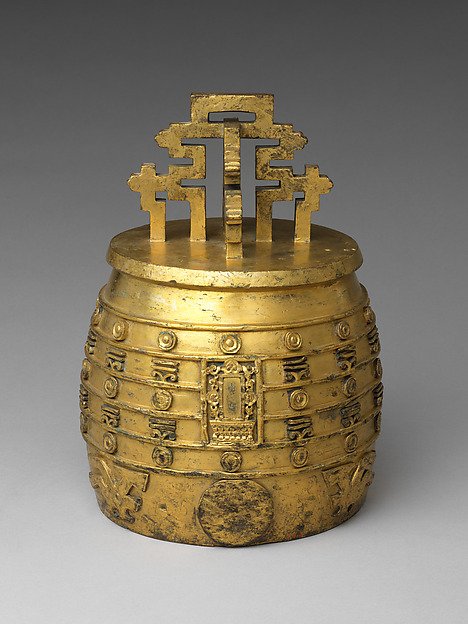
Confucian traditions connect learning, family responsibilities, ceremony and government with a larger account of human and cosmic order. Whether these commitments count as religion depends partly on the definition being used.
Daoist traditions: the way and the rhythms of nature
Jody L Ondich, World Religions: the Spirit Searching, Daoism. Read source · CC BY-NC-SA 4.0.
The Daoists, beginning with the supposed founder, Laozi (Lao Tzu), taught about nature and its operation and what it meant to live harmoniously with the Dao. The Dao is said to be the principle or power that makes the universe move through the patterns and rhythms seen in nature. Daoism arose around 500 BCE, during a time when spiritual ideas were developing in both the East and the West. The Daoists saw the trappings of civilization as something artificial or at least far removed from the Dao, the source of all. Disdaining formal education, Daoists advocated a more intuitive path through life best conveyed through stories, or described using images such as the movement of water. Simplicity, gentleness, humility, seeing the relative nature of things, and a certain earthiness were Daoist values. Yet this apparent ordinariness in approaching life also embodied a rather different way of looking at the world and of being in it. Daoists sought a special effortless way of acting to accomplish one’s purposes, which included serenity and longevity.
Two texts form the basis of Daoism: the Laozi and the Zhuangzi. The Laozi—also called the Daodejing, or The Way and Its Power—has been understood as a set of instructions for self-cultivation. A number of terms within its teachings are considered key to living within the Dao.
Daoist temple worship and household practice extend beyond the philosophical ideals emphasized in this selection. Chapter 7 brings texts, ritual and religious communities into the same history.
7. Beyond a list of major world religions
A survey organized by a few named traditions can make some forms of religious life easy to see and others easy to miss. It can also imply that a tradition must have a single founder, a fixed scripture, or a large international institution to deserve attention. The next selection begins with a particular people and place. It should not be treated as a description of all Indigenous communities.
Jody L Ondich, World Religions: the Spirit Searching, History, Beliefs, Rituals, Legends; Anishinaabe discussion. Read source · CC BY-NC-SA 4.0.
The Ojibwe, also known as Chippewa, refer to themselves in their original language as the Anishinaabe, or “the people.” The term Ojibwe comes from what other tribes called the Anishinaabe people, and means “puckered”, which refers to the toes of the moccasins that the Anishinaabe people made and wore. The term Chippewa is just a variation of the pronunciation of the word Ojibwe.
The religious beliefs and activities of the Anishinaabe can vary from place to place, and clan to clan, but are all based on a profound respect for life and the gifts of life.
As with many indigenous peoples, the immigrant Europeans tried to impose their lifestyle, beliefs, and manners on the tribes of the Americas. With the Ojibwe, this took the form of removing them from their land, forcing them into individual land ownership and farming instead of communal land ownership and hunting/gardening, and various forms of forced assimilation. For decades Ojibwe children were removed from their homes and send to “boarding schools” in order to lose their native identities, languages and practices. Learning about these schools, and the graveyards now being discovered across Canada and the US is crucial to understanding some of the suffering still being experienced in Ojibwe culture.
Land, language and kinship belong to the religious life described here, and colonization has affected all of them. The community is a living one. Some teachings are publicly shared; others depend on relationships and permissions that a visitor does not possess.
Yoruba traditions: divine beings and ancestors
Jody L Ondich, World Religions: the Spirit Searching, History, Beliefs, Rituals, Legends; Yoruba discussion. Read source · CC BY-NC-SA 4.0.
The Yoruba have hundreds of deities. Yoruba deities are called orisha, and the high god is Olorun. Other important orishas include Eshu, the trickster; Shango, the god of thunder; and Ogun, the god of iron and modern technology.
The Yoruba believe that the ancestors still have real influence among the living. Annual ritual honor is paid to the family or clan ancestors, and this yearly sacrificial activity honors all deceased members of the family. Egungun (maskers) appear at funerals and are believed to embody the spirit of the deceased person.
The examples concern Yoruba traditions and the relationships among the living, ancestors and divine beings. They cannot stand for the religious life of an entire continent.
Further tools: perspectives, dimensions, and public questions
Several dimensions of one religious life
A funeral can involve a story about death, rules for burial, music, clothing, family duties and grief. These dimensions overlap. Recording only what mourners say they believe would leave much of the event unexplained.
| Approach | A question it can investigate | A limit to remember |
|---|---|---|
| History | How did this text, institution, or practice change over time? | A later account of an origin is not automatically a contemporary record of it. |
| Psychology | How do people experience devotion, fear, conversion, or grief? | One person's experience does not describe every member of a tradition. |
| Sociology | How do authority, social class, migration, and collective belonging affect religious life? | A pattern across a population does not explain every individual's motives. |
| Anthropology | How do participants interpret practices in the settings where they occur? | The observer's categories and presence also need examination. |
| Gender studies | Who can teach, lead, inherit authority, or enter a sacred space, and who contests those arrangements? | An official rule, an idealized figure, and a person's lived options are different kinds of evidence. |
| Biology and cognitive science | What bodily and cognitive processes accompany ritual, attention, or an experience described as sacred? | A measurement of bodily activity does not by itself decide a theological claim. |
Gender, authority, and the range of evidence
Reverence for a goddess does not establish that women hold equal authority in a religious institution. A rule excluding women from an office also leaves much of their work unrecorded: teaching, donating, composing songs or organizing household observances. Sources differ in whose experience they preserve.
Difference, disagreement, and violence
Tolerance can mean allowing others to practice despite disagreement. Pluralism goes further when it involves active engagement across differences, but it need not mean that every religion teaches the same thing. A community may cooperate with neighbors while maintaining a distinctive account of truth. Distinguish that situation from relativism, exclusivism, indifference, or the mere fact that several groups live in one city.
An explanation of religious violence needs to identify the actors and their circumstances. Religious language may authorize conquest, resistance or peacemaking, while institutions, resources and political ambitions affect what happens. The label “religious conflict” begins an inquiry; it does not supply its cause.
Ecology, modernity, and new religious movements
A sacred river can be a divine presence for devotees and also a waterway affected by pollution, dams and competing demands. Reverence alone does not establish how people will respond to those conditions. Accounts of belief need to be read alongside evidence about practice.
Migration, new media and political change can alter institutions and generate new religious movements. The term “new religious movement” identifies a subject of study. Claims about coercion, financial exploitation or freedom to leave require evidence about a particular group. A label such as “cult” often passes judgment before that investigation begins.
Try the tools
Choose one event described in this chapter. Identify two dimensions of religious life, then frame one historical question and one question about participants’ experience. Which source could answer each question? What would remain uncertain?
8. Comparing without flattening differences
Comparison begins with a question about something specific: a funeral, a gift, a sacred place or an interpretation of a text. Describe each example in its own setting. Similar-looking practices can express different beliefs; different practices may address a shared concern.
Questions to carry into every chapter
- Authority: Who can teach, interpret, lead, or challenge a practice? How is that authority recognized?
- Community: What roles do households, congregations, monastic communities, and wider networks play?
- Practice: What happens daily, seasonally, and at major moments in a life?
- Meaning: How do participants explain suffering, obligation, fulfillment, death, and ultimate reality?
- Diversity: How do region, generation, gender, class, and individual experience affect what people do?
- Change: What has been preserved, debated, translated, or transformed over time?
Florida State College at Jacksonville, ATD World Religions; copyright Lumen Learning; original content, attribution key (1). Read source · CC BY 4.0.
Each of these four approaches to religion (anthropological, psychological, sociological, and economic) offer compelling explanations for determining why human beings gravitate to religion and religious beliefs. As a criticism, one can point out that an argument can be made for each of these being a relevant reason why people are religious. In short, religious belief is very complex. One cannot simply reduce religious belief to anthropological, psychological, sociological, or economic reasons. In truth, people gravitate to religion for a multiplicity of reasons. To diminish religious belief to one or even two explanations fails to appreciate the distinct reasons that each individual has for adopting a religious identity. (1)
9. Putting the tools to work
- Define and revise. Write a two-sentence definition of religion. Test it against the Lincoln example, the Confucian portrait, and the Jain selection. What does it include? What does it leave out? Revise one part.
- Distinguish questions. Choose a prayer, meal, pilgrimage, festival, or place from this chapter. Frame a historical question, a sociological question, and a question a participant might ask. What evidence would each need?
- Compare a pair. Choose two traditions and one theme: authority, community, ethics, texts, or place. Use a specific passage from each. State one similarity, one difference, and one limitation of your comparison.
- Interpret a primary source. Read the Plato selection on the separate primary-readings page. What definition is being proposed? How does Socrates test it? Distinguish the ancient dialogue from the modern textbook explanation.
- Observe carefully. Describe a publicly accessible place that people treat as special. Separate what you observed from what you inferred. What would you need to ask a participant? Follow the expectations of the place and ask permission before photographing or interviewing anyone.
10. Working vocabulary
The meanings of these terms depend on their context.
- Academic study of religion
- Investigation of religious life through evidence, interpretation, and disciplinary methods.
- Primary / secondary source
- A source from the people or setting under study / a work that interprets such sources.
- Functional / substantive approach
- Attention to what religion does / attention to its content or defining features.
- Sacred / profane
- What is set apart or treated as specially significant / the ordinary sphere, in a particular analytical distinction. Profane does not necessarily mean immoral.
- Ritual
- Patterned action carrying social, symbolic, or religious meaning.
- Ethnocentrism
- Judging another community through the assumed superiority or normality of one's own.
- Monotheism / polytheism
- Belief in one god / belief in multiple gods. These terms do not describe every aspect of a tradition.
- Non-theistic
- Not centered on belief in a creator god; this does not by itself mean opposed to religion.
- Diaspora
- Communities living beyond a place understood as an ancestral homeland.
- Ahimsa
- Nonviolence or non-harming, interpreted and practiced in particular ways within several South Asian traditions.
- Karma / samsara / moksha
- Action and its consequences / the cycle of rebirth / liberation, with meanings that require attention to the particular tradition.
Primary readings
Read the primary texts for Chapter 1. This separate page contains the assigned passages, translation credits and reading questions.