CA-ROTEL · World Religions
Chapter 2: Introduction to Hinduism
History, sacred knowledge, human responsibilities, and the search for liberation
On this page — 19 sections
- Learning goals
- In this chapter
- 2.1 Beginning with diversity
- 2.2 Historical layers: traditions taking shape
- 2.3 Sacred knowledge, oral transmission, and texts
- 2.4 Dharma: living in relation to others
- 2.5 Karma and samsara: action beyond a single lifetime
- 2.6 Moksha: what would it mean to be free?
- 2.7 Atman and Brahman: the self and ultimate reality
- 2.8 Four aims of a human life
- 2.9 Different paths, overlapping commitments
- 2.10 Social life: varna, jati, and inequality
- 2.11 Religious life in particular places
- Hindu traditions in social and historical context
- 2.12 Preparing for Hindu deities, epics, and practice
- 2.13 Review and discussion
- 2.14 Working vocabulary
- Primary readings
- Sources, images, and reuse
Learning goals
- Explain why Hinduism is approached as a diverse set of related traditions.
- Identify broad relationships among Vedic literature, the Upanishads, and later forms of religious life.
- Distinguish dharma, karma, samsara, moksha, atman, and Brahman.
- Describe the four aims of life and recognize different paths of discipline and devotion.
- Distinguish a normative social classification from the lives of particular communities.
- Read sacred texts and historical images as sources that require interpretation.
2.1 Beginning with diversity
Chapter 1 asked how we recognize a religion. Hindu traditions test definitions centered on a single founder, book, or creed. Here we begin with recurring concepts; Chapters 3 and 4 will connect them with deities, stories, and celebrations.
John Mack and Jody L Ondich, Hinduism, as adapted in Tim McKenzie, ed., World Religions. Source · CC BY-NC-SA 4.0.
As other religions and philosophies made inroads into India, Hinduism absorbed, assimilated, and adopted these traditions, contributing to the evolution of contemporary Hinduism. Unlike many other religious traditions, Hinduism does not offer just one path to enlightenment and liberation, or indeed just one answer to what happens to us when we die.
Hindu traditions differ by region, community, teacher and school. The Pluralism Project’s account of Hindu self-description gives examples of how Hindus name these affiliations. Pluralism Project discussion of Hindu self-description
A name and a setting
The name Hindu has a geographical history connected to the Indus region. Hinduism became a widely used English category much later than the traditions it describes.
2.2 Historical layers: traditions taking shape
Lumen Learning, Roots of Hinduism, reproduced in ATD World Religions; attribution key (3). Source · CC BY-NC-SA 4.0.
Hinduism developed over many centuries from a variety of sources: cultural practices, sacred texts, and philosophical movements, as well as local popular beliefs. The combination of these factors is what accounts for the varied and diverse nature of Hindu practices and beliefs. Hinduism developed from several sources.
According to recent theories, Indus Valley peoples migrated to the Gangetic region of India and blended with indigenous cultures, after the decline of civilization in the Indus Valley. A separate group of Indo-European speaking people migrated to the subcontinent from West Asia. These peoples brought with them ritual life including fire sacrifices presided over by priests, and a set of hymns and poems collectively known as the Vedas. (3)
Migration, local communities, hymns, and sacrifice are parts of this history. Archaeology, language, and texts provide different kinds of evidence. An ancient object may reveal a practice without establishing how its makers understood it; later religious identities cannot simply be read backward into it.
From Vedic traditions to new questions
Jody L Ondich, World Religions: the Spirit Searching, Hinduism. Source · CC BY-NC-SA 4.0.
The religious tradition that emerged early on (almost before anything that looks like modern Hinduism) had a variety of gods and was centered on priests performing sacrifices using fire and sacred chants. This is much like traditions in many places around the continent.
Cristian Violatti, Upanishads, Ancient History Encyclopedia (now World History Encyclopedia), reproduced in ATD World Religions; attribution key (4). Source · CC BY-NC-SA 3.0.
The Upanishads are a collection of texts of religious and philosophical nature, written in India probably between c. 800 BCE and c. 500 BCE, during a time when Indian society started to question the traditional Vedic religious order. Some people during this time decided to engage in the pursuit of spiritual progress, living as ascetic hermits, rejecting ordinary material concerns, and giving up family life. Some of their speculations and philosophy were compiled into the Upanishads. There is an attempt in these texts to shift the focus of religious life from external rites and sacrifices to internal spiritual quests in the search for answers.
Etymologically, the name Upanishad is composed of the terms upa (near) and shad (to sit), meaning something like “sitting down near .” The name is inspired by the action of sitting at the feet of an illuminated teacher to engage in a session of spiritual instructions, as aspirants still do in India today.
The books, then, contain the thoughts and insights of important spiritual Indian figures. Although we speak of them together as a body of texts, the Upanishads are not parts of a whole, like chapters in a book. Each is complete in itself. Therefore, they represent not a consistent philosophy or worldview, but rather the experiences, opinions, and lessons of many different men and women. (4)
New questions did not make earlier practices disappear. The Upanishads themselves belong to Vedic literature. Philosophy and sacrifice could be connected through interpretation, even when a teacher criticized a particular understanding of ritual.
A broad orientation in time
- Second millennium BCE: oral composition of early Vedic hymns; particular dates remain approximate.
- First millennium BCE: continuing Vedic interpretation, early Upanishadic inquiry, and debates over disciplined life and liberation.
- Later centuries: continuing development of temple communities, devotional traditions, philosophical schools, narrative literature, and regional forms of religious life.
- Modern contexts: colonial encounters, reform, migration, and public debates bring further ways of interpreting and presenting Hindu traditions.
Dates checked against the Pluralism Project historical timeline. These broad markers overlap; they are not a sequence in which one kind of religion replaces another.
2.3 Sacred knowledge, oral transmission, and texts

A hymn may be learned by hearing and recitation long before its earliest surviving manuscript. The date of a composition, the date of a copy and the date of a translation answer different questions.
Cristian Violatti, The Vedas, Ancient History Encyclopedia (now World History Encyclopedia), reproduced in ATD World Religions; attribution key (7). Source · CC BY-NC-SA 3.0.
The Vedas are a collection of hymns and other religious texts composed in India between about 1500 and 1000 BCE. It includes elements such as liturgical material, as well as mythological accounts, poems, prayers, and formulas considered to be sacred by the Vedic religion. (7)
In general, the Vedas have a strong priestly bias, as the priestly class had the monopoly in the edition and transmission of these texts.
The Rig-Veda is the largest and most important text of the Vedic collection; it includes 1028 hymns and it is divided into ten books called mandalas . It is a difficult text, written in a very obscure style and filled with metaphors and allusions that are hard to understand for the modern reader. The Sama-Veda has verses that are almost entirely from the Rig-Veda, but are arranged in a different way since they are to be chanted. The Yajur-Veda is divided into the White and Black Yajur-Veda and contains explanatory commentaries on how to perform religious rituals and sacrifices. The Atharva-Vedacontains charms and magical incantations and has a more folkloristic style.
John Mack and Jody L Ondich, Hinduism, as adapted in Tim McKenzie, ed., World Religions. Source · CC BY-NC-SA 4.0.
Hinduism recognizes a wide variety of sacred texts that have arisen over a period of several thousand years. Because of the wide variety of views about god, Hinduism takes a fluid view of inspiration; Hindu scriptures are the insights and spiritual guidance provided by the great sages of the past.
Shruti, what is heard, and smriti, what is remembered, distinguish kinds of textual authority. Vedic literature has a special place in the first category; epics belong to the second. Authority does not determine which text matters most in a household. Chapter 4 explores the epics in depth.
2.4 Dharma: living in relation to others
Dharma can concern duty, ethics, order, law, or a way of life. Its sense of upholding helps explain why an action can sustain relationships beyond the individual. See the Pluralism Project account.
Jody L Ondich, World Religions: the Spirit Searching, Hinduism. Source · CC BY-NC-SA 4.0.
Hindus generally believe in a set of principles called dharma, which refer to one’s duty in the world that corresponds with “right” actions. Hindus also believe in karma, or the notion that spiritual ramifications of one’s actions are balanced cyclically in this life or a future life (reincarnation).
The first, dharma, means to act morally and ethically throughout one’s life. However, dharma also has a secondary aspect; since Hindus believe that they are born in debt to the gods and people, dharma calls for Hindus to remember these debts. These include debts to the Gods for various blessings, debts to parents and teachers, debts to guests, debts to other human beings, and debts to all other living beings.
Obligations can conflict. In the Mahabharata, loyalty to relatives and teachers becomes part of the difficulty of deciding whether to fight. Chapter 4 follows that problem through the epic and the Bhagavad Gita.
2.5 Karma and samsara: action beyond a single lifetime
John Mack and Jody L Ondich, Hinduism, as adapted in Tim McKenzie, ed., World Religions. Source · CC BY-NC-SA 4.0.
The law of karma is intimately connected to the notion of samsara. Hindus believe in reincarnation, or soul transmigration. When a person dies, that person is reborn in a new body. One’s karma in this life has a direct impact on one’s existence in the next life. Good karma ensures favorable rebirths, while negative karma leads to the opposite.
Karma concerns action and its consequences; samsara names the cycle of birth and death. These ideas extend the horizon of conduct beyond one lifetime. They should not be reduced to a judgment that a suffering person simply deserves their circumstances.
What the terms help us ask
A deed can bind someone to its results through desire, resentment or pride. Hindu texts ask how knowledge, devotion and discipline change that attachment. The answer concerns the manner of acting as well as the prospect of another birth.
2.6 Moksha: what would it mean to be free?
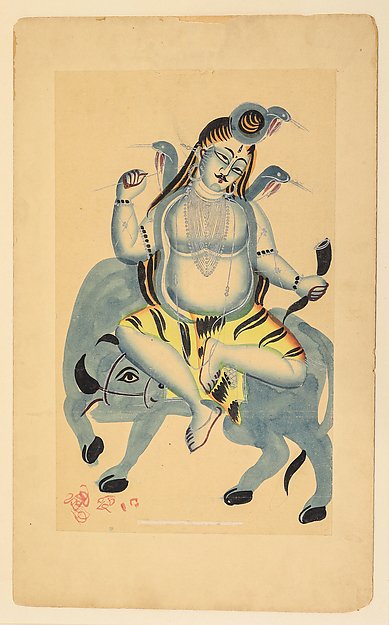
Cristian Violatti, Upanishads, Ancient History Encyclopedia (now World History Encyclopedia), reproduced in ATD World Religions; attribution key (4). Source · CC BY-NC-SA 3.0.
Moksha means “liberation” or release. The eternal cycle of deaths and resurrection can be seen as a pointless repetition with no ultimate goal attached to it. Seeking permanent peace or freedom from suffering seems impossible, for sooner or later we will be reborn in worse circumstances. Moksha is the liberation from this never-ending cycle of reincarnation, a way to escape this repetition. But what would it mean to escape from this cycle? What is it that awaits the soul that manages to be released from samsara? To answer this question we need to look into the concept of atman and Brahman.
John Mack and Jody L Ondich, Hinduism, as adapted in Tim McKenzie, ed., World Religions. Source · CC BY-NC-SA 4.0.
Hinduism provides a number of paths out of samsara. One can renounce the world, limiting one’s actions in it, and thereby curtailing the results. A person can also surrender to God. Meditation and ritual action are other means some Hindus pursue in order to escape the binds of samsara.
A favorable rebirth remains within samsara. Moksha concerns release from the cycle itself. The account below presents one influential explanation of liberation; Hindu schools disagree about its nature.
2.7 Atman and Brahman: the self and ultimate reality
Atman concerns the self; Brahman concerns ultimate reality. The following selection presents a nondual account of their relationship. Other Hindu schools distinguish the individual self from the supreme divine being.
Cristian Violatti, Upanishads, Ancient History Encyclopedia (now World History Encyclopedia), reproduced in ATD World Religions; attribution key (4). Source · CC BY-NC-SA 3.0.
The Upanishads tell us that the core of our own self is not the body, or the mind, but atman or “ Self ”. Atman is the core of all creatures, their innermost essence. It can only be perceived by direct experience through meditation. It is when we are at the deepest level of our existence.
Brahman is the one underlying substance of the universe, the unchanging “ Absolute Being ”, the intangible essence of the entire existence. It is the undying and unchanging seed that creates and sustains everything. It is beyond all description and intellectual understanding.
One of the great insights of the Upanishads is that atman and Brahman are made of the same substance. When a person achieves moksha or liberation, atman returns to Brahman, to the source, like a drop of water returning to the ocean. The Upanishads claim that it is an illusion that we are all separate: with this realization we can be freed from ego, from reincarnation and from the suffering we experience during our existence. Moksha, in a sense, means to be reabsorbed into Brahman, into the great World Soul. (4)
There are many ways according to the Upanishads: Meditation, introspection, and also from the knowledge that behind all forms and veils the subjective and objective are One, that we are all part of the Whole. In general, the Upanishads agree on the idea that men are naturally ignorant about the ultimate identity between atman, the self within, and Brahman. One of the goals of meditation is to achieve this identification with Brahman, and abandon the ignorance that arises from the identification with the illusory or quasi-illusory nature of the common sense world. (4)
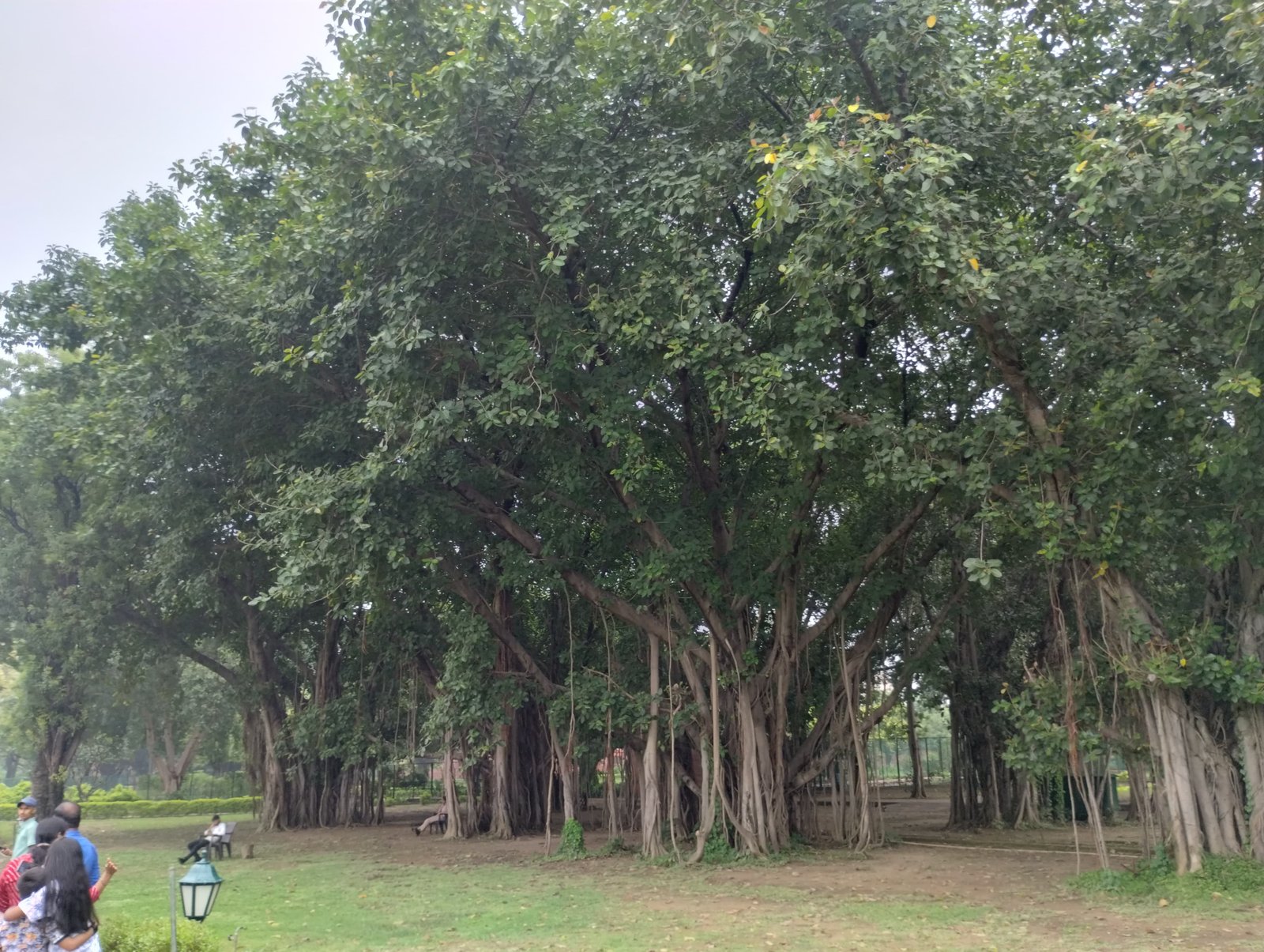
In the primary reader, a father teaches through a seed and salt dissolved in water. Each example moves from something visible to a claim about what cannot be seen. The analogy is part of the argument, and can be examined on those terms. primary readings
2.8 Four aims of a human life
The four aims include ethical responsibility, material prosperity, pleasure and liberation. They recognize household concerns while also raising the question of release from rebirth.
Jody L Ondich, World Religions: the Spirit Searching, Hinduism. Source · CC BY-NC-SA 4.0.
According to Hinduism, the meaning (purpose) of life is four-fold: to achieve Dharma, Artha, Kama, and Moksha.
The second meaning of life according to Hinduism is Artha, which refers to the pursuit of wealth and prosperity in one’s life. Importantly, one must stay within the bounds of dharma while pursuing this wealth and prosperity (i.e. one must not step outside moral and ethical grounds in order to do so). So it is considered good to prosper, but not at the expense of others.
The third purpose of a Hindu’s life is to seek Kama. In simple terms, Kama can be defined as obtaining enjoyment from life. Again, this is not to be done at the expense of others, but it is considered a good thing in life to have joy and pleasure.
The fourth and final meaning of life according to Hinduism is Moksha, enlightenment. By far the most difficult meaning of life to achieve, Moksha may take an individual just one lifetime to accomplish (rarely) or it may take several. However, it is considered the most important meaning of life and offers such rewards as liberation from reincarnation, self-realization, enlightenment, or unity with God. Often, in human lives, people focus on this goal as elders. As a young person, the other goals may be more important, or more demanding.
Artha and kama are commonly understood as pursuits governed by dharma. Moksha concerns liberation. These aims can place different demands on a householder and a renouncer.
Try the four aims as questions
- Dharma: What is the responsible thing to do in this relationship or situation?
- Artha: What resources support a secure and effective life?
- Kama: What forms of pleasure, love, and enjoyment enrich life?
- Moksha: What would freedom from bondage and rebirth mean?
These questions introduce a framework; they do not prescribe one identical life for every Hindu.
2.9 Different paths, overlapping commitments
Yoga here means a disciplined path, extending beyond physical postures. This table is an editorial orientation; Hindu texts do not all organize the paths identically.
| Path | Emphasis | A question to pursue |
|---|---|---|
| Jnana | Knowledge, discernment, and inquiry into reality and self. | What kind of ignorance binds a person? |
| Karma | Action and the way a person relates to its results. | How can work become a discipline rather than a source of attachment? |
| Bhakti | Loving devotion and relationship with the divine. | How can love transform the one who practices it? |
| Meditative discipline | Training attention and cultivating concentration. | How are habits of mind involved in liberation? |
Study, devotion, work, and meditation may support one another. We will return to bhakti through particular deities in Chapter 3 and to disciplined action in the Bhagavad Gita in Chapter 4.
Householders and renouncers
Householders maintain family and social obligations; renouncers withdraw from many ordinary attachments. The classical ashrama model names student, householder, forest-dweller, and renouncer stages. It is a normative model with a particular social history, not a biography that every Hindu follows.
2.10 Social life: varna, jati, and inequality
Duty has been understood within unequal institutions and has also become a subject of criticism. Varna and jati help us avoid treating caste as a simple four-part diagram.
Jody L Ondich, World Religions: the Spirit Searching, Hinduism. Source · CC BY-NC-SA 4.0.
Varna is a term that literally means type, order, or class and it groups people into classes, a structure that was first used in Vedic times. The four classes were the Brahmins (priestly people), the Kshatriyas (rulers, administrators and warriors), the Vaishyas (artisans, merchants, tradesmen and farmers), and Shudras (laboring classes). It had an additional category, identifying people beyond societal status, considered the untouchables.
Jati is a term used in India to refer to a person’s lineage and kinship group. Indians identify themselves by the community they belong to and these jati are sub-groups of specific castes. The status of the jati one is born into is still a factor in marriage selection, even though the strict isolation of caste in India is softening. Each jati, or subgroup of a caste level, has a set of jobs common to their position, but this can change with effort on the part of the community. Jatis are much less obvious in their caste associations than was previously thought.
Article 17 of India’s Constitution abolishes untouchability. The Constitution came into force in 1950. Discrimination persisted despite the prohibition, and Dalit movements have challenged both inherited practices and failures to enforce legal rights. Article 17 · Library of Congress interview on Dalit movements
2.11 Religious life in particular places
John Mack and Jody L Ondich, Hinduism, as adapted in Tim McKenzie, ed., World Religions. Source · CC BY-NC-SA 4.0.
Hinduism is deeply rooted in Indian history and geography, with its holy sites and temples intricately connected to the country’s rich cultural heritage. Thousands of Hindu temples dot the Indian landscape, from rural villages to bustling cities, and alongside rivers and roadways. These temples are not only places of worship but also testaments to India’s architectural and artistic prowess.

The historical photograph shows a particular temple and its surroundings. It records the site at one moment; accounts of worship are needed to explain what people did there.
Traditions on the move
Migrants establish temples, teach children and arrange festivals in new settings. Decisions about language and leadership can change relationships within a community.
Hindu traditions in social and historical context
Historical layers and living change
Om, also written Aum, is a sacred syllable used in recitation, meditation, and written symbolism. It directs attention to the religious significance of sound, not just to a visual emblem. The swastika is another ancient auspicious sign used in Hindu, Buddhist, and Jain contexts. Its sacred histories long precede the Nazi appropriation of a related form. Interpretation requires attention to the setting, community, and history of use rather than assuming every occurrence has one meaning. Historical reference: United States Holocaust Memorial Museum.
Vedic sacrifice, Upanishadic inquiry, epic narratives, temple worship and regional devotional traditions overlap. Later forms did not simply replace earlier ones. The Puranas connect divine stories with sacred places, ritual and accounts of the cosmos.
Bhakti, or devotion, brought intimate relationships with divine figures into poetry, song, pilgrimage, and community life in many languages. Devotional movements could challenge barriers to religious participation, but no single statement about bhakti describes every community's social arrangements. Philosophical teaching continued alongside these practices. Yoga, Vedanta, and devotional traditions also developed through commentaries, institutions, and relationships between teachers and students.
Colonial rule, Christian missions, print, new educational institutions, and debates about social reform generated further reinterpretations. Rammohun Roy and the Brahmo Samaj advocated a reformist religious vision and challenged practices such as sati, the burning of a widow on her husband's funeral pyre. Ramakrishna became known for intense devotional experience; his disciple Vivekananda presented Vedanta to international audiences and connected religious life with service. These figures did not speak for all Hindus, but they help explain why modern Hinduism includes both continuity and deliberate reform. Roy; Ramakrishna; Vivekananda.
Mohandas Gandhi made religious discipline part of a struggle against colonial domination. His practice of nonviolent action drew on Hindu resources while engaging other traditions. B. R. Ambedkar, a major critic of caste oppression, challenged the social order from a different position and eventually embraced Buddhism with many followers. These differing paths matter: religious identity, social equality, and political freedom have been debated rather than settled by one uncontested Hindu response.
Independence and Partition in 1947 also brought the relationship between religion, national belonging, and minority communities into painful focus. Hindu religious life cannot be equated with a single political position. Devotional institutions, reformers, nationalists, secular critics, and families have offered different accounts of how religious commitments should relate to public life.
Varna, jati, and the difference between a rule and a life
The four-varna scheme names Brahmins, Kshatriyas, Vaishyas, and Shudras. It offers a normative ordering of priestly, governing and martial, productive and commercial, and serving occupations. Actual social relations involve many jatis, communities connected with descent, marriage, occupation, locality, and status. Varna and jati should not be treated as two names for an identical four-part arrangement. Dalit communities have historically faced forms of exclusion that cannot be captured simply by adding a fifth box to that model.
Stages of life and women's lives
The ashrama ideal distinguishes a student devoted to learning and discipline; a householder responsible for family, livelihood, hospitality, and offerings; a forest-dweller withdrawing from household management; and a renouncer seeking liberation beyond ordinary possessions and status. In classical formulations this model especially concerned men from particular social groups. It is not a schedule that every Hindu person follows, and traditions differ over the relationship between renunciation and household life.
Women's lives cannot be inferred from male life-stage prescriptions alone. Women sustain household observances, transmit stories and songs, support temples, undertake vows and pilgrimages, teach, lead, and interpret their traditions. At the same time, rules and institutions have restricted women's choices in different ways. Devotion to a powerful Goddess does not by itself establish social equality. Female devotional poets such as Andal and Mirabai illustrate religious voices that do not fit an account limited to male teachers and legal prescriptions. Scholarly orientation: Women in Hinduism.
A sari, a forehead mark or a vegetarian meal can carry religious meanings without identifying every Hindu. Their significance depends on the person, occasion and community.
Hindu life beyond India
Hindu traditions have long histories in Nepal, Sri Lanka and other South Asian settings. Colonial systems of indentured labor carried communities to Africa, the Caribbean, the Indian Ocean and the Pacific. Temples, festivals and household observances developed in those places under changed conditions.
In North America, Vivekananda's appearance at the 1893 Parliament of Religions and Vedanta institutions formed one channel of encounter. Teachers of yoga and devotion provided others. Immigration changes in the 1960s enabled larger South Asian communities to establish durable networks of temples, associations, and educational programs. A temple may bring together traditions that would have separate institutions in South Asia, while later generations negotiate language, marriage, public representation, and belonging. Background: Pluralism Project, Hinduism.
2.12 Preparing for Hindu deities, epics, and practice

Chapter 3 examines Hindu Deities. Keep three similar-looking words distinct: Brahman concerns ultimate reality, Brahma names a deity, and Brahmin is associated with priestly status.
Chapter 4 follows dharma, devotion and disciplined action through the epics, rituals and festivals.
2.13 Review and discussion
- A definition under pressure. Explain why a single founder, text, or belief statement is an insufficient introduction to Hindu traditions. Use two specific selections from this chapter.
- Concept map. Connect dharma, karma, samsara, and moksha in four sentences. Explain one difference between a favorable rebirth and liberation.
- One interpretation among others. What does the drop-and-ocean analogy explain about self and ultimate reality? Why should it not be treated as the only Hindu account?
- A human dilemma. Imagine a student balancing family responsibilities, a career, pleasure, and spiritual study. Use the four aims to frame questions about that situation without assuming there is one automatic answer.
- Social models and lives. Distinguish varna from jati. What additional evidence would you need to investigate how an inherited status affects a person?
- Read a primary source. Complete the separate primary readings. Compare the questioning voice of the creation hymn with the teaching method in the seed and salt examples.
- Look carefully. Make two observations about the temple photograph and identify two questions it cannot answer. Explain why its date matters.
2.14 Working vocabulary
Transliteration varies: atman/ātman, samsara/saṃsāra, moksha/mokṣa and jnana/jñāna are examples.
- Veda
- Knowledge or sacred wisdom; the four Vedic collections and, in a broader usage, their associated literature.
- Upanishads
- Texts of inquiry and teaching within Vedic literature, important to later debates about self and ultimate reality.
- Shruti / smriti
- What is heard / what is remembered: categories associated with different kinds of textual authority.
- Dharma
- Order, duty, ethics, law, or a way of life, with meaning determined by context.
- Karma
- Action and its consequences; a concept with different elaborations across Indian traditions.
- Samsara
- The recurring cycle of birth and death.
- Moksha
- Liberation from bondage and the cycle of rebirth.
- Atman
- The self, especially the enduring or deepest self in the teachings considered here.
- Brahman
- Ultimate reality; its relation to the self and the world is a subject of philosophical disagreement.
- Artha / kama
- Material prosperity and practical success / pleasure, enjoyment, or desire.
- Yoga
- A discipline or path; its meanings extend beyond physical postures.
- Bhakti
- Loving devotion, often directed toward a personal deity.
- Varna / jati
- A fourfold social classification / an inherited social community; related but not identical categories.
- Guru
- A teacher or spiritual guide; the nature of the relationship depends on the tradition.
Primary readings
Read the primary texts for Chapter 2. This separate page contains the assigned passages, translation credits and reading questions.