CA-ROTEL World Religions
Chapter 14: Islam: Leadership, Schisms and Misconceptions
On this page — 16 sections
- 1. Who could lead after Muhammad?
- 2. Civil war, dynasty and the memory of Karbala
- 3. Sunni, Shi‘a and other Muslim communities
- 4. Scholars, teachers and the interpretation of law
- 5. Sufism: remembrance, discipline and love
- 6. Rule, learning and the spread of Islam
- 7. Reform, colonialism and modern political movements
- 8. Jihad, warfare and the misuse of scripture
- 9. Women, family and contested interpretations
- 10. God, art and the boundaries of reverence
- 11. Muslims around the world
- 12. Muslim life in the United States
- 13. Questions that lead beyond stereotypes
- 14. A chronology of leadership and change
- 15. Primary readings and questions
- Primary readings
1. Who could lead after Muhammad?
Ann Kordas, Ryan J. Lynch, Brooke Nelson and Julie Tatlock / OpenStax. World History, Volume 1, §11-2 The Arab-Islamic Conquests and the First Islamic States. Source · CC BY-NC-SA 4.0.
When Muhammad died in 632 CE, members of the early Muslim ummah needed to immediately answer several important questions. Who was capable of now leading the community, of following in the footsteps of a leader who claimed prophecy—the ability to communicate with God—when none of those who remained could do so? Another critical question was about the survival of the community: what, exactly, had Muhammad accomplished by uniting the Arab tribes, and where would they go from here? The first few years following Muhammad’s death tested the community’s resolve while its members sought to articulate what made this moment in their history unique.
Arab tribes had come together for a common cause in the pre-Islamic period, such as a war against another tribe or recognition of the strength of a chieftain. But once that cause had been accomplished or that chieftain had died, the confederacy typically disbanded, its purpose fulfilled. In the wake of Muhammad’s death, at least some Arab tribes likewise believed the community’s purpose had been completed. His accomplishment in bringing people together under the banner of Islam was not one the surviving leaders of the community intended to be temporary, however.
Muhammad’s death in 632 created a problem of political leadership and religious authority. It did not mean that Muslims expected another prophet to replace him. For the major Muslim traditions discussed here, Muhammad is the final prophet. The dispute concerned who should guide the community, how that person should be recognized and what kind of authority succession carried.
Sunni and Shi‘a accounts differ over whether Muhammad designated Ali. Shi‘a readings of the declaration at Ghadir Khumm establish Ali’s special authority; Sunni readings do not treat it as an exclusive hereditary right to govern. The designation is part of the dispute, not a premise that both traditions share.
Ann Kordas, Ryan J. Lynch, Brooke Nelson and Julie Tatlock / OpenStax. World History, Volume 1, §11-2 The Arab-Islamic Conquests and the First Islamic States. Source · CC BY-NC-SA 4.0.
Members of the community had concerns about their own standing. Some were the earliest converts who had joined Muhammad when he was still in Mecca, some had welcomed his community in Medina when they needed shelter, and still others had not converted until shortly before Muhammad’s death. In the end, Abu Bakr was chosen to be the first successor to Muhammad, the caliph or religious and political leader of the Muslim community. This was accomplished through popular acclamation by tribal leaders, who ultimately won out over those who favored the lineage of Ali. Islam had weathered this first hurdle, although the question of leadership had longer-term implications for the unity of the ummah.
Abu Bakr became the first caliph, or successor in leadership. Selection involved prominent participants in the early community, not a modern election of all Muslims. Umar succeeded him in 634, Uthman in 644 and Ali in 656. Sunni tradition honors these four as the Rashidun, the rightly guided caliphs. Shi‘a Muslims accord Ali a distinctive status as the first Imam and do not accept the first three caliphs’ claims in the same way.
| Leader | Period and significance |
|---|---|
| Abu Bakr | 632–634; consolidated the community during the Ridda conflicts. |
| Umar | 634–644; major expansion into Byzantine and Sasanian territories. |
| Uthman | 644–656; associated with standardization of the Qur’anic text; killed amid opposition. |
| Ali | 656–661; faced civil war and rival claims to leadership; revered throughout Islam and central to Shi‘a understandings of authority. |
Abu Bakr’s campaigns, often called the Ridda Wars, involved tribes whose allegiance, obligations and religious commitments were contested. The early caliphs then led a state expanding beyond Arabia. Political survival, military power, taxation and religious claims became intertwined. The modern distinction between a purely private religion and an entirely separate state does not describe these institutions well.
2. Civil war, dynasty and the memory of Karbala
Ann Kordas, Ryan J. Lynch, Brooke Nelson and Julie Tatlock / OpenStax. World History, Volume 1, §11-2 The Arab-Islamic Conquests and the First Islamic States. Source · CC BY-NC-SA 4.0.
The rule of the “rightly guided,” despite their name, did not escape challenge and controversy. The reign of the fourth caliph, Ali ibn Abi Talib, resulted in the first Islamic civil war, which proved devastating for the long-term unity of the new religion. The war was fought over the murder of the third caliph, Uthman, in 656, and his successor’s inability to bring the killers and their collaborators to justice. Uthman’s family—the tribe of Umayya—rose to resist Ali’s claim to the caliphate. It was a conflict that deeply wounded the unity of the Islamic world and saw many early family members and supporters of Muhammad take up arms against one another. For example, Aisha played a leading role in opposing Ali at the Battle of the Camel at the outset of the civil war. The eventual murder of Ali in 661 deepened the divide between his supporters and other Muslims.
Ali’s opponents included Mu‘awiya, the powerful governor of Syria and a relative of Uthman. Arbitration after the battle of Siffin in 657 provoked a break with some of Ali’s own supporters, later called Kharijites. Ali was killed in 661 by an attacker associated with that movement. These events produced competing memories of legitimate authority, justice and compromise. They did not instantly create every later Sunni or Shi‘a doctrine.
Ann Kordas, Ryan J. Lynch, Brooke Nelson and Julie Tatlock / OpenStax. World History, Volume 1, §11-2 The Arab-Islamic Conquests and the First Islamic States. Source · CC BY-NC-SA 4.0.
With Ali’s death, the Umayyads, led by Mu‘awiya ibn Abi Sufyan, established Islam’s first hereditary dynasty. Moving the capital of their state from the Prophet’s city of Medina to the Syrian city of Damascus, they became a major imperial power in the region while beginning to articulate what made Islam different from other religious traditions in the region.
Mu‘awiya’s son Yazid succeeded him. Husayn, son of Ali and Fatima and grandson of Muhammad, refused allegiance. In 680, forces of the Umayyad regime killed Husayn and a small group of relatives and supporters at Karbala. Shi‘a remembrance understands their deaths as a witness against oppression.
Ann Kordas, Ryan J. Lynch, Brooke Nelson and Julie Tatlock / OpenStax. World History, Volume 1, §11-3 Islamization and Religious Rule under Islam. Source · CC BY-NC-SA 4.0.
Tensions between the two groups continued to escalate through the first Islamic civil war, fought between the caliph Ali and the Umayyad ruler Mu‘awiya, and escalated with the massacre of a large portion of Muhammad’s family, including his grandson Husayn ibn Ali, at Karbala as the second Islamic civil war was beginning. The commemoration of these events in the early Islamic period remains a major feature of the denominations of Shia Islam. The Shia came to revere the family of the Prophet, seeing in them a role beyond providing a new caliph. They believe members of Muhammad’s family transmit divine knowledge, charisma, and authority, and they afford certain of them the title of imam, signifying the religious leader of the community of Muslims. At the center of this focus on the Prophet’s family in the faith’s earliest century was the lineage of Muhammad through his daughter Fatima, the wife of Ali, and her children, who included Husayn.
Ashura, the tenth day of Muharram, is a central occasion of Shi‘a mourning. Sermons, poetry, processions, dramatic representations, acts of charity and visits to shrines can convey the story across generations. Some participants practice bodily mourning, but bloodletting does not define the observance and is rejected by many Shi‘a authorities. The annual remembrance can give language to later struggles against injustice. Its political uses vary and should not be projected backward as if all later conflicts were present at Karbala.
Sunnis also revere the Prophet’s family, and Husayn’s death is not celebrated as a Sunni victory. Many Sunnis observe Ashura through fasting associated with traditions about Moses and deliverance. Communities can share reverence while assigning different ritual and theological significance to the same date. The clay tablet used by some Shi‘a Muslims during prostration is a surface on which the forehead rests; it is not an object they worship.
3. Sunni, Shi‘a and other Muslim communities
Ann Kordas, Ryan J. Lynch, Brooke Nelson and Julie Tatlock / OpenStax. World History, Volume 1, §11-3 Islamization and Religious Rule under Islam. Source · CC BY-NC-SA 4.0.
The catalyst for the formation of denominations within Islam was a growing divide between the groups now known as the Sunni and the Shia (sometimes written as Shi‘ite), the two primary “umbrella sects” within Islam. The Sunni take their name from the sunna or customs of the Islamic prophet Muhammad. Adherents follow a canonized, common form of the hadith and interpretation of the Quran, although different schools of law exist that provide variable interpretation and guidance to the religious faithful. Today the largest group of Muslims around the world, the Sunni also came to be identified as those who accepted the decision, following Muhammad’s death, that the first leader of the community would be his father-in-law Abu Bakr rather than his son-in-law Ali. The Shia derive their name from the Arabic phrase Shiat Ali or “the followers of Ali,” who eventually became the fourth caliph. They began as those who believed in the claim by Ali and the Prophet’s family that Ali had been designated the new leader of the Muslim community following Muhammad’s death.
Sunni Islam is the largest Muslim tradition. Its internal diversity includes schools of law, theological approaches, Sufi orders and modern reform movements. “Sunni” does not mean that every Sunni agrees on law or politics. Shi‘a Islam similarly includes several communities with different lines of Imams and understandings of their authority. Calling Islam a religion of two completely uniform camps misses both the common ground and the differences within each.
| Community | A central distinction |
|---|---|
| Twelver Shi‘a | Recognizes a line of twelve Imams. The twelfth Imam is understood to be in occultation, hidden from ordinary public access, and expected to return as the Mahdi. |
| Ismaili Shi‘a | Developed along different lines of succession after Ja‘far al-Sadiq. Nizari Ismailis recognize a continuing line of living Imams known in modern times by the title Aga Khan; other Ismaili communities organize authority differently. |
| Zaydi Shi‘a | Associated especially with Yemen. Its account of the Imamate differs from Twelver and Ismaili teaching, including the qualifications and recognition of an Imam. |
| Ibadi | A distinct tradition with important communities in Oman and North Africa. It should not be forced into a Sunni/Shi‘a binary or identified with modern violent movements. |
In Twelver Shi‘a life, learned jurists can serve as authorities whom believers follow in questions of practice. An ayatollah is a title of scholarly standing, not a synonym for an elected president or for “the Muslim pope.” A marja‘ is an authority followed in legal matters. These forms of authority are important, but they do not erase disagreement among jurists or the choices made by laypeople.
The Imamate in Shi‘a theology should also be distinguished from the ordinary use of imam for someone who leads congregational prayer. The same Arabic word has different ranges of meaning. A person who leads a local Sunni prayer service does not thereby claim the status of a divinely designated Imam in Shi‘a belief. Institute of Ismaili Studies: the diversity of Shi‘i studies; Farhad Daftary on Ismaili history.
4. Scholars, teachers and the interpretation of law
Ann Kordas, Ryan J. Lynch, Brooke Nelson and Julie Tatlock / OpenStax. World History, Volume 1, §11-3 Islamization and Religious Rule under Islam. Source · CC BY-NC-SA 4.0.
The role of the caliph as a leader in the Islamic world also began to change dramatically in the Middle Ages. This shift was due not just to the Shia conception of the imam. Rather, as the Abbasids came to power, a religious clerical class also arose within Islam. Known as the ulama (literally “the scholars”), they came to hold an increasingly important role as the interpreters of Islamic law within non-Shia, Sunni Islam during the Abbasid period.
Ann Kordas, Ryan J. Lynch, Brooke Nelson and Julie Tatlock / OpenStax. World History, Volume 1, §11-3 Islamization and Religious Rule under Islam. Source · CC BY-NC-SA 4.0.
Before the Abbasid period, the early caliphs had successfully made a case for being vested with both secular and religious authority, including the ability to interpret the scripture and issue religious proclamations. As the ulama acquired a more prominent role in Abbasid society, however, they claimed more of this power and authority for themselves, diminishing the religious entitlements that earlier caliphs had claimed.
Ulama are religious scholars. The term is used in Sunni and Shi‘a settings, and authority rests on learning without requiring priestly ordination. Teachers, judges, preachers and spiritual guides occupy different roles; their claims can conflict.
John Mack, in Tim McKenzie, ed.. World Religions, Islam. Source · CC BY-NC-SA 4.0.
The imam’s responsibilities include leading prayers, representing the Muslim community in the wider society, teaching the Quran, and offering guidance and counsel to Muslims on important life decisions.
Shari‘a refers to the divinely grounded path of right living. Fiqh is human understanding and articulation of that path through jurisprudence. The distinction matters because a scholar’s interpretation is not simply identical with God’s will. Religious law addresses worship, contracts, marriage, inheritance and personal conduct as well as matters that modern states classify as criminal law. Reducing it to a few punishments gives a misleading account of its scope.
Jurists draw on the Qur’an, prophetic example and methods of interpretation. Sunni traditions commonly discuss consensus, ijma‘, and analogical reasoning, qiyas, alongside scripture and sunna. The four enduring Sunni schools are Hanafi, Maliki, Shafi‘i and Hanbali. They are schools of jurisprudence, not four separate religions. Shi‘a jurisprudence uses related sources while assigning distinctive authority to the Imams and developing its own methods.
A fatwa is a legal opinion given in response to a question. It can concern worship, finance or family responsibilities, and does not automatically carry the force of a court judgment. A mufti’s qualifications and methods matter to its authority.
Debates over ijtihad, disciplined independent reasoning, and adherence to earlier scholarship concern who can interpret and by what methods. Describing these as an inevitable conflict between thinking people and unthinking tradition misses the training and reasoning within established schools. Modern reformers, traditional scholars, state-appointed officials and activists can all make claims about what faithful interpretation requires.
5. Sufism: remembrance, discipline and love
Wikipedia for Schools, Islam; ATD attribution (45). World Religions, Schools of Islam. Source · CC BY-SA 3.0.
Sufism is a mystical-ascetic approach to Islam that seeks to find divine love and knowledge through direct personal experience of God. By focusing on the more spiritual aspects of religion, Sufis strive to obtain direct experience of God by making use of “intuitive and emotional faculties” that one must be trained to use.
Sufism developed within Sunni and Shi‘a communities. Many Sufi teachers also studied jurisprudence and taught regular religious obligations. Purification, remembrance and spiritual training can accompany those commitments.
A tariqa, or spiritual path/order, can organize training under a guide, often called a shaykh or pir. A chain of teaching links the guide to earlier masters. Dhikr, remembrance of God, may involve repeated divine names, Qur’anic words, silent attention or collective recitation. Some orders use music, poetry or movement, while others do not. The Mevlevi practice of turning, associated with the legacy of Jalal al-Din Rumi, is one particular form, not the activity of all Sufis.
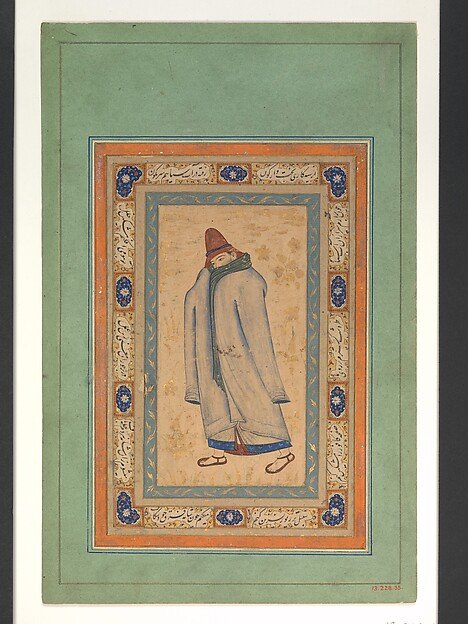
Saintly figures, often called awliya, can be remembered through stories, poetry and visits to tombs. Some Muslims ask for intercession or seek blessing at shrines; others strongly object to such practices as religious innovation or a danger to God’s exclusive claim to worship. Both the devotion and the criticism belong within the history of Islam. Calling every shrine visitor an idolater would adopt one side’s polemic rather than explain the disagreement.
The theologian and jurist al-Ghazali (1058–1111) is an important example of a scholar who connected learned religion to inward discipline. The reader includes the complete chapter on self-examination and remembrance from Claud Field’s short 1909 English version of The Alchemy of Happiness. This historical rendering comes through Hindustani and is not the whole Persian work. Its memorable stories ask whether a person behaves differently when no human observer is present.
Abu Hamid al-Ghazali; Claud Field, translator (1909), from a Hindustani version. The Alchemy of Happiness, chapter VI: Concerning Self-Examination and the Recollection of God. Source · Public-domain historical translation.
We come now to the recollection of God. This consists in a man's remembering that God observes all his acts and thoughts. People only see the outward, while God sees both the outer and the inner man. He who really believes this will have both his outer and inner being well disciplined. If he disbelieve it, he is an infidel, and if, while believing it, he acts contrary to that belief, be is guilty of the grossest. presumption. One day a negro came to the Prophet and said, "O Prophet of God! I have committed much sin. Will my repentance be accepted, or not?" The Prophet said "Yes." Then the negro said, "O Prophet of God, all the time I was committing sin, did God really behold it?" "Yes," was the answer. The negro uttered a cry and fell lifeless. Till a man is thoroughly convinced of the fact that be is always under God's observation it is impossible for him to act rightly.
The relation between fear, love, self-restraint and divine presence is central to this reading. It should not be reduced to an exotic experience of “mysticism” detached from daily conduct. Rumi, Rabia of Basra and many other remembered teachers likewise belong to traditions in which poetry, love and moral training give religious practice emotional force. Their writings and stories have particular Muslim settings even when later readers encounter them in secular anthologies.
6. Rule, learning and the spread of Islam
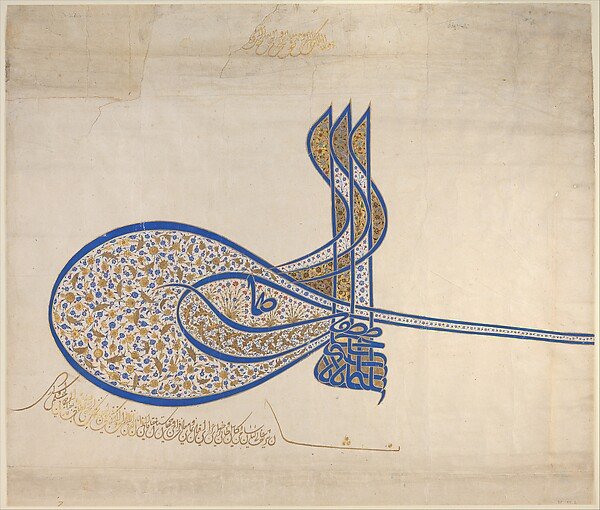
The Umayyads ruled from Damascus until the Abbasid revolution of 750; a branch of the Umayyad family later ruled in al-Andalus. The Abbasids made Baghdad a major center after its foundation in 762. Their claim to rule invoked kinship with the Prophet, but their dynasty should not simply be labeled a Shi‘a government. Different groups who supported the revolution did not share one settled program for succession.
Ann Kordas, Ryan J. Lynch, Brooke Nelson and Julie Tatlock / OpenStax. World History, Volume 1, §11-3 Islamization and Religious Rule under Islam. Source · CC BY-NC-SA 4.0.
The society the early Abbasids created was one of the great marvels of the Middle Ages, and the growth of Baghdad and its courtly culture played a major part in that achievement. But as central as Baghdad was to the advancement and success of the Abbasids, so too were the people who made up their cosmopolitan empire. The early Abbasids strongly supported learning, especially in their capital, and fostered what is now called the Abbasid Translation Movement, or the Greco-Arabic Translation Movement. Few people were literate at this time, but it was an especially important moment in world history thanks to new technology and opportunities that improved access to education and literacy more generally. Especially important was the introduction of Chinese papermaking techniques into the Middle East. These methods allowed for the creation of significantly less expensive books, and the Abbasids’ patronage of scholarly work proved the catalyst for an explosion of medieval learning.
The Abbasids sought to preserve the knowledge of past societies by translating the works of the ancient world into Arabic, especially from Greek and Persian, as the Islamic world transitioned from an oral to a writerly society during the ninth century. Writing and scholarly research were not always well funded in the premodern world, so wealthy patrons, including the caliph himself, provided financial support to scholars capable of completing this work. As a result, the Abbasid elite were able to attract the best and brightest to participate, and a culture of learning grew among the upper echelons of society and especially in Baghdad. Scholars were often native speakers of Greek and Syriac who were generally non-Muslim. The Abbasids’ support of this multicultural and multiethnic community ultimately increased the number of works produced in Arabic during the first centuries of their rule, while at the same time providing exceptional educational opportunities as Islamic schools called madrasas were founded and grew.
The achievements of the translation movement were considerable, preserving many incredibly important astrological, geographic, mathematical, medical, and other scientific and philosophical texts in Arabic at a time when non-Arabic copies had become increasingly rare. These texts included seminal works by the Greek thinkers Aristotle, Dioscorides, Galen, Hippocrates, and Ptolemy that were given advanced study in the Muslim world when their popularity and even availability were extremely limited in the rest of the Mediterranean.
Muslim scholars did more than preserve books for later Europeans. They developed arguments and new work in medicine, mathematics, astronomy, philosophy and other fields. Their institutions included libraries, hospitals, observatories and schools. Muslims, Christians, Jews and others participated in these intellectual worlds, with opportunities and restrictions varying by place and period. “Islamic civilization” can describe a broader cultural setting than the religious identity of every scholar within it.
Ann Kordas, Ryan J. Lynch, Brooke Nelson and Julie Tatlock / OpenStax. World History, Volume 1, §11-3 Islamization and Religious Rule under Islam. Source · CC BY-NC-SA 4.0.
What was it like for Indigenous peoples of captured territories to live under Islamic rule during the Umayyad and Abbasid periods? Perhaps unsurprisingly, the experience was variable, especially considering the size of the empire the Abbasids came to rule. What is surprising is that the majority of these inhabitants were not Muslims themselves.
The largest group belonged to eastern Christian denominations, including Melkites, Jacobites, Copts, and Nestorians, but significant minority populations of Jewish people and Zoroastrians also lived throughout the empire. We have seen that non-Muslims were allowed to keep their religion and continue to live under Islamic rule by paying a special tax. Early on, the Muslims instituted a series of rules to limit the interactions between themselves and non-Muslims, and a later series of regulations regarding religious intermarriage and child-rearing slowly converted more of the population to Islam over time.
Conquest established rule quickly in some regions, while conversion often took generations. Trade, family ties, patrons, scholars and Sufi networks also carried Islam into new settings. These processes were especially important in sub-Saharan Africa and Southeast Asia. Coercion occurred, but cannot explain every region’s conversion.
Jewish, Christian and other protected communities could retain worship and institutions under arrangements commonly described through dhimma. These systems often included a poll tax, jizya, and unequal legal status. Conditions could offer security relative to some contemporary alternatives while still falling short of equal citizenship in a modern sense. Neither “perfect tolerance” nor “unbroken persecution” describes every period of Muslim rule.
After the Mongol conquest of Baghdad in 1258, Muslim political and religious life continued in many centers. Later empires included the predominantly Sunni Ottomans, whose forces took Constantinople in 1453; the Safavids, who established Twelver Shi‘ism in Iran from the early sixteenth century; and the Mughals, who ruled much of South Asia from the sixteenth century. Their histories explain important regional patterns without making political boundaries identical to religious ones. Ottoman government began long before the sixteenth century, and the Safavids did not establish their empire in the thirteenth.
7. Reform, colonialism and modern political movements
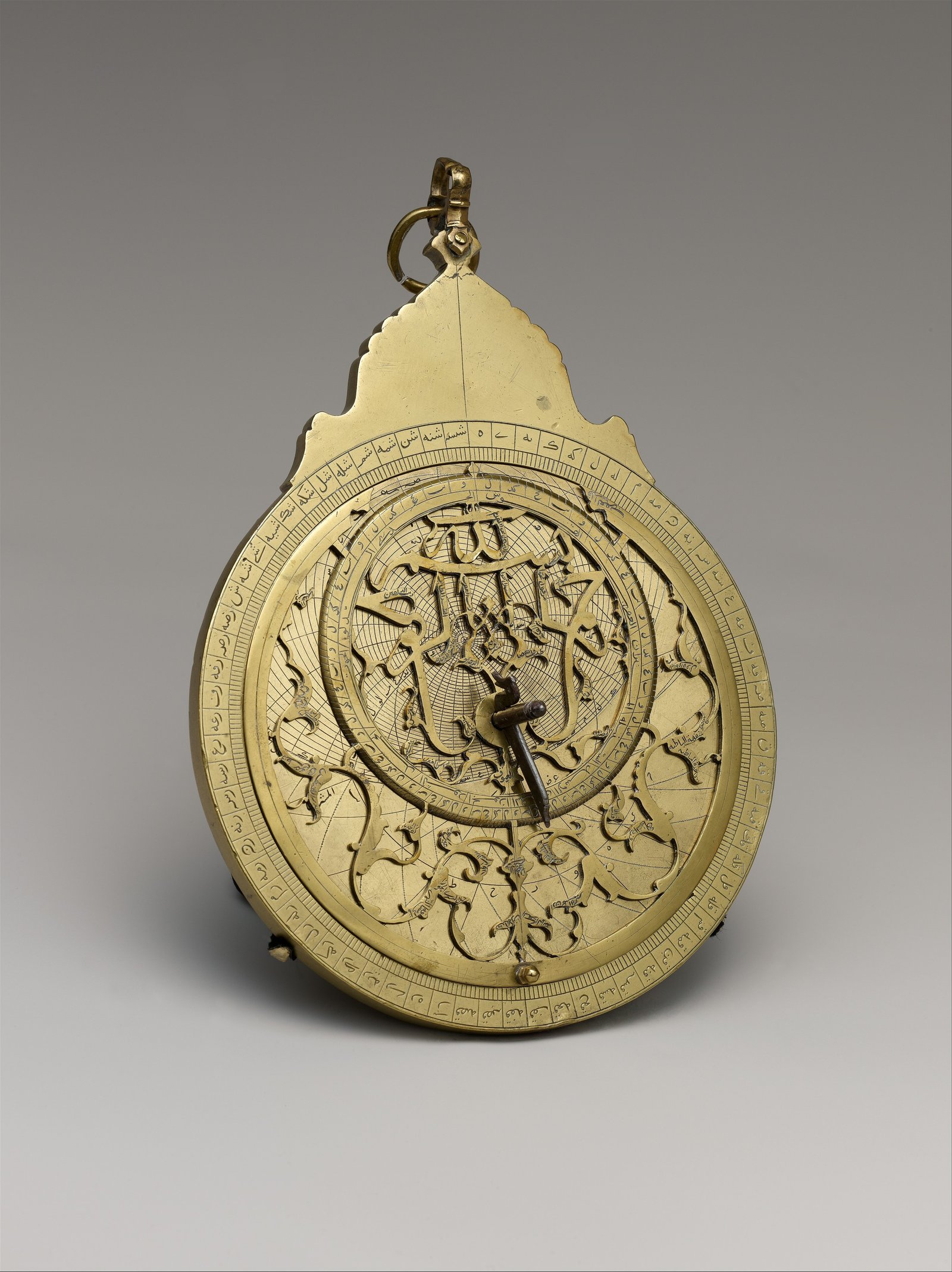
European imperial expansion, changing trade, military pressure, printing, new schools and debates about law transformed Muslim societies. Responses included institutional reform, nationalist independence movements, renewed study of scripture, spiritual revival and criticism of Western domination. A single story of “Islam resisting modernity” cannot account for these different projects, many led by Muslims who valued education and reform.
The Ottoman state undertook major nineteenth-century reforms and collapsed after World War I; the caliphate was abolished in Turkey in 1924. New nation-states adopted different relationships between religion and government. The partition of British India in 1947 created Pakistan and India amid mass displacement and violence; large Muslim communities remained in India. Migration later carried many Muslims to Europe and North America. These histories shape religious identities without determining every believer’s politics.
The eighteenth-century Arabian reformer Muhammad ibn Abd al-Wahhab emphasized exclusive worship of God and opposed practices he understood as innovations or idolatry. His alliance with the Saudi ruling family had enduring consequences. Salafi movements call for a return to the exemplary early generations, but they include different approaches to politics and activism. It is inaccurate to treat all Salafis as terrorists or to describe every conservative Muslim as Salafi.
Islamism commonly refers to modern projects that make Islam a basis for political organization and public order. Such movements vary in aims, institutions and willingness to use elections, coercion or violence. The term is distinct from “Muslim,” which names religious affiliation, and from jihadism, used for militant movements that frame violence as religious struggle. Broad labels require examination of the actual group and its conduct.
Iran’s revolution in 1979 overthrew the shah and established an Islamic republic with a powerful role for senior jurists. The doctrine of guardianship of the jurist, associated with Ayatollah Ruhollah Khomeini, is not accepted in the same form by all Shi‘a scholars. The Iranian state does not speak for every Shi‘a Muslim. Likewise, a government claiming Islamic legitimacy is open to historical and ethical analysis rather than being treated as the inevitable expression of Islam.
8. Jihad, warfare and the misuse of scripture
Jihad means striving or struggle. Depending on context it can refer to moral effort, religious service or armed struggle. Many Muslims distinguish inward struggle against wrongdoing from military activity. The familiar report about returning from a lesser to a greater jihad is not accepted as sound by all hadith scholars. Neither “jihad only means inner peace” nor “jihad simply means holy war” adequately describes its history.
Classical jurists developed rules for warfare, authority, treaties and the treatment of people not fighting. Some theories permitted expansionist war; modern writers often emphasize defense, international agreements and limits on violence. It is therefore inaccurate to claim that every historical Muslim account allowed war only after direct attack. Interpretations changed with political settings, and Muslims have argued about legitimate authority and conduct rather than possessing one timeless manual of war.
Marmaduke Pickthall, translator (1930); digital text: AlQuran Cloud, en.pickthall. The Meaning of the Glorious Koran. Source · Historical translation public domain in the United States (1930 publication; as of 2026).
2:190 Fight in the way of Allah against those who fight against you, but begin not hostilities. Lo! Allah loveth not aggressors.
2:191 And slay them wherever ye find them, and drive them out of the places whence they drove you out, for persecution is worse than slaughter. And fight not with them at the Inviolable Place of Worship until they first attack you there, but if they attack you (there) then slay them. Such is the reward of disbelievers.
2:192 But if they desist, then lo! Allah is Forgiving, Merciful.
2:193 And fight them until persecution is no more, and religion is for Allah. But if they desist, then let there be no hostility except against wrong-doers.
Qur’an 9:5 addresses violence within a passage about treaties and conflict. The reader includes 9:1–15, retaining both restrictions and difficult commands. Interpretation concerns whom the commands address and how later readers extend or limit them.
Qur’an 5:32 is often quoted as a universal affirmation of life. Its wording refers to an ordinance for the Children of Israel, follows the story of two sons of Adam, and includes exceptions. Those features are retained in the reader rather than silently removed. A responsible account can examine the ethical use of the verse while acknowledging its complete wording and the surrounding passage.
Attacks directed at civilians are not made representative of all Muslims because their perpetrators invoke Islam. Muslim victims, opponents and critics of militant violence belong in the account as well. Al-Qaeda and the organization calling itself Islamic State have used selective religious arguments and practices of takfir, declaring others unbelievers, to justify violence. Their claims to authority are widely contested. Naming that contest does not erase the harm they have caused or make criticism of their actions illegitimate.
The Amman Message, launched in 2004, provides one documented effort to affirm shared Muslim standing across recognized schools and to restrict unqualified declarations of apostasy and legal opinions. Its Three Points recognize several Sunni, Shi‘a and other schools while stressing qualifications for issuing fatwas. It is an important statement by participating authorities, not proof that every Muslim has accepted one centralized institution. The Three Points of the Amman Message.
9. Women, family and contested interpretations
Women supported the earliest community, transmitted teachings, endowed institutions and wrote religious works. Khadija, Aisha and Fatima occupy distinct places in Muslim memory. Women’s opportunities changed across regions, classes and periods.
Marmaduke Pickthall, translator (1930); digital text: AlQuran Cloud, en.pickthall. The Meaning of the Glorious Koran. Source · Historical translation public domain in the United States (1930 publication; as of 2026).
33:35 Lo! men who surrender unto Allah, and women who surrender, and men who believe and women who believe, and men who obey and women who obey, and men who speak the truth and women who speak the truth, and men who persevere (in righteousness) and women who persevere, and men who are humble and women who are humble, and men who give alms and women who give alms, and men who fast and women who fast, and men who guard their modesty and women who guard (their modesty), and men who remember Allah much and women who remember - Allah hath prepared for them forgiveness and a vast reward.
The Qur’an addresses spiritual responsibility in terms that include women and men. It also contains rules about marriage, inheritance and household relations that modern readers debate. Traditional law generally recognized women’s property and dower rights while assigning unequal shares and different responsibilities in specified situations. “Women always inherit half as much as men” is too broad: the result depends on the relationship and configuration of heirs. Spiritual equality is not the same claim as identical legal rights in every inherited rule.
Qur’an 4:3 permits up to four wives under conditions of justice; most Muslim marriages are monogamous. Laws in Muslim-majority countries differ, including restrictions or prohibitions on polygyny. Marriage consent, divorce, custody and financial responsibilities involve both scripture and jurisprudence, as well as state law and social power. It is misleading to attribute every inequality to culture alone, as though interpretation and legal institutions played no role. It is equally misleading to make one country’s rules the practice of all Muslims.
The reader includes 4:34 within a longer passage on household responsibilities. Pickthall’s rendering includes an instruction to scourge in a sequence addressing marital conflict. Many traditional interpretations permitted a restricted form of physical discipline; contemporary Muslims argue over the translation, its scope, the Prophet’s example and whether it can authorize any violence against a spouse. Some reject that authorization entirely. The difficulty should be examined directly rather than hidden behind a general claim that every text says exactly what modern readers would wish.
Modesty instructions address men and women in Qur’an 24:30–31. Their interpretation has varied. A hijab commonly means a head covering; a niqab covers the face except the eyes; a chador is a full-body outer garment associated with Iran; forms called burqas cover more of the body and face. The terms describe different garments.
Women may wear a covering as devotion, modesty, family custom, public identity or a combination of reasons. Some experience pressure or state compulsion to cover; others face discrimination or laws restricting their clothing. A person’s clothing alone cannot establish whether she has chosen freely. Muslim feminists and other reformers debate these issues using scripture, history and women’s experience, while disagreeing among themselves about the conclusions.
10. God, art and the boundaries of reverence
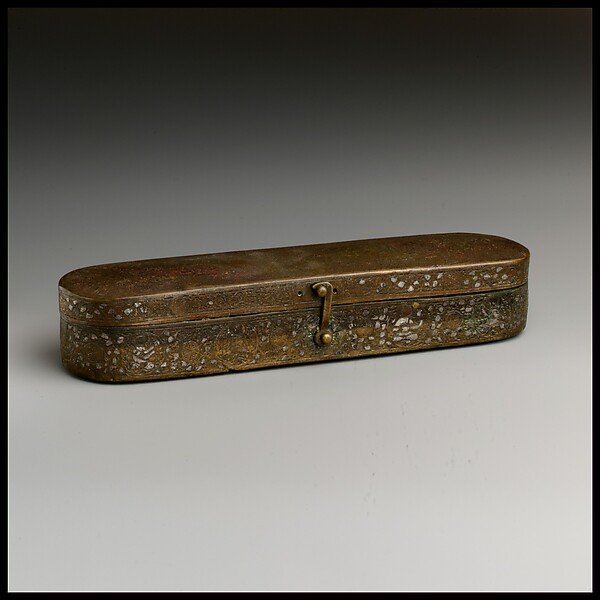
Muslims worship God, not Muhammad. Reverence for the Prophet can include blessings upon him, study of his example, poetry and celebration of his birth, although the last practice is contested. Calling Muslims “Muhammadans” wrongly suggests a relationship parallel to Christian claims about Christ’s divinity. It is an outdated term that appears in some historical sources, not the preferred term of this textbook.
Islamic religious art often emphasizes calligraphy, geometry and vegetal ornament, especially in mosques and Qur’an manuscripts. Many Muslims object strongly to visual depictions of Muhammad. Yet historical Persian, Ottoman and South Asian art also includes human and animal figures, and sometimes depictions of prophets. The painted dervish in this chapter is one example of figurative art in a Muslim setting. Acknowledging that history does not imply that every Muslim accepts the same images or that context has no importance.
Whether a shrine, inscription or image receives honor or worship is often the issue under dispute. A direction of prayer, a saint’s tomb and a Qur’an manuscript do not have the same religious function. Accounts of reverence need to identify the practice and the explanations participants give.
11. Muslims around the world
Pew Research Center’s estimates for 2020, published in 2025, place the worldwide Muslim population at about two billion, or 26% of humanity. About 59% lived in the Asia-Pacific region and 18% in sub-Saharan Africa. Indonesia, Pakistan and India together contained roughly one-third of the world’s Muslims. These dated estimates describe populations, not a single culture or level of observance. Pew: Muslim population change.
A Muslim community in Senegal, Bosnia, India, Indonesia or the United States can share Qur’an and prayer while using different languages, foods, music, clothing and institutions. A Muslim-majority country can contain religious minorities and disagreements among Muslims; a country where Muslims are a minority can contain a large Muslim population. India is an important example of the latter distinction. Geography does not determine whether a person is observant, secular, conservative, reformist or politically active.
Europe’s Muslim communities include older populations in the Balkans and elsewhere as well as migrants and their descendants. Labor recruitment, colonial connections, refuge and family reunion have shaped more recent settlement. Questions about citizenship, employment, religious education and discrimination are therefore part of the story, not simply a supposed encounter between an unchanged Islam and an unchanged Europe. European Muslims belong to Europe’s history and present.
12. Muslim life in the United States
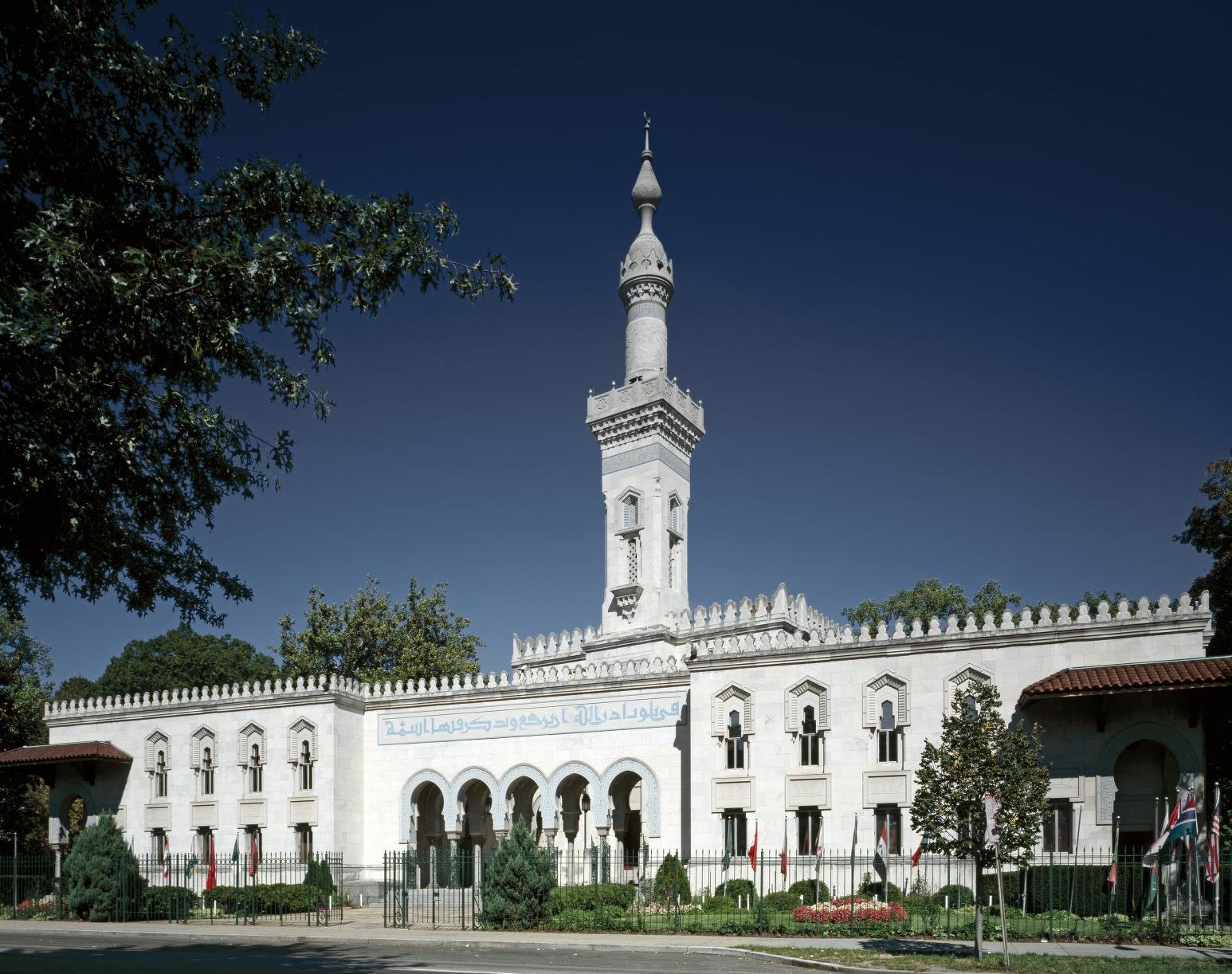
Muslim life in North America includes enslaved West Africans whose religious identities were often suppressed or ignored. The Arabic writings of figures such as Omar ibn Said provide evidence of that history. Later immigration brought Muslims from the Middle East, South Asia, southeastern Europe, Africa and elsewhere. U.S. Muslim history therefore begins earlier than recent immigration or the public attention following September 11, 2001. Library of Congress: Omar Ibn Said Collection.
African American movements gave Islam a distinctive place in struggles over race, dignity and self-determination. The Nation of Islam, associated with Elijah Muhammad, developed teachings that differ substantially from Sunni Islam. Malcolm X’s later turn toward Sunni practice and his pilgrimage to Mecca were important parts of his religious development. After Elijah Muhammad’s death in 1975, Warith Deen Mohammed led many followers toward Sunni Islam; Louis Farrakhan later continued a separate Nation of Islam organization. These histories should not be collapsed into one permanent identity. Islamic Networks Group: Muslims in America.
Mosques, student associations, schools, charities, professional networks and interfaith groups support contemporary Muslim life. Congregations can face ordinary organizational questions—fundraising, leadership, language, youth education and access for women—as well as discrimination. Black American and immigrant experiences intersect but are not identical. Nor does any one public figure represent every American Muslim.
After the attacks of September 11, 2001, Muslims and people mistaken for Muslims faced increased suspicion, harassment and violence. Islamophobia names prejudice, hostility or discriminatory treatment directed at Muslims or those perceived as Muslim. Criticism of a religious doctrine, government or political movement is not automatically prejudice; it becomes discriminatory when it treats people as collectively guilty, inherently dangerous or unfit for equal membership in society. Disagreement and fair treatment can coexist.
13. Questions that lead beyond stereotypes
| Misconception | A more accurate starting point |
|---|---|
| All Muslims are Arabs. | Muslims live across the world, and most are not Arabs. Arab communities also include Christians and other non-Muslims. |
| Islam has one pope or government. | Authority is distributed across institutions, scholars, guides, states and communities. Their claims can conflict. |
| Sunni and Shi‘a are eternal enemies. | Their differences have histories; cooperation, shared life and conflict all require particular explanation. |
| Islam spread only by the sword. | Military rule and conversion are distinct. Conquest, trade, teaching, migration and local choices all mattered. |
| Jihad is simply terrorism. | The word has several uses. Violent movements make contested claims about it; all uses require context. |
| Every practice involving women is either “pure Islam” or “only culture.” | Scripture, interpretation, law, custom and power interact. Women also interpret and change those traditions. |
| A Muslim’s opinions can be inferred from a news event. | Study the person, community, institution and evidence rather than assigning collective responsibility. |
Religious literacy does not require defending every Muslim institution or condemning all of them. It requires accurate description, attention to sources and a willingness to ask which people, which period and which interpretation are being discussed. The same standards used for other religions apply here. They permit examination of achievements, internal criticism, discrimination and wrongdoing without turning a varied tradition into a single caricature.
14. A chronology of leadership and change
| Date | Development |
|---|---|
| 632–661 | The first four caliphs; expansion and conflict over succession. |
| 656–661 | First civil war; Ali’s rule and assassination. |
| 661–750 | Umayyad dynasty centered in Damascus. |
| 680 | Husayn killed at Karbala. |
| 750; 762 | Abbasid revolution; foundation of Baghdad. |
| Ninth century | Major Sunni hadith collections take shape. |
| 1058–1111 | Life of al-Ghazali. |
| 1258 | Mongol conquest of Baghdad. |
| 1453 | Ottoman conquest of Constantinople. |
| Sixteenth century | Safavid rule establishes Twelver Shi‘ism in Iran; Mughal rule begins in South Asia. |
| 1924 | Ottoman caliphate abolished in Turkey. |
| 1947 | Partition of British India; creation of Pakistan. |
| 1979 | Iranian Revolution. |
| 2001 | September 11 attacks and intensified public scrutiny of Muslim communities. |
| 2004 onward | Amman Message initiative on shared Muslim standing and religious authority. |
15. Primary readings and questions
The primary reader brings ethical, legal and spiritual texts together. Read the longer Qur’anic sequences with their stated boundaries, then compare them with al-Ghazali’s account of self-examination. These texts do not all have the same genre, date or authority.
- How do Sunni and Shi‘a accounts of succession differ, and why should the textbook identify the disagreement?
- What gives Karbala continuing religious meaning beyond the details of a battle?
- Distinguish caliph, prayer leader, Shi‘a Imam, scholar, judge and mufti.
- Why is fiqh a human activity even when its practitioners understand shari‘a as divine?
- How does al-Ghazali connect unseen intention with visible conduct?
- Identify the distinctions needed to evaluate a claim that Islam spread through conquest.
- Read 9:1–15. What difference do the surrounding verses make to interpretation of 9:5?
- Compare 4:19–35, 24:27–35 and 33:35. What issues do they raise, and what further interpretive evidence would be needed?
- Why can neither the Iranian government nor the Nation of Islam represent every Muslim?
- Choose one misconception in the table and explain which evidence could correct it.
Primary readings
Read the primary texts for Chapter 14. This separate page contains the assigned passages, translation credits and reading questions.