CA-ROTEL World Religions
Chapter 10: Modern Judaism
On this page — 16 sections
- 1. Jewish life in a changing world
- 2. From minority communities to emancipation
- 3. Religious movements and their differences
- 4. Antisemitism, the Holocaust and survival
- 5. Zionism, Israel and Jewish life across borders
- 6. Communities, identity and North American life
- 7. The synagogue: prayer, Torah and community
- 8. Shabbat: making time holy
- 9. The year: remembrance, repentance and celebration
- 10. Passover: telling the story at home
- 11. Kashrut, purity and daily choices
- 12. Birth, coming of age and marriage
- 13. Death, mourning and continuing bonds
- 14. Religious obligation and contemporary ethical life
- 15. Primary readings and discussion
- Primary readings
1. Jewish life in a changing world
A Jewish family might welcome Shabbat with candles and a meal, attend synagogue for the High Holy Days, volunteer through a community organization, and argue about politics with relatives who share its traditions. Another household might keep a fully kosher kitchen and organize each week around prayer and religious study. A third might describe its Jewish identity mainly through family, language, history and culture. Modern Judaism includes these different ways of belonging, alongside strong disagreements over what Jewish life requires.
Chapter 9 introduced covenant, Torah and rabbinic teaching. This chapter follows emancipation, migration and persecution, then turns to worship and household observance. Modern movements differ over authority and obligation; their names do not measure how much religion an individual has.
Jewish communities have never been confined to one region. Ashkenazi traditions developed especially in central and eastern Europe; Sephardi traditions have roots in the Iberian Peninsula and communities formed after the Spanish and Portuguese expulsions and forced conversions. Mizrahi is a broad modern designation for Jews from Middle Eastern and related settings. These categories overlap with one another and do not replace Ethiopian, Yemenite, Indian and other Jewish histories. Hebrew, Aramaic, Yiddish, Ladino and local languages have carried different parts of Jewish communal life.
2. From minority communities to emancipation
Jewish life under Christian and Muslim rule included periods of protection and intellectual exchange, as well as legal restrictions, forced conversion, expulsion and massacre. Conditions changed with rulers, regions and centuries. General descriptions need to be tested against particular communities.
Medieval Spain became an important center of Jewish poetry, biblical interpretation, philosophy and law. Expulsion from Spain in 1492 and forced conversions in Portugal in the 1490s transformed Sephardi life. Communities developed around the Mediterranean, including the Ottoman Empire, as well as farther afield. In central and eastern Europe, Jewish learning and communal institutions developed in their own languages and political settings. Religious creativity continued alongside insecurity.
Wikipedia for Schools; reproduced by Florida State College at Jacksonville / Lumen Learning. World Religions, The Enlightenment and Holocaust; attribution key (35). Source · CC BY-SA 3.0.
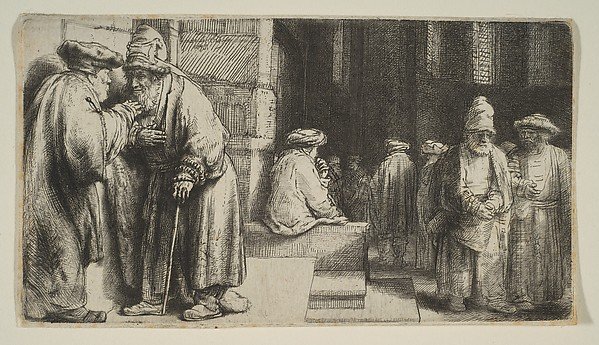
In the late 18th century CE, Europe was swept by a group of intellectual, social and political movements known as the Enlightenment . The Enlightenment led to reductions in the European laws that prohibited Jews to interact with the wider secular world, thus allowing Jews access to secular education and experience. A parallel Jewish movement, Haskalah or the ” Jewish Enlightenment ” began, especially in Central Europe and Western Europe, in response to both the Enlightenment and these new freedoms. It placed an emphasis on integration with secular society and a pursuit of non-religious knowledge through reason.
Emancipation meant gaining civil rights that had previously been restricted on religious grounds. France granted Jews equal citizenship in 1791; other countries followed different and uneven paths. Access to universities, professions and public office opened new possibilities. It also raised questions: which inherited institutions remained binding, how should a synagogue sound, and could someone participate fully in national life while maintaining a distinct Jewish way of life?
The philosopher Moses Mendelssohn became an important figure in arguments that Jewish observance and participation in a wider intellectual world could coexist. Other Jews embraced secular education, political movements or new forms of religious practice. Change did not always mean abandoning Judaism, and preserving religious law did not necessarily mean refusing every feature of modern life.
3. Religious movements and their differences
Wikipedia for Schools; reproduced by Florida State College at Jacksonville / Lumen Learning. World Religions, The Enlightenment and Holocaust; attribution key (35). Source · CC BY-SA 3.0.
In Central Europe, followed by Great Britain and the United States, Reform Judaism and Liberal Judaism developed, relaxing legal obligations (especially those that limited Jewish relations with non-Jews), emulating Protestant decorum in prayer, and emphasizing the ethical values of Judaism’s Prophetic tradition.
Reform Judaism developed in nineteenth-century Europe and became especially influential in North America. Reformers changed aspects of liturgy, language and synagogue organization, and emphasized the ethical demands of the prophets. Their views of ritual changed over time. The 1885 Pittsburgh Platform sharply distinguished binding moral teachings from ceremonies its authors considered outdated. The full declaration is in the reader. Its language of progress and civilization expresses a particular historical outlook, not a neutral description of all Judaism.
Reform rabbis meeting in Pittsburgh, November 1885. Declaration of Principles: the Pittsburgh Platform. Source · Public domain: historical text published in 1885.
3. We recognize in the Mosaic legislation a system of training the Jewish people for its mission during its national life in Palestine, and today we accept as binding only its moral laws, and maintain only such ceremonies as elevate and sanctify our lives, but reject all such as are not adapted to the views and habits of modern civilization.
8. In full accordance with the spirit of the Mosaic legislation, which strives to regulate the relations between rich and poor, we deem it our duty to participate in the great task of modern times, to solve, on the basis of justice and righteousness, the problems presented by the contrasts and evils of the present organization of society.
Later Reform statements gave renewed attention to Hebrew, Jewish peoplehood, mitzvot and Israel. Contemporary Reform communities include different levels of ritual observance, and services commonly combine Hebrew with the local language. Informed choice involves study and communal responsibility; it need not mean that every inherited practice is dismissed. The movement’s 1999 statement helps place the older platform in perspective.
Orthodox Judaism affirms the continuing authority of Torah and halakhah, the Jewish legal tradition. Orthodox approaches differ in their relations to secular education, employment, Zionism and surrounding society. Modern Orthodox communities generally combine observance with participation in universities, professions and public life. Haredi communities place especially strong emphasis on religious study and communal boundaries, although their institutions and attitudes vary.
Hasidism arose in eighteenth-century eastern Europe and is now a major part of the Haredi world. Associated with Israel ben Eliezer, the Baal Shem Tov, it emphasized devotion, prayer and the possibility of serving God throughout life. Many Hasidic communities gather around a rebbe, a spiritual leader whose teaching and example shape communal life. Song, storytelling and distinctive customs matter alongside study and law. Hasidic Jews are not the whole of Orthodox Judaism, and their communities differ from one another.
Conservative Judaism, called Masorti in many countries, treats halakhah as authoritative while recognizing that interpretation and historical development can produce change. It emerged from nineteenth-century debates over continuity and reform and developed substantial institutions in North America. Many Conservative communities combine traditional liturgy and observance with egalitarian leadership. The movement includes differing legal opinions and congregational practices; its name does not indicate a political party.
Reconstructionist Judaism, associated with Mordecai Kaplan, understands Judaism as an evolving religious civilization. Religion is joined to peoplehood, history, culture, language and institutions. Communities study inherited practices while considering how they can sustain meaningful Jewish life under changed conditions. This approach commonly emphasizes democratic participation and equality. Further context from Reconstructing Judaism.
| Movement or setting | Characteristic emphasis | Differences students may encounter |
|---|---|---|
| Orthodox | Binding halakhah; continuity of revealed teaching and rabbinic interpretation. | Modern Orthodox, Hasidic and other Haredi settings differ; traditional public prayer generally separates women and men. |
| Conservative / Masorti | Halakhic commitment together with historical interpretation and legal development. | Many communities have egalitarian services and clergy; local practices and legal opinions vary. |
| Reform / Progressive | Ethical and religious commitments developed through continuing interpretation and informed choice. | Ritual practices vary; Hebrew and vernacular prayer, egalitarian leadership and contemporary liturgy are common. |
| Reconstructionist | Judaism as a developing religious civilization sustained by its people. | Community deliberation, inherited culture and egalitarian participation receive strong emphasis. |
Other forms include Humanistic Judaism, which grounds Jewish identity and ethical life without requiring belief in a supernatural God, and Jewish Renewal, which emphasizes spiritual practice and creative engagement with inherited traditions. Renewal can cross denominational lines. Many Jews identify with no religious movement. The denominational map is particularly useful in North America; it should not be imposed unchanged on every Jewish society.
4. Antisemitism, the Holocaust and survival
Emancipation did not end hostility toward Jews. Antisemitism took religious, political and racial forms. Modern racial ideologies portrayed Jews as an alien hereditary group even when they converted or rejected religion. Pogroms, organized attacks on Jewish communities, brought violence in the Russian Empire and elsewhere. Such persecution helped drive migration and convinced some Jews that equal citizenship alone could not guarantee safety.
Wikipedia for Schools; reproduced by Florida State College at Jacksonville / Lumen Learning. World Religions, The Enlightenment and Holocaust; attribution key (36). Source · CC BY-SA 3.0.
The persecution and genocide were carried out in stages. Various laws to remove the Jews from civil society, most prominently the Nuremberg Laws , were enacted in Germany years before the outbreak of World War II. Concentration camps were established in which inmates were subjected to slave labor until they died of exhaustion or disease. Where Germany conquered new territory in Eastern Europe, specialized units called Einsatzgruppen murdered Jews and political opponents in mass shootings.
The Holocaust, or Shoah, was the systematic persecution and murder of six million European Jews by Nazi Germany and its allies and collaborators. Persecution escalated after the Nazis took power in 1933; mass murder expanded during the Second World War. Exclusion, dispossession, ghettos, forced labor, mass shootings and killing centers worked together in a state-directed genocide. Jews were targeted because the perpetrators classified them as Jews, irrespective of their beliefs or observance. Historical overview and evidence.
Jewish responses included efforts to escape, preserve families, document events, maintain religious or cultural life, and resist through clandestine activity and armed struggle. Survival depended heavily on conditions victims could not control. Nazi Germany also persecuted and murdered millions of non-Jewish victims. Recognizing those crimes does not erase the specific effort to destroy European Jewry.
After liberation in 1945, survivors faced bereavement, destroyed communities and displacement. Some reaffirmed religious observance; others protested against God or rejected inherited explanations of protection. Survivor testimony and the rebuilding of communities preserve different responses to the catastrophe.
5. Zionism, Israel and Jewish life across borders
Wikipedia for Schools; reproduced by Florida State College at Jacksonville / Lumen Learning. World Religions, The Re-Establishment of the Nation of Israel in the Twentieth Century; attribution key (35). Source · CC BY-SA 3.0.
After thousands of years of the Jewish Diaspora, with Jews living as minorities in countries across the globe, a movement called Zionism , with the goal of establishing a Jewish homeland and sovereign state, emerged in the late 19th century. The political movement was formally established by the Austro-Hungarian journalist, Theodor Herzl in 1897 following the publication of his book Der Judenstaat (The Jewish State).
The movement was energized by rising anti-Semitism in Europe and anti-Jewish pogroms in Russia and aimed at encouraging Jewish migration to Ottoman Palestine. The movement was eventually successful in establishing Israel on May 14, 1948, as the homeland for the Jewish people.
Zionism included political, cultural, socialist and religious currents. Its supporters did not agree on the kind of society a Jewish homeland should become. Some religious Jews supported national restoration; others believed redemption should await the Messiah. Some Jews defended diaspora life and opposed Jewish nationalism. These differences are visible when the reader places Herzl’s proposal beside the 1885 Reform platform, which then described Jews as a religious community rather than a nation.
Palestine was already inhabited by Arab Muslims, Arab Christians and Jewish communities. Jewish migration and national organization developed first under Ottoman and then British rule. The 1917 Balfour Declaration supported a national home for the Jewish people while also addressing the civil and religious rights of existing non-Jewish communities. British rule, competing national aspirations and escalating conflict shaped the decades before independence.
In 1947 the United Nations proposed partition into Jewish and Arab states and an international arrangement for Jerusalem. Israel declared independence on May 14, 1948, during the war. For many Jews the state offered self-determination and refuge. More than 700,000 Palestinians fled or were expelled in the Nakba, the catastrophe. The displacement became central to Palestinian national memory. Historical context on Palestinian displacement
Israel became home to Holocaust survivors and to Jews arriving from Europe, the Middle East, North Africa and other regions. These migrations involved different combinations of persecution, expulsion, political change, religious attachment and opportunity. The state’s Jewish population includes secular, traditional, religious and Haredi communities; it also has non-Jewish citizens. After the 1967 war, Israeli control of East Jerusalem, the West Bank and other territories added further disputes over land, security, rights and sovereignty.
Israeli descriptions such as Hiloni (“secular”), Masorti (“traditional”), Dati (“religious”) and Haredi do not map neatly onto North American denominations. In particular, identifying as Masorti in this social sense need not mean belonging to the Conservative/Masorti religious movement. A comparison of the two settings explains the distinction.
At the Western Wall, worshippers pray, read and leave written petitions. The retaining wall of the ancient Temple platform connects current observance with memory of the destroyed Temple. Forms of prayer, access and women’s participation remain contested. The larger precinct is also sacred to Muslims.
Attachment to Israel does not imply agreement with every Israeli government, and Jews outside Israel do not hold one political position. The land’s sacred significance, national belonging and the policies of a modern state are related but distinct subjects. Jewish communities debate them intensely. Jerusalem is also sacred to Christians and Muslims; religious history alone does not settle the rights of the people living there.
6. Communities, identity and North American life
North American Jewish settlement developed through several migrations, including the large movement from eastern Europe in the late nineteenth and early twentieth centuries. Later arrivals included survivors, refugees and Soviet Jews. Schools, newspapers, labor organizations and charitable societies developed alongside synagogues.
North American Jews helped develop religious seminaries and movements, pursued civil rights and public service, and created a wide range of cultural work. They also encountered quotas, exclusion and antisemitic hostility. Affluence and professional opportunity did not remove inequality within Jewish communities or erase the experiences of Jews of color, immigrants and people with disabilities.
A 2020 survey of Jewish American adults found 37 percent identifying as Reform, 17 percent as Conservative and 9 percent as Orthodox; 32 percent reported no particular branch. These are dated survey findings, not a current membership count or a map of world Judaism. They show why denominations alone cannot describe American Jewish identity. Survey methods and findings.
Jewish status, conversion and interfaith families raise practical questions about recognition and belonging. Traditional halakhic authorities recognize a person born to a Jewish mother or converted through an accepted process. American Reform communities may recognize a child with one Jewish parent when raised with an affirmed Jewish identity. Recognition is not uniform across movements or countries. A family’s acceptance in one community does not automatically establish how every other authority will respond.
Contemporary Jewish communities also debate women’s leadership, LGBTQ inclusion, racial justice, disability access, environmental responsibilities and economic inequality. Many Reform, Reconstructionist and Conservative institutions ordain women and LGBTQ clergy and welcome same-sex couples. Orthodox communities retain different halakhic positions, with internal debate over authority and participation. One movement’s approach to inclusion illustrates how these questions shape congregational life.
7. The synagogue: prayer, Torah and community
Wikipedia for Schools; reproduced by Florida State College at Jacksonville / Lumen Learning. World Religions, Jewish Observances; attribution key (35). Source · CC BY-SA 3.0.
Synagogues are Jewish houses of prayer and study. They usually contain separate rooms for prayer (the main sanctuary), smaller rooms for study, and often an area for community or educational use. There is no set blueprint for synagogues and the architectural shapes and interior designs of synagogues vary greatly. The Reform movement mostly refers to their synagogues as temples.
The main sanctuary commonly contains an ark holding Torah scrolls, a bimah or platform for reading, and a ner tamid, an enduring light near the ark. Seating, architecture and placement vary. A rabbi teaches and interprets tradition; a cantor, or hazzan, leads or supports sung prayer. Lay members also lead, read and teach. A rabbi’s presence is not what makes every valid act of Jewish prayer possible.
Wikipedia for Schools; reproduced by Florida State College at Jacksonville / Lumen Learning. World Religions, Jewish Observances; attribution key (35). Source · CC BY-SA 3.0.
Traditionally, Jews recite prayers three times daily, Shacharit , Mincha , and Ma’ariv with a fourth prayer, Mussaf added on Shabbat and holidays. At the heart of each service is the Amidah or Shemoneh Esrei . Another key prayer in many services is the declaration of faith, the Shema Yisrael (or Shema ).
The Amidah is a standing prayer of praise, petition and thanksgiving, with forms that vary by day and occasion. The Shema affirms divine oneness and calls for love and remembrance of God’s teaching. A siddur is an ordered prayer book. The High Holy Days use a festival prayer book often called a mahzor. Torah reading follows a communal schedule, accompanied by blessings and often explanation or a sermon.
Wikipedia for Schools; reproduced by Florida State College at Jacksonville / Lumen Learning. World Religions, Jewish Observances; attribution key (35). Source · CC BY-SA 3.0.
In addition to prayer services, observant traditional Jews recite prayers and benedictions throughout the day when performing various acts. Prayers are recited upon waking up in the morning, before eating or drinking different foods, after eating a meal, and so on. The approach to prayer varies among the Jewish denominations. Differences can include the texts of prayers, the frequency of prayer, the number of prayers recited at various religious events, the use of musical instruments and choral music, and whether prayers are recited in the traditional liturgical languages or the vernacular.
A minyan is the quorum, traditionally ten adult Jewish men, required for particular communal prayers and acts of worship. Egalitarian communities count adult Jews without limiting the quorum to men. Prayer without a minyan is still possible; it is certain communal elements, rather than all prayer, that require one. Orthodox settings generally separate women and men during public prayer, while many other congregations seat them together.
Wikipedia for Schools; reproduced by Florida State College at Jacksonville / Lumen Learning. World Religions, Jewish Observances; attribution key (35). Source · CC BY-SA 3.0.
Kippah or yarmulke is a slightly rounded brimless skullcap worn by many Jews while praying, eating, reciting blessings, or studying Jewish religious texts, and at all times by some Jewish men.
Wikipedia for Schools; reproduced by Florida State College at Jacksonville / Lumen Learning. World Religions, Jewish Observances; attribution key (35). Source · CC BY-SA 3.0.
Tzitzit are special knotted “fringes” or “tassels” found on the four corners of the tallit, or prayer shawl. The tallit is worn by Jewish men and some Jewish women during the prayer service. Customs vary regarding when a Jew begins wearing a tallit. In the Sephardi community, boys wear a tallit from bar mitzvah age. In some Ashkenazi communities it is customary to wear one only after marriage. A tallit katan (small tallit) is a fringed garment worn under the clothing throughout the day. In some Orthodox circles, the fringes are allowed to hang freely outside the clothing.
Tefillin contain biblical passages in leather boxes worn on the head and an arm during traditional weekday morning prayer. The arm depends on handedness. Their use, like that of a tallit or head covering, varies by community and occasion.
8. Shabbat: making time holy
Wikipedia for Schools; reproduced by Florida State College at Jacksonville / Lumen Learning. World Religions, Jewish Observances; attribution key (35). Source · CC BY-SA 3.0.
Shabbat , the weekly day of rest lasting from shortly before sundown on Friday night to nightfall Saturday night, commemorates God’s day of rest after six days of creation. It plays a pivotal role in Jewish practice and is governed by a large corpus of religious law.
Shabbat is welcomed before sunset on Friday with preparations that may include food, clean clothing, candles and a table set for a special meal. Kiddush sanctifies the day over wine or grape juice; a blessing over bread accompanies the meal, often with two loaves of challah. Candle-lighting is commonly undertaken by women but is not dependent on a woman being present. Songs, conversation, study, rest and synagogue services can all belong to the day.
Traditional Sabbath law identifies thirty-nine categories of melakhah, productive activity whose prohibition is not simply a ban on physical exertion. Lighting a fire or writing can be restricted even when easy to perform. Observance involves interpretation about such things as cooking, transport, electricity and carrying. Jews differ in how they understand and observe these rules. What looks to an outsider like a minor action may have considerable religious significance.
Jewish Publication Society of America, translation committee (1917); digital edition supplied by Sefaria. The Holy Scriptures: A New Translation (JPS 1917). Source · Public domain: 1917 translation.
Deuteronomy 5:12 Observe the sabbath day, to keep it holy, as the LORD thy God commanded thee.
Deuteronomy 5:13 Six days shalt thou labour, and do all thy work;
Deuteronomy 5:14 but the seventh day is a sabbath unto the LORD thy God, in it thou shalt not do any manner of work, thou, nor thy son, nor thy daughter, nor thy man-servant, nor thy maid-servant, nor thine ox, nor thine ass, nor any of thy cattle, nor thy stranger that is within thy gates; that thy man-servant and thy maid-servant may rest as well as thou.
Deuteronomy 5:15 And thou shalt remember that thou was a servant in the land of Egypt, and the LORD thy God brought thee out thence by a mighty hand and by an outstretched arm; therefore the LORD thy God commanded thee to keep the sabbath day.
Deuteronomy connects rest with liberation from slavery and extends it to servants, strangers and animals. Havdalah marks Shabbat’s close, commonly using wine, fragrant spices and a braided candle.
9. The year: remembrance, repentance and celebration

Wikipedia for Schools; reproduced by Florida State College at Jacksonville / Lumen Learning. World Religions, Jewish Observances; attribution key (35). Source · CC BY-SA 3.0.
Jewish holidays are special days in the Jewish calendar, which celebrate moments in Jewish history, as well as central themes in the relationship between God and the world, such as creation, revelation, and redemption.
Jewish holy days ( chaggim ), celebrate landmark events in Jewish history, such as the Exodus from Egypt and the giving of the Torah, and sometimes mark the change of seasons and transitions in the agricultural cycle.
The three major festivals, Passover , Sukkot , and Shavuot , are called ” regalim ” (derived from the Hebrew word “regel” or foot). On the three regalim, it was customary for the Israelites to make pilgrimages to Jerusalem to offer sacrifices in the Temple.
The Jewish calendar follows lunar months and adds months to keep festivals in their seasons. Dates move against the Gregorian calendar, and observances begin on the preceding evening. Customs and festival lengths can differ between Israel and diaspora communities.
| Observance | Central themes | Common practices |
|---|---|---|
| Rosh Hashanah, 1–2 Tishrei | New year; judgment, remembrance and the opening of the Days of Awe. | Synagogue prayer, sounding the shofar subject to Sabbath rules, festive meals and sweet foods. |
| Yom Kippur, 10 Tishrei | Atonement and repentance. | A sustained day of prayer and fasting for those obligated and able; confession and efforts to repair relationships. |
| Sukkot, from 15 Tishrei | Harvest, vulnerability and the wilderness journey. | A sukkah or temporary shelter; meals, hospitality and the four species used in festival worship. |
| Shemini Atzeret / Simchat Torah | Concluding festival; completing and restarting the Torah-reading cycle. | Special prayers and celebration with Torah scrolls; dates and combinations vary. |
| Hanukkah, from 25 Kislev | Rededication of the Temple and remembered deliverance. | Eight nights of lights, blessings and songs; an additional light serves the other lights. |
| Purim, 14 Adar in most places | Deliverance in the book of Esther. | Reading Esther, gifts of food, giving to poor people and a festive meal. |
| Passover / Pesach, from 15 Nisan | Liberation from slavery in Egypt. | Seder, Haggadah, matzah, symbolic foods and restrictions on leaven. |
| Shavuot, 6 Sivan; also 7 in many diaspora settings | Harvest and the giving of Torah. | Torah study, festival worship and customs including reading Ruth. |
| Tisha B’Av, 9 Av | Destruction of the Temples and other catastrophes. | Fasting, mourning and reading Lamentations. |
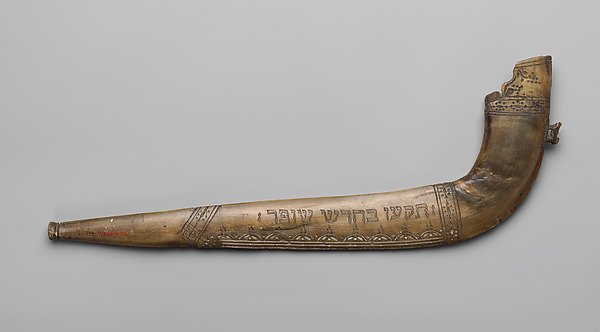
Rosh Hashanah begins a period of self-examination leading to Yom Kippur. The shofar, a ram’s horn or other permitted animal horn, calls hearers to attention and repentance. Sweet foods can express hope for a good year. Teshuvah, return or repentance, asks for changed action, not simply a wish to avoid punishment.
Yom Kippur commonly involves roughly twenty-five hours of fasting and extended prayer. Obligations are qualified where health or other recognized circumstances require it. Kol Nidre, chanted at the opening, concerns vows; it is not blanket permission to break promises to others or erase wrongdoing. Confession, requests for mercy and the concluding Ne’ilah service give the day its shape. Making amends with people one has harmed remains necessary.
Mishnah; translated by Dr. Joshua Kulp, Mishnah Yomit. Mishnah Yoma, Chapter 8. Source · CC BY 3.0.
One who says: I shall sin and repent, sin and repent, they do not afford him the opportunity to repent. [If one says]: I shall sin and Yom HaKippurim will atone for me, Yom HaKippurim does not effect atonement. For transgressions between man and God Yom HaKippurim effects atonement, but for transgressions between man and his fellow Yom HaKippurim does not effect atonement, until he has pacified his fellow. This was expounded by Rabbi Elazar b. Azariah: “From all your sins before the Lord you shall be clean” (Leviticus 16:30) for transgressions between man and God Yom HaKippurim effects atonement, but for transgressions between man and his fellow Yom HaKippurim does not effect atonement, until he has pacified his fellow. Rabbi Akiva said: Happy are you, Israel! Who is it before whom you become pure? And who is it that purifies you? Your Father who is in heaven, as it is said: “And I will sprinkle clean water upon you and you shall be clean” (Ezekiel 36:25). And it further says: “O hope (mikveh) of Israel, O Lord” (Jeremiah 17:13--just as a mikveh purifies the unclean, so too does he Holy One, blessed be He, purify Israel.
Sukkot turns attention toward shelter, harvest and human vulnerability. Families or communities construct a sukkah with a temporary roof and may eat or spend other time in it. The lulav, together with the etrog and other branches, forms the four species used in worship. The celebration is followed by concluding observances whose arrangement differs between Israel and many diaspora communities. Simchat Torah expresses joy in returning to the beginning of the Torah after completing its cycle.
Wikipedia for Schools; reproduced by Florida State College at Jacksonville / Lumen Learning. World Religions, Jewish Observances; attribution key (35). Source · CC BY-SA 3.0.
Purim is a joyous Jewish holiday that commemorates the deliverance of the Persian Jews from the plot of the evil Haman, who sought to exterminate them, as recorded in the biblical Book of Esther.
It is characterized by public recitation of the Book of Esther, mutual gifts of food and drink, charity to the poor, and a celebratory meal (Esther 9:22). Other customs include drinking wine, eating special pastries called hamantashen , dressing up in masks and costumes, and organizing carnivals and parties.
Wikipedia for Schools; reproduced by Florida State College at Jacksonville / Lumen Learning. World Religions, Jewish Observances; attribution key (35). Source · CC BY-SA 3.0.
Hanukkah , also known as the Festival of Lights , is an eight-day Jewish holiday that starts on the 25th day of Kislev (Hebrew calendar). The festival is observed in Jewish homes by the kindling of lights on each of the festival’s eight nights, one on the first night, two on the second night and so on.
The holiday was called Hanukkah (meaning “dedication”) because it marks the re-dedication of the Temple after its desecration by Antiochus IV Epiphanes. Spiritually, Hanukkah commemorates the ” Miracle of the Oil .” According to the Talmud, at the re-dedication of the Temple in Jerusalem following the victory of the Maccabees over the Seleucid Empire, there was only enough consecrated oil to fuel the eternal flame in the Temple for one day. Miraculously, the oil burned for eight days – which was the length of time it took to press, prepare and consecrate new oil.
The Hanukkah lamp has places for eight lights and an additional shamash, used to serve or kindle them. It differs from the seven-branched Temple menorah. Hanukkah is important to many families, but its prominence in some countries should not make it a Jewish equivalent of Christmas or displace the centrality of Shabbat, the High Holy Days and the pilgrimage festivals.

10. Passover: telling the story at home

John Mack, in Tim McKenzie, ed.. World Religions, Judaism. Source · CC BY-NC-SA 4.0.
One other holy place in Judaism bears mention: the home. Many Jewish holidays are observed in the family home. Passover , for example, calls for the extended family to gather in one home for a feast, with prominent roles in the ritual for the oldest male and female in the family and for young children. During the festival of Hanukkah , homes are decorated with candles and other ornaments, and meals are celebrated in the home.
A seder follows the Haggadah’s order of blessings, questions, narrative, foods and songs. Participants are asked to see themselves within the story of liberation. Children’s questions help organize its telling.
Traditional Passover Haggadah; Sefaria Community Translation. Pesach Haggadah, selected complete Magid sections. Source · CC0.
This is the bread of affliction that our ancestors ate in the land of Egypt. Let all who are hungry come and eat. Let anyone who are in need come and observe Passover. This year we are here; next year in the Land of Israel. This year we are slaves; next year we shall be free.
Matzah, unleavened bread, recalls haste and affliction. Bitter herbs recall slavery. The seder plate commonly includes other symbolic foods, with explanations and arrangements that vary. Four cups of wine or grape juice, reclining, questions and songs help make the evening distinct. The bread called the afikoman is reserved for later in the meal; many households involve children in finding it. Many participants remove drops of wine while naming the plagues, a gesture commonly interpreted as limiting joy in light of suffering.
Traditional Haggadot include children described as wise, wicked, simple and unable to ask. Modern editions sometimes rework that language and broaden the range of voices at the table. New readings may connect the Exodus with slavery, displacement or struggles for freedom in other settings. Such additions show interpretation at work; they do not make all seders identical. The reader supplies several complete Magid sections in a reusable English translation.
11. Kashrut, purity and daily choices
Wikipedia for Schools; reproduced by Florida State College at Jacksonville / Lumen Learning. World Religions, Purity and Life-Cycle Events; attribution key (35). Source · CC BY-SA 3.0.
The Jewish dietary laws are known as kashrut . Food prepared in accordance with them is termed kosher , and food that is not kosher is also known as treifah or treif . People who observe these laws are colloquially said to be “keeping kosher.”
Kashrut includes permitted species, preparation and the relation of meat and dairy. Land mammals must both chew the cud and have split hooves; permitted fish have fins and scales. Pork and shellfish are therefore excluded. Rules for birds involve inherited classifications. Meat must also meet requirements for slaughter and preparation. A food is not kosher simply because a rabbi has blessed it.
Wikipedia for Schools; reproduced by Florida State College at Jacksonville / Lumen Learning. World Religions, Purity and Life-Cycle Events; attribution key (35). Source · CC BY-SA 3.0.
Jewish law also forbids the consumption of meat and dairy products together. The waiting period between eating meat and eating dairy varies by the order in which they are consumed and by community, and can extend for up to six hours. Based on the Biblical injunction against cooking a kid in its mother’s milk, this rule is mostly derived from the Oral Torah, the Talmud and Rabbinic law. Chicken and other kosher birds are considered the same as meat under the laws of kashrut, but the prohibition is Rabbinic, not Biblical.
Keeping meat and dairy separate can involve utensils, cookware and waiting periods. Pareve foods contain neither meat nor dairy, although preparation and other rules still matter. Certification symbols help consumers identify supervised products. Particular mixtures, equipment and methods of preparation can require expert interpretation; observance is not reducible to one list of ingredients.
Wikipedia for Schools; reproduced by Florida State College at Jacksonville / Lumen Learning. World Religions, Purity and Life-Cycle Events; attribution key (35). Source · CC BY-SA 3.0.
The Torah does not give specific reasons for most of the laws of kashrut. However, a number of explanations have been offered, including maintaining ritual purity, teaching impulse control, encouraging obedience to God, improving health, reducing cruelty to animals and preserving the distinctness of the Jewish community.
Kashrut can affect school meals, travel and hospitality, as well as a kitchen’s equipment. Jews differ in which restrictions they observe. Contemporary discussion also considers labor, animal welfare and environmental concerns alongside formal requirements.
A mikveh is a ritual immersion pool used in conversion and in other forms of observance. Traditional family-purity practices include a period of sexual separation linked to menstruation and immersion before resuming relations. These practices differ by community and interpretation. Ritual purity is a technical religious category; it should not simply be equated with dirtiness or a judgment that a person has acted immorally.
12. Birth, coming of age and marriage
Wikipedia for Schools; reproduced by Florida State College at Jacksonville / Lumen Learning. World Religions, Purity and Life-Cycle Events; attribution key (35). Source · CC BY-SA 3.0.
Life-cycle events, or rites of passage, occur throughout a Jew’s life that serve to strengthen Jewish identity and bind him or her to the entire community.
Brit milah, the covenant of circumcision, traditionally takes place for a newborn boy on the eighth day, with postponement when required by the child’s condition. A trained mohel performs the rite, and naming and blessings join the child to the covenantal community. Naming and welcoming ceremonies for girls have varied across Jewish communities; contemporary celebrations may be called simchat bat or brit bat. Their forms and timing are not uniform.
Bar mitzvah, “son of the commandment,” and bat mitzvah, “daughter of the commandment,” mark religious responsibility. Thirteen is the traditional age for boys; girls’ observances commonly occur at twelve or thirteen, depending on community. The status does not depend on holding an expensive party. Preparation, study, reading or teaching, and responsibility toward others give the milestone its religious importance.
Orthodox communities recognize a girl’s coming of age and often celebrate it, while differing over forms of public participation. Many egalitarian congregations give girls and boys similar roles in leading services and reading Torah.
Wikipedia for Schools; reproduced by Florida State College at Jacksonville / Lumen Learning. World Religions, Purity and Life-Cycle Events; attribution key (35). Source · CC BY-SA 3.0.
Marriage is an extremely important lifecycle event. A wedding takes place under a chupah , or wedding canopy , which symbolizes a “happy house.” At the end of the ceremony, the groom breaks a glass with his foot, symbolizing the continuous mourning for the destruction of the Temple, and the scattering of the Jewish people.
The chuppah is a canopy, symbolizing the home the couple will form. The traditional ketubah is a marriage document specifying obligations; its wording and use vary in modern communities. A ring, blessings over wine, the seven wedding blessings and breaking a glass commonly appear in the ceremony. Some communities include veiling or a period of private seclusion afterward. No single sequence or explanation covers every Jewish wedding.
Marriage and divorce expose differences among Jewish legal authorities. Traditional marriage and the granting of a get, a religious divorce document, involve distinct obligations and procedures. Difficulties obtaining a get have prompted major ethical debate and institutional responses. Egalitarian wedding texts, interfaith marriages and same-sex ceremonies likewise produce different decisions across movements. A civil marriage’s legal recognition and a community’s religious recognition are not automatically the same question.
13. Death, mourning and continuing bonds
Jewish practices surrounding death emphasize honoring the dead and supporting mourners. A hevra kadisha, a burial society, may care for the body through ritual washing and preparation. Traditional burial uses a shroud and, where a coffin is used, often a plain one. Burial is usually prompt, subject to practical needs and the calendar. These customs express dignity rather than social rank. Practices vary by place and movement; cremation, traditionally prohibited, is accepted by some contemporary Jews.
Close mourners may tear a garment or use a torn ribbon. Shiva, associated with seven days, brings mourning into the household, where visitors offer presence, meals and practical help. It is followed by further stages, including sheloshim, the thirty-day period, with longer obligations associated especially with mourning a parent. Festivals and other circumstances affect the calendar, so these stages should not be treated as one rigid timetable for every case.
The Mourner’s Kaddish praises and sanctifies God’s name; it does not describe death. Reciting it within communal prayer connects mourners with a continuing community. Customs include saying it for a parent for eleven months and marking the yahrzeit, the anniversary of a death, with remembrance, prayer or a memorial candle. Stones left on a grave can mark a visit and an enduring bond. Jewish beliefs about resurrection and the world to come vary, but care for the bereaved is a concrete present obligation.
14. Religious obligation and contemporary ethical life
Wikipedia for Schools; reproduced by Florida State College at Jacksonville / Lumen Learning. World Religions, Jewish Observances; attribution key (35). Source · CC BY-SA 3.0.
Specific Jewish ethical practices include practices of charity ( tzedakah ) and refraining from negative speech ( lashon hara ). Proper ethical practices regarding sexuality and many other issues are subjects of dispute among Jews.
Tzedakah joins giving with righteousness and responsibility. Lashon hara concerns harmful speech; the problem is not limited to statements known to be false. Tikkun olam, repair of the world, has become an important expression for social responsibility in many Jewish settings. These concepts shape debate about poverty, work, public policy and the responsibilities of organizations as well as individuals.
Pikuach nefesh, preservation of life, can override an ordinary prohibition. Mishnah Yoma places fasting beside illness and rescue, and repentance beside obligations to other people. The reader includes the whole chapter so these competing duties can be examined together.
Mishnah; translated by Dr. Joshua Kulp, Mishnah Yomit. Mishnah Yoma, Chapter 8. Source · CC BY 3.0.
If an avalanche fell on someone, and it is doubtful whether or not he is there, or whether he is alive or dead, or whether he is an Israelite or a non-Jew, they remove the debris from above him [even on Shabbat]. If they find him alive they remove the debris, but if dead they should leave him there [until Shabbat is over].
15. Primary readings and discussion
The primary reader brings together a biblical calendar, a Sabbath commandment, a complete rabbinic chapter on atonement and urgent duties, Passover liturgy, the complete 1885 Pittsburgh Platform, and sustained selections from Herzl. These documents have different purposes and historical settings. None speaks for every Jewish community.
- How did emancipation change the questions Jewish communities faced? Compare two religious responses.
- What questions about authority distinguish Reform, Conservative, Orthodox and Reconstructionist approaches? Explain why these are more than different amounts of observance.
- Compare the 1885 platform and Herzl on religion, peoplehood and political belonging. Which conditions made each position persuasive to its supporters?
- How do Shabbat, the seder and Yom Kippur connect inherited stories with actions in the present?
- What does Mishnah Yoma 8 suggest about the relation between a religious rule, danger to life and duties to another person?
- Choose one life-cycle observance. Explain its purpose and one important variation across communities.
- Why must the histories of Jewish refuge and Palestinian displacement both be considered when studying Israel’s emergence?
- How can a description of modern Judaism include secular Jews, Jews outside denominations and communities beyond North America?
Primary readings
Read the primary texts for Chapter 10. This separate page contains the assigned passages, translation credits and reading questions.