CA-ROTEL World Religions
Chapter 9: Jewish Origins, Thought and Beliefs
On this page — 14 sections
- 1. A people, a tradition and a covenant
- 2. Reading the Jewish scriptures
- 3. Creation, human dignity and responsibility
- 4. Abraham, Sarah and the ancestral stories
- 5. Moses, liberation and the Exodus
- 6. Sinai: freedom and commandments
- 7. Land, kings, Temple and prophets
- 8. Defeat, exile and return
- 9. Many voices in the Second Temple period
- 10. Rabbinic Judaism: teaching, law and argument
- 11. One God, particular responsibilities and many formulations
- 12. Choice, suffering, repentance and hope
- 13. Reading, review and the next chapter
- Primary readings
1. A people, a tradition and a covenant
Wikipedia for Schools; reproduced by Florida State College at Jacksonville / Lumen Learning. World Religions, History of Judaism; attribution key (35). Source · CC BY-SA 3.0.
Judaism is the religion, philosophy and way of life of the Jewish people. Judaism is a monotheistic religion originating in the Hebrew Bible (also known as the Tanakh ) and explored in later texts, such as the Talmud . Judaism is considered by religious Jews to be the expression of the covenantal relationship God established with the Children of Israel.
Judaism joins religious teaching with the life of a people. Jewish identity can involve family descent, conversion, community, language, historical memory and religious practice. Jews belong to many cultures and have many appearances; they are not one biological “race.” Some identify strongly as Jews without believing in God or observing religious law. This chapter introduces religious ideas and their history while recognizing that no one description speaks for every Jew.
A covenant binds promises to responsibilities. Biblical accounts of Noah, Abraham and Sinai relate the wider human family to the particular history of Israel. Later Jewish communities interpret these accounts through worship, law and study.
Wikipedia for Schools; reproduced by Florida State College at Jacksonville / Lumen Learning. World Religions, Defining Character and Principles of Faith; attribution key (35). Source · CC BY-SA 3.0.
According to the Tanakh (Hebrew Bible), God promised Abraham to make of his offspring a great nation. Many generations later, he commanded the nation of Israel to love and worship only one God; that is, the Jewish nation is to reciprocate God’s concern for the world. He also commanded the Jewish people to love one another; that is, Jews are to imitate God’s love for people. These commandments are but two of a large corpus of commandments and laws that constitute this covenant, which is the substance of Judaism.
The name Jew is related to Judah, an ancient kingdom and region. Israel has several meanings: Jacob’s new name in Genesis, the people associated with him, the ancient northern kingdom, and the modern state founded in 1948. Context matters. An ancient text about Israel cannot simply be read as a description of the modern state. Modern Jewish movements, communities, the Holocaust, Zionism and contemporary Israel will receive fuller treatment in Chapter 10.
2. Reading the Jewish scriptures
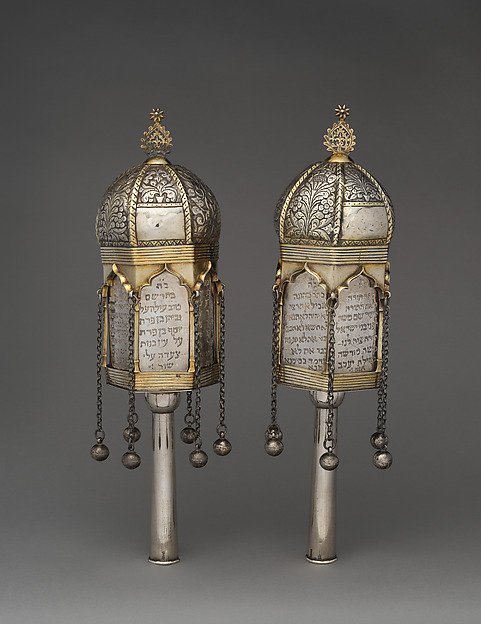
Jody L. Ondich. World Religions: the Spirit Searching, Judaism. Source · CC BY-NC-SA 4.0.
Judaism is often associated with its most important writings. The Hebrew Bible contains a variety of material that records interactions and responses between the people and a God who is portrayed in complex ways, perhaps reflecting different ancient traditions that were ultimately combined. The scriptures are divided into three parts.
First is the Torah, the sacred core of five books containing stories of the Creation, Adam and Eve, a Great Flood, the Hebrew patriarchs and matriarchs, and Moses, the great liberator and lawgiver. It includes laws about religious ritual and daily conduct, including the Ten Commandments.
| Division of the Tanakh | Contents and character |
|---|---|
| Torah: Teaching or Instruction | Genesis, Exodus, Leviticus, Numbers and Deuteronomy: creation and ancestral narratives, liberation, covenant and commandments. |
| Nevi’im: Prophets | Joshua, Judges, Samuel and Kings, together with Isaiah, Jeremiah, Ezekiel and the Twelve: histories, prophetic judgment and hope. |
| Ketuvim: Writings | Poetry, wisdom, stories and other writings, including Psalms, Proverbs, Job, Ruth, Esther and Daniel. |
Tanakh is formed from the Hebrew names of these three divisions. Jewish tradition counts twenty-four books, grouping together texts that many Christian Bibles divide into separate books. The contents largely correspond to the Protestant Old Testament, but their order, grouping and religious interpretation differ. “Hebrew Bible” or “Tanakh” respects their place within Jewish life. Most of the text is Hebrew; portions of Ezra and Daniel are Aramaic.
Torah can mean the five books specifically or, more broadly, Jewish teaching. Its legal passages stand beside stories, speeches, songs and journeys. A command to remember slavery, for example, draws practical force from the story of liberation. A Torah scroll used in worship is handwritten in Hebrew. Study and public reading keep the text part of a continuing communal life.
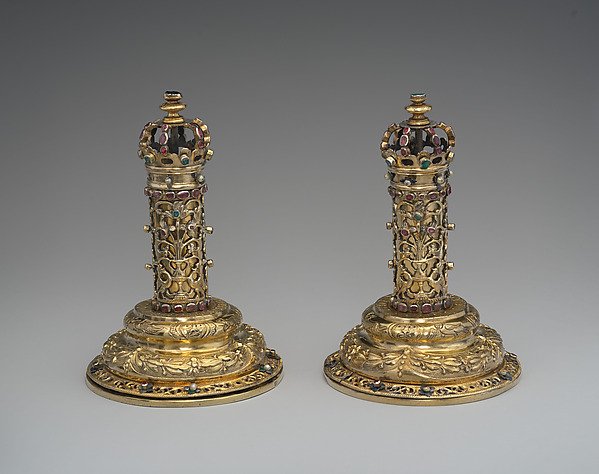
Traditional accounts associate Torah with revelation to Moses. Historical research instead investigates the text’s composition and transmission through language, parallel narratives, laws and editorial features. Archaeology contributes settlements, objects and inscriptions. A date within a story does not establish the date of its composition.
Ann Kordas, Ryan J. Lynch, Brooke Nelson and Julie Tatlock / OpenStax. World History, Volume 1: to 1500, §4.4 The Hebrews. Source · CC BY-NC-SA 4.0.
While this chronology explains how the Hebrews found themselves in Canaan, there is little to support it. There are no archaeological sites we can reference, and the only evidence we have for Abraham, his trip from Mesopotamia, and his children, grandchildren, and great-grandchildren comes from the Hebrew Bible. This has led some to suspect that the stories of Abraham and his family may have been developed much later than the Bible suggests. And in fact, historians have traced the story of Abraham to sources written down between the tenth and sixth centuries BCE. It is possible that Abraham was a historical person and part of an ancient migration recounted for centuries in oral form, but without additional records or archaeological discoveries that attest to his existence, we cannot know for sure.
The primary reader uses the Jewish Publication Society translation of 1917. Its older English remains unchanged. Introductions identify biblical narrative, later interpretation and historical evidence where the distinction affects the discussion.
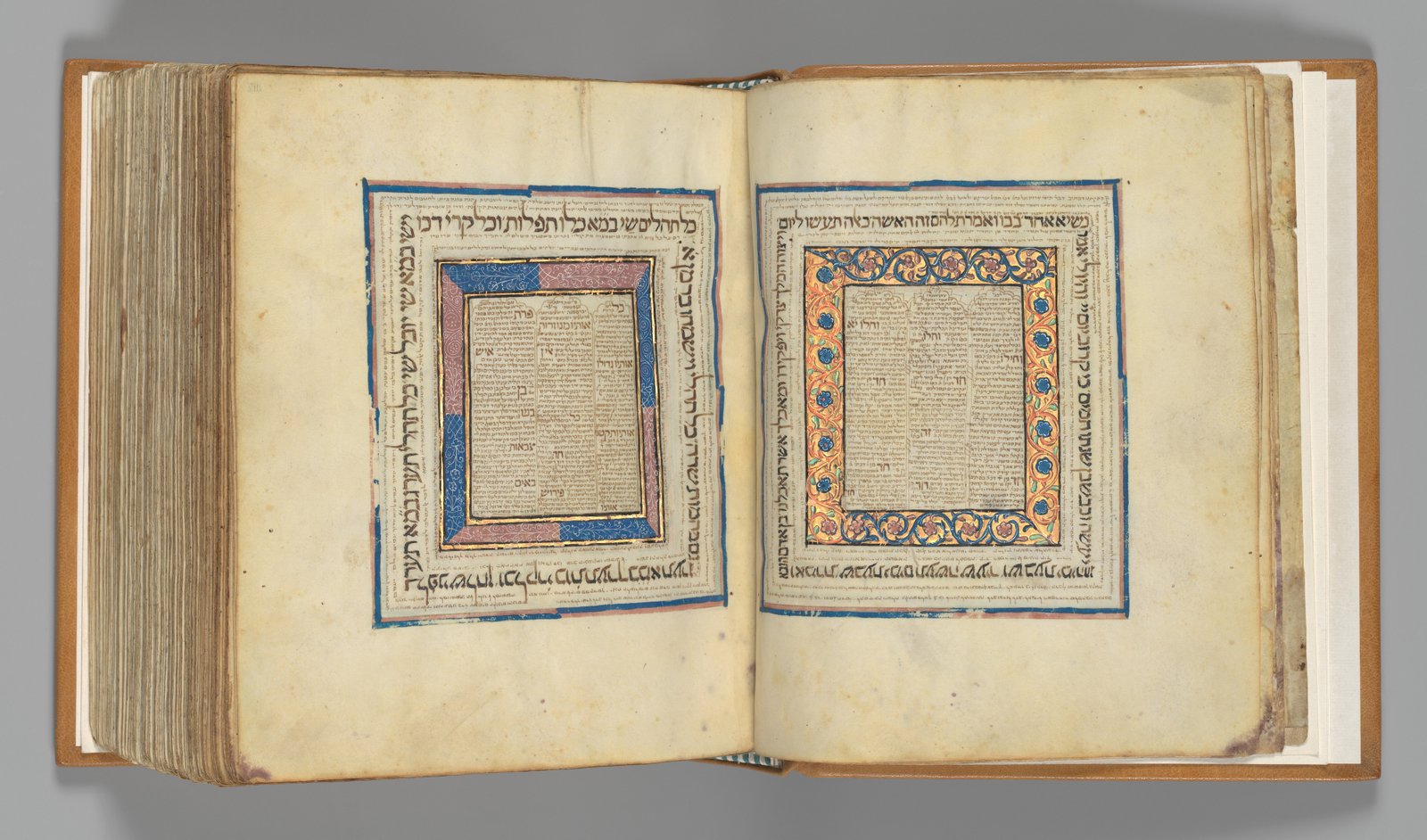
3. Creation, human dignity and responsibility
Genesis opens with God creating an ordered world through speech. Light, land, plants, animals and human beings receive places within creation. The recurring judgment that creation is good makes the material world worthy of attention and care. The sequence culminates in rest on the seventh day. The Sabbath will later become a recurring sign of holiness within ordinary time.
Jewish Publication Society of America, translation committee (1917); digital version supplied by Sefaria. The Holy Scriptures: A New Translation (JPS 1917). Source · Public domain (1917 translation).
Genesis 1:26 And God said: ‘Let us make man in our image, after our likeness; and let them have dominion over the fish of the sea, and over the fowl of the air, and over the cattle, and over all the earth, and over every creeping thing that creepeth upon the earth.’
Genesis 1:27 And God created man in His own image, in the image of God created He him; male and female created He them.
Genesis 1:28 And God blessed them; and God said unto them: ‘Be fruitful, and multiply, and replenish the earth, and subdue it; and have dominion over the fish of the sea, and over the fowl of the air, and over every living thing that creepeth upon the earth.’
Genesis 2:1 And the heaven and the earth were finished, and all the host of them.
Genesis 2:2 And on the seventh day God finished His work which He had made; and He rested on the seventh day from all His work which He had made.
Genesis 2:3 And God blessed the seventh day, and hallowed it; because that in it He rested from all His work which God in creating had made.
Being made in the image of God has supported Jewish reflection on human dignity and the treatment of others. The text applies the image to humankind, male and female, rather than to one king or social class. Human power over other creatures also raises questions about its proper limits. The creation passage gives people a task within the world and leaves later readers to debate what responsible rule requires.
The garden story, Cain’s killing of Abel and the flood place disobedience and violence within the opening of Genesis. God’s covenant after the flood extends to living creatures beyond Noah’s household. Later Jewish interpretations disagree about many details of these narratives.
The opening of Genesis also establishes a rhythm: work does not occupy every moment. Rest is built into the account of a good creation. Later commandments extend Sabbath rest to members of a household, servants, resident strangers and working animals. We will return to its observance in Chapter 10; here it helps explain how a belief about creation can shape the use of time.
4. Abraham, Sarah and the ancestral stories
John Mack, in Tim McKenzie, ed.. World Religions, Chapter 2: Judaism. Source · CC BY-NC-SA 4.0.
Judaism as a religion begins with Abraham. Abraham is presented in the Hebrew Bible as the friend of God. The Hebrew Bible states that Yahweh (the Hebrew name for God) entered into a covenant with Abraham. According to the terms of the covenant, Abraham would worship and obey only Yahweh. In return, Yahweh would bless Abraham with a large family and possession of the promised land — the land of Canaan in the Middle East. According to the Hebrew Bible, Abraham’s wife, Sarah, had a son named Isaac when Sarah was 90 years old, and Abraham was 100 years old.
Isaac became the father of Jacob, and Jacob’s name was later changed to Israel. According to the Pentateuch , which records that God sent Moses to deliver the Hebrew people from Egypt, Jacob had 12 sons, who became the fathers of the 12 tribes of Israel. Abraham, Isaac, and Jacob are known as the patriarchs of Judaism. According to Jewish tradition, the tribes of Israel migrated from Canaan to Egypt to escape a regional famine.
The biblical ancestral stories include Sarah, Rebekah, Leah and Rachel, as well as Abraham, Isaac and Jacob. Hagar and Ishmael also receive promises. Rivalry, infertility, migration and disputes over inheritance belong to these accounts of covenant.
Jewish Publication Society of America, translation committee (1917); digital version supplied by Sefaria. The Holy Scriptures: A New Translation (JPS 1917). Source · Public domain (1917 translation).
Genesis 12:1 Now the LORD said unto Abram: ‘Get thee out of thy country, and from thy kindred, and from thy father’s house, unto the land that I will show thee.
Genesis 12:2 And I will make of thee a great nation, and I will bless thee, and make thy name great; and be thou a blessing.
Genesis 12:3 And I will bless them that bless thee, and him that curseth thee will I curse; and in thee shall all the families of the earth be blessed.’
Genesis 12:4 So Abram went, as the LORD had spoken unto him; and Lot went with him; and Abram was seventy and five years old when he departed out of Haran.
Genesis 12:5 And Abram took Sarai his wife, and Lot his brother’s son, and all their substance that they had gathered, and the souls that they had gotten in Haran; and they went forth to go into the land of Canaan; and into the land of Canaan they came.
Genesis 12:6 And Abram passed through the land unto the place of Shechem, unto the terebinth of Moreh. And the Canaanite was then in the land.
Genesis 12:7 And the LORD appeared unto Abram, and said: ‘Unto thy seed will I give this land’; and he builded there an altar unto the LORD, who appeared unto him.
Genesis 12:8 And he removed from thence unto the mountain on the east of Beth-el, and pitched his tent, having Beth-el on the west, and Ai on the east; and he builded there an altar unto the LORD, and called upon the name of the LORD.
Genesis 12:9 And Abram journeyed, going on still toward the South.
The promise extends beyond Abraham’s own success: the families of the earth are to receive blessing through him. Genesis 17 develops the covenant through new names, the promise of a son to Sarah and circumcision as a sign carried by males in the household. The primary reader gives the complete chapter. Later Jewish understandings of chosenness connect a particular relationship with demanding responsibilities. They should not be reduced to a claim that Jews possess greater human worth than other people.
Abraham can also question. In Genesis 18 he asks whether the innocent should die with the guilty when Sodom is judged. His appeal invokes divine justice. The same ancestral collection includes a much more disturbing test: God tells him to offer Isaac. Abraham prepares to obey, but a messenger stops him and a ram is offered instead. The Akedah, the binding of Isaac, has inspired interpretations concerning trust, sacrifice, fear and the limits of human understanding. The reader supplies the whole chapter so its difficulty remains visible.
Jewish Publication Society of America, translation committee (1917); digital version supplied by Sefaria. The Holy Scriptures: A New Translation (JPS 1917). Source · Public domain (1917 translation).
Genesis 18:23 And Abraham drew near, and said: ‘Will You indeed sweep away the righteous with the wicked?
Genesis 18:24 Peradventure there are fifty righteous within the city; wilt Thou indeed sweep away and not forgive the place for the fifty righteous that are therein?
Genesis 18:25 That be far from Thee to do after this manner, to slay the righteous with the wicked, that so the righteous should be as the wicked; that be far from Thee; shall not the judge of all the earth do justly?’
Genesis 18:26 And the LORD said: ‘If I find in Sodom fifty righteous within the city, then I will forgive all the place for their sake.’
Jacob’s own story includes deception, exile, marriages, conflict with his brother Esau and a night of wrestling with a mysterious figure. He emerges blessed and injured, with the name Israel. Later readers have found in the struggle an image of wrestling with God and with difficult questions. His twelve sons are associated with the twelve tribes. Joseph, one of these sons, is sold by his brothers and carried to Egypt; he later becomes able to save the family from famine. Benjamin, not Joseph, is the youngest son.
Jewish Publication Society of America, translation committee (1917); digital version supplied by Sefaria. The Holy Scriptures: A New Translation (JPS 1917). Source · Public domain (1917 translation).
Genesis 32:25 And Jacob was left alone; and there wrestled a man with him until the breaking of the day.
Genesis 32:26 And when he saw that he prevailed not against him, he touched the hollow of his thigh; and the hollow of Jacob’s thigh was strained, as he wrestled with him.
Genesis 32:27 And he said: ‘Let me go, for the day breaketh.’ And he said: ‘I will not let thee go, except thou bless me.’
Genesis 32:28 And he said unto him: ‘What is thy name?’ And he said: ‘Jacob.’
Genesis 32:29 And he said: ‘Thy name shall be called no more Jacob, but Israel; for thou hast striven with God and with men, and hast prevailed.’
Genesis 32:30 And Jacob asked him, and said: ‘Tell me, I pray thee, thy name.’ And he said: ‘Wherefore is it that thou dost ask after my name?’ And he blessed him there.
Genesis 32:31 And Jacob called the name of the place Peniel: ‘for I have seen God face to face, and my life is preserved.’
Genesis 32:32 And the sun rose upon him as he passed over Peniel, and he limped upon his thigh.
5. Moses, liberation and the Exodus
Ann Kordas, Ryan J. Lynch, Brooke Nelson and Julie Tatlock / OpenStax. World History, Volume 1: to 1500, §4.4 The Hebrews. Source · CC BY-NC-SA 4.0.
The Hebrew Bible notes that Joseph, one of Abraham’s twelve great-grandsons, ended up in Egypt. Later, around 1800 BCE based on the biblical chronology, Joseph’s family joined him, and his descendants lived there for several generations. During this long time in Egypt, the Bible explains that the descendants of Joseph experienced increasingly poor treatment, including being enslaved by the (unnamed) Egyptian pharaoh and put to work on building projects in the Nile delta (Figure 4.37). Later, the pharaoh decided to kill all the male Hebrew children, but one was saved from the slaughter by being hidden in a basket to float down the Nile. He was discovered by the pharaoh’s daughter, who named him Moses and raised him among the Egyptian royalty as her own.
In Exodus, Moses first flees Egypt after killing an Egyptian who is beating a Hebrew. While tending a flock in Midian, he encounters a bush that burns without being consumed. God calls him to confront Pharaoh and bring the enslaved Israelites out. Moses asks how he can undertake the task, what he should say and whether anyone will believe him. His questions make the call a conversation involving reluctance and reassurance.
Jewish Publication Society of America, translation committee (1917); digital version supplied by Sefaria. The Holy Scriptures: A New Translation (JPS 1917). Source · Public domain (1917 translation).
Exodus 3:7 And the LORD said: ‘I have surely seen the affliction of My people that are in Egypt, and have heard their cry by reason of their taskmasters; for I know their pains;
Exodus 3:8 and I am come down to deliver them out of the hand of the Egyptians, and to bring them up out of that land unto a good land and a large, unto a land flowing with milk and honey; unto the place of the Canaanite, and the Hittite, and the Amorite, and the Perizzite, and the Hivite, and the Jebusite.
Exodus 3:9 And now, behold, the cry of the children of Israel is come unto Me; moreover I have seen the oppression wherewith the Egyptians oppress them.
Exodus 3:10 Come now therefore, and I will send thee unto Pharaoh, that thou mayest bring forth My people the children of Israel out of Egypt.’
Exodus 3:11 And Moses said unto God: ‘Who am I, that I should go unto Pharaoh, and that I should bring forth the children of Israel out of Egypt?’
Exodus 3:12 And He said: ‘Certainly I will be with thee; and this shall be the token unto thee, that I have sent thee: when thou hast brought forth the people out of Egypt, ye shall serve God upon this mountain.’
Exodus 3:13 And Moses said unto God: ‘Behold, when I come unto the children of Israel, and shall say unto them: The God of your fathers hath sent me unto you; and they shall say to me: What is His name? what shall I say unto them?’
Exodus 3:14 And God said unto Moses: ‘I AM THAT I AM’; and He said: ‘Thus shalt thou say unto the children of Israel: I AM hath sent me unto you.’
Exodus 3:15 And God said moreover unto Moses: ‘Thus shalt thou say unto the children of Israel: The LORD, the God of your fathers, the God of Abraham, the God of Isaac, and the God of Jacob, hath sent me unto you; this is My name for ever, and this is My memorial unto all generations.
The divine name represented by the four Hebrew letters YHWH is connected in this account with being: the translation gives “I AM THAT I AM.” Jewish reading practices generally substitute a reverent title such as Adonai, “Lord,” rather than pronounce the name. HaShem means “the Name.” Some Jews write “G-d” in English as a practice of reverence; others write “God.” In the primary translation, capitalized LORD commonly represents the four-letter name.
John Mack, in Tim McKenzie, ed.. World Religions, Chapter 2: Judaism. Source · CC BY-NC-SA 4.0.
Eventually, as the story is told, the inhabitants of the nation of Israel became slaves in Egypt, where they lived for hundreds of years after the death of Jacob. Through a series of miraculous events, God persuaded the Egyptian Pharaoh to release the Hebrew people so they could return to Canaan. This event, known as the Exodus , is among the most theologically significant events in the history of Judaism. For Jewish believers, the Exodus symbolizes the intervention of Yahweh (the name used in the Hebrew Bible to refer to God) to save their people.
Pharaoh repeatedly refuses to release the Israelites. Ten plagues culminate in the death of Egypt’s firstborn. In the Passover instructions, households mark their doorways with blood from a slaughtered animal and share a meal before departure. The story then brings the fleeing people to the sea, pursued by Pharaoh’s army. A path opens through the waters; the Israelites cross, and the pursuing force is overwhelmed. The deliverance becomes a central act of remembrance in Jewish life.
The Exodus describes liberation through events that bring devastation to Egyptians. Its Passover instructions make remembering deliverance a recurring duty. Both the relief of the departing Israelites and the violence of the narrative remain in the assigned text.
The historical questions remain open. The biblical account does not name its Pharaoh, and a confident identification with Ramesses II goes beyond the evidence. Scholars debate whether smaller movements from Egypt contributed to traditions later told on a national scale. Archaeology does not establish the whole sequence as narrated. These uncertainties should be distinguished from the clear evidence that later Israelites and Jews remembered the Exodus as foundational.
6. Sinai: freedom and commandments
At Sinai the liberated people enter a covenant. Freedom leads to responsibilities toward God and one another. The Ten Commandments, also called the Decalogue or Ten Utterances, begin by recalling release from slavery. They address worship, sacred time, family duties, killing, sexual conduct, property and truthful testimony. Jewish and Christian traditions divide their numbering differently; the reader presents Exodus 20 without imposing one modern list on the text.
Jewish Publication Society of America, translation committee (1917); digital version supplied by Sefaria. The Holy Scriptures: A New Translation (JPS 1917). Source · Public domain (1917 translation).
Exodus 19:3 And Moses went up unto God, and the LORD called unto him out of the mountain, saying: ‘Thus shalt thou say to the house of Jacob, and tell the children of Israel:
Exodus 19:4 Ye have seen what I did unto the Egyptians, and how I bore you on eagles’wings, and brought you unto Myself.
Exodus 19:5 Now therefore, if ye will hearken unto My voice indeed, and keep My covenant, then ye shall be Mine own treasure from among all peoples; for all the earth is Mine;
Exodus 19:6 and ye shall be unto Me a kingdom of priests, and a holy nation. These are the words which thou shalt speak unto the children of Israel.’
Exodus 19:7 And Moses came and called for the elders of the people, and set before them all these words which the LORD commanded him.
Exodus 19:8 And all the people answered together, and said: ‘All that the LORD hath spoken we will do.’ And Moses reported the words of the people unto the LORD.
A mitzvah is a commandment; the plural is mitzvot. Rabbinic tradition counts 613 in the Torah as a whole. They are distributed across its books and concern different people and circumstances. Some concern Temple service; others address agriculture, family life, courts, worship or relations with neighbors. A person is not expected to perform every commandment regardless of role or setting.
John Mack, in Tim McKenzie, ed.. World Religions, Chapter 2: Judaism. Source · CC BY-NC-SA 4.0.
Under the Jewish concept of obedience to the Law of Moses, an exceptionally positive side to keeping the law exists. Jews believe that the Law of Moses is a reflection of the nature of Yahweh himself. That is, the Law of Moses does not simply describe what Yahweh wants the world to be like; rather, it reflects what Yahweh is like. The law reflects Yahweh’s character. When Jews keep the law, they are imitating Yahweh and becoming more and more like God. This divine imitation is the essence of Jewish ethics: if you do what Yahweh says, you will become more like Yahweh and enjoy a closer relationship with him.
The source’s phrase “becoming like God” concerns conduct, such as mercy and justice. Leviticus 19 places ritual duties beside commands about wages, honest measures and the treatment of strangers.
Jewish Publication Society of America, translation committee (1917); digital version supplied by Sefaria. The Holy Scriptures: A New Translation (JPS 1917). Source · Public domain (1917 translation).
Leviticus 19:9 And when ye reap the harvest of your land, thou shalt not wholly reap the corner of thy field, neither shalt thou gather the gleaning of thy harvest.
Leviticus 19:10 And thou shalt not glean thy vineyard, neither shalt thou gather the fallen fruit of thy vineyard; thou shalt leave them for the poor and for the stranger: I am the LORD your God.
Leviticus 19:11 Ye shall not steal; neither shall ye deal falsely, nor lie one to another.
Leviticus 19:12 And ye shall not swear by My name falsely, so that thou profane the name of thy God: I am the LORD.
Leviticus 19:13 Thou shalt not oppress thy neighbour, nor rob him; the wages of a hired servant shall not abide with thee all night until the morning.
Leviticus 19:14 Thou shalt not curse the deaf, nor put a stumbling-block before the blind, but thou shalt fear thy God: I am the LORD.
Leviticus 19:15 Ye shall do no unrighteousness in judgment; thou shalt not respect the person of the poor, nor favour the person of the mighty; but in righteousness shalt thou judge thy neighbour.
Leviticus 19:16 Thou shalt not go up and down as a talebearer among thy people; neither shalt thou stand idly by the blood of thy neighbour: I am the LORD.
Leviticus 19:17 Thou shalt not hate thy brother in thy heart; thou shalt surely rebuke thy neighbour, and not bear sin because of him.
Leviticus 19:18 Thou shalt not take vengeance, nor bear any grudge against the children of thy people, but thou shalt love thy neighbour as thyself: I am the LORD.
Leviticus 19:33 And if a stranger sojourn with thee in your land, ye shall not do him wrong.
Leviticus 19:34 The stranger that sojourneth with you shall be unto you as the home-born among you, and thou shalt love him as thyself; for ye were strangers in the land of Egypt: I am the LORD your God.
The command to care for a stranger recalls the Israelites’ own experience in Egypt. Duties toward poor people and workers appear beside ritual prescriptions. Other provisions assume slavery and patriarchal households. Interpretation concerns both what these laws demanded in their setting and how later communities apply or challenge them.
7. Land, kings, Temple and prophets
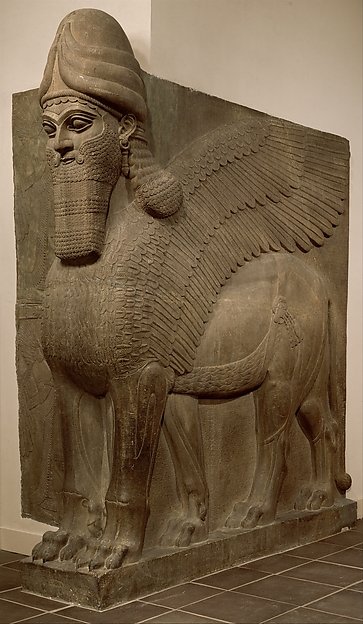
Joshua and Judges describe settlement in Canaan through stories of warfare and competing leaders. Archaeological evidence has complicated a reading of Joshua as a record of one sweeping conquest. Christine Hayes’s Yale lectures discuss the literary accounts alongside evidence for Israel’s emergence within Canaan. Biblical tradition names Saul, David and Solomon as its first kings and associates David and Solomon with Jerusalem and the First Temple.
Ann Kordas, Ryan J. Lynch, Brooke Nelson and Julie Tatlock / OpenStax. World History, Volume 1: to 1500, §4.4 The Hebrews. Source · CC BY-NC-SA 4.0.
After the death of Solomon, the period of the united monarchy came to an end, and Israel split into two kingdoms, Israel in the north and Judah in the south. This inaugurated the period of the divided monarchy (Figure 4.40). Jerusalem remained the capital of Judah, while Samaria was the capital of Israel. The northern kingdom was the larger and wealthier of the two and exerted influence over and sometimes warred with Judah. The biblical account often puts the kings of the northern kingdom in a negative light, noting that they abused their subjects and incorporated elements of foreign religious traditions in their worship of Yahweh.
The scale and character of David and Solomon’s rule remain debated. Inscriptions and excavations provide firmer evidence for later kingdoms than for every detail of the earlier royal narratives. The biblical writers themselves expose royal failures. David’s treatment of Bathsheba and her husband Uriah, for instance, becomes the occasion for the prophet Nathan’s rebuke. Kings remain answerable to moral judgment.
The Temple brought priests, offerings, pilgrimage and communal worship into a central place. A priest performed inherited ceremonial responsibilities; a prophet spoke as one called to deliver God’s message. These roles could overlap with established institutions or produce conflict with them. Biblical prophets were not simply predictors of remote events. They addressed the way rulers, landowners and communities treated people in their own time.
Jewish Publication Society of America, translation committee (1917); digital version supplied by Sefaria. The Holy Scriptures: A New Translation (JPS 1917). Source · Public domain (1917 translation).
Amos 5:18 Woe unto you that desire the day of the LORD! Wherefore would ye have the day of the LORD? It is darkness, and not light.
Amos 5:19 As if a man did flee from a lion, And a bear met him; And went into the house and leaned his hand on the wall, And a serpent bit him.
Amos 5:20 Shall not the day of the LORD be darkness, and not light? Even very dark, and no brightness in it?
Amos 5:21 I hate, I despise your feasts, And I will take no delight in your solemn assemblies.
Amos 5:22 Yea, though ye offer me burnt-offerings and your meal-offerings, I will not accept them; Neither will I regard the peace-offerings of your fat beasts.
Amos 5:23 Take thou away from Me the noise of thy songs; And let Me not hear the melody of thy psalteries.
Amos 5:24 But let justice well up as waters, And righteousness as a mighty stream.
Amos challenges worship that coexists with injustice. The criticism is not a universal rejection of ceremony; it makes a claim about the conduct required of worshippers. Other prophetic books likewise call attention to people without wealth or powerful protectors: widows, orphans, poor people and strangers. Judgment is often paired with the possibility of return and a future in which communities live more faithfully.
Jewish Publication Society of America, translation committee (1917); digital version supplied by Sefaria. The Holy Scriptures: A New Translation (JPS 1917). Source · Public domain (1917 translation).
Micah 6:6 ’Wherewith shall I come before the LORD, And bow myself before God on high? Shall I come before Him with burnt-offerings, With calves of a year old?
Micah 6:7 Will the LORD be pleased with thousands of rams, With ten thousands of rivers of oil? Shall I give my first-born for my transgression, The fruit of my body for the sin of my soul?’
Micah 6:8 It hath been told thee, O man, what is good, And what the LORD doth require of thee: Only to do justly, and to love mercy, and to walk humbly with thy God.
8. Defeat, exile and return
Ann Kordas, Ryan J. Lynch, Brooke Nelson and Julie Tatlock / OpenStax. World History, Volume 1: to 1500, §4.4 The Hebrews. Source · CC BY-NC-SA 4.0.
With the rise of the Neo-Assyrian Empire and its expansion into Canaan, Israel and Judah entered a new era under foreign domination within the Assyrian-controlled Near East. Anti-Assyrian sentiment in both kingdoms and the Neo-Assyrians’ desire to control the eastern Mediterranean eventually led to multiple Assyrian attacks on Israel. The most devastating occurred in 722 BCE, when thousands of Israelites were deported to other parts of the empire, as was the Assyrians’ custom.
Prophets in Judah interpreted the destruction of Israel as punishment for its having veered from the covenant with Yahweh. They called for religious reforms in Judah in order to avoid a similar fate. While Judah was incorporated into the Neo-Assyrian Empire, it avoided the destruction experienced by Israel. However, the defeat of Assyria by the Neo-Babylonians brought new challenges to Judah. Resistance to Babylon led to punishments and forced deportations in 597 BCE, and finally to the destruction of Jerusalem and its temple in 586 BCE.
Assyrian conquest brought the northern kingdom to an end in the late eighth century BCE. Babylonian attacks on Judah led to deportations in 597 BCE and the destruction of Jerusalem and its Temple in 586 BCE. Exile did not mean that every inhabitant was removed. Communities remained in the land, while deported Judeans faced the task of living away from the Temple and ancestral places.
Exile produced grief, protest and explanations of defeat in terms of covenant-breaking. Those explanations are voices within the sources. Psalm 137 preserves the rage of displacement; Jeremiah’s letter tells exiles to build households and seek the welfare of their place of settlement.
Jewish Publication Society of America, translation committee (1917); digital version supplied by Sefaria. The Holy Scriptures: A New Translation (JPS 1917). Source · Public domain (1917 translation).
Jeremiah 29:4 Thus saith the LORD of hosts, the God of Israel, unto all the captivity, whom I have caused to be carried away captive from Jerusalem unto Babylon:
Jeremiah 29:5 Build ye houses, and dwell in them, and plant gardens, and eat the fruit of them;
Jeremiah 29:6 take ye wives, and beget sons and daughters; and take wives for your sons, and give your daughters to husbands, that they may bear sons and daughters; and multiply ye there, and be not diminished.
Jeremiah 29:7 And seek the peace of the city whither I have caused you to be carried away captive, and pray unto the LORD for it; for in the peace thereof shall ye have peace.
Cyrus of Persia conquered Babylon in 539 BCE, and Persian policy permitted Judean return and rebuilding. Not everyone returned. Jewish life continued in Babylonia and elsewhere. The Second Temple was completed around 515 BCE. Its rebuilding did not restore the world exactly as before: Persian imperial authority, new community arrangements and continuing interpretation of inherited writings shaped the era.
| Approximate date | Development |
|---|---|
| c. 1208 BCE | An Egyptian inscription, the Merneptah stele, refers to Israel in Canaan. |
| 10th century BCE, traditional setting | Stories of David, Solomon and the First Temple; the extent of the monarchy is debated. |
| 722/721 BCE | Assyrian conquest ends the northern kingdom. |
| 597 and 586 BCE | Babylonian deportations; Jerusalem and the First Temple destroyed in 586. |
| 539 to c. 515 BCE | Persian conquest, return of some exiles, and rebuilding of the Temple. |
| 2nd–1st centuries BCE | Maccabean revolt and Hasmonean Jewish rule. |
| 70 CE | Roman forces destroy the Second Temple during the revolt. |
| 132–135 CE | Bar Kokhba revolt and further Roman repression. |
| c. 200 CE; later centuries | Mishnah compiled; Palestinian and Babylonian Talmuds subsequently developed. |
9. Many voices in the Second Temple period
Persian, Greek and Roman empires successively shaped the eastern Mediterranean. Greek language and culture created opportunities for Jewish exchange and translation as well as conflict. In the second century BCE, repression under Antiochus IV helped provoke the Maccabean revolt. The subsequent Hasmonean dynasty achieved a period of Jewish political independence. The rededication of the Temple became associated with Hanukkah. Jewish sovereignty therefore did occur between the Babylonian exile and modern times.
Sadducees were associated with priestly elites and Temple authority; Pharisees developed practices of Torah interpretation beyond the Temple. Essene communities emphasized purity and discipline. The Library of Congress exhibition discusses the proposed connection between Essenes, Qumran and the Dead Sea Scrolls, together with the limits of that identification. These groups did not encompass every Jew of the period.
The Dead Sea Scrolls, found in caves near the Dead Sea beginning in 1947, include biblical manuscripts, commentaries, community rules and other writings. They reveal a wider textual and religious world than a single uniform Judaism. The Library of Congress exhibition introduces the evidence and the proposed connection with Qumran. Christianity also began within this Jewish world before developing into distinct religious communities.
Herod the Great, a ruler under Roman power, greatly enlarged the Second Temple complex. During the revolt that began in 66 CE, Roman forces under Titus destroyed the Temple in 70. The loss ended its sacrificial service. The Western Wall is part of the retaining structure of the expanded Temple platform, rather than a surviving wall of the sanctuary building itself. The site remains central to Jewish memory and prayer.
Diaspora—Jewish life outside the ancestral land—already existed before 70 CE. The Temple’s destruction and later repression intensified displacement, but did not remove every Jew from the region. Following the Bar Kokhba revolt in 132–135, further devastation and restrictions altered life again. Jewish communities continued both within the land and across the Mediterranean and Mesopotamia. Rabbinic Judaism grew through this long process, rather than appearing fully formed on the day the Temple fell.
10. Rabbinic Judaism: teaching, law and argument
Wikipedia for Schools; reproduced by Florida State College at Jacksonville / Lumen Learning. World Religions, Defining Character and Principles of Faith; attribution key (35). Source · CC BY-SA 3.0.
Rabbinic Judaism (which derives from the Pharisees) has always held that the books of the Torah (called the written law) have always been transmitted in parallel with an oral tradition. To justify this viewpoint, Jews point to the text of the Torah, where many words are left undefined, and many procedures mentioned without explanation or instructions; this, they argue, means that the reader is assumed to be familiar with the details from other, i.e., oral, sources. This parallel set of material was originally transmitted orally, and came to be known as “the oral law.”
By the time of Rabbi Judah haNasi (200 CE), after the destruction of Jerusalem, much of this material was edited together into the Mishnah. Over the next four centuries this law underwent discussion and debate in both of the world’s major Jewish communities (in Israel and Babylonia), and the commentaries on the Mishnah from each of these communities eventually came to be edited together into compilations known as the two Talmuds. These have been expounded by commentaries of various Torah scholars during the ages.
Halakha , the rabbinic Jewish way of life, then, is based on a combined reading of the Torah, and the oral tradition — the Mishnah, the halakhic Midrash, the Talmud and its commentaries. The Halakha has developed slowly, through a precedent-based system.
These paragraphs describe the traditional claim that written and oral teaching belong together, and the later written collections through which that teaching developed. The Mishnah, associated with Judah haNasi around 200 CE, arranges legal teaching by subject. Gemara is the discussion and interpretation of that material. Mishnah and Gemara together form a Talmud. The Palestinian, or Jerusalem, Talmud and the Babylonian Talmud preserve different bodies of discussion, developed and edited over centuries.
John Mack, in Tim McKenzie, ed.. World Religions, Chapter 2: Judaism. Source · CC BY-NC-SA 4.0.
The Mishnah and the Talmud are attempts to come to grips with a basic tenet of Judaism: the Law of Moses was given to specific Jews at a specific time and place. While it is the word of Yahweh, it must be interpreted for each generation of Jews in their cultural and historical context. In this sense, the Law of Moses is a living law, flowing and changing in its application for each generation.
Halakhah is the legal way of life. Aggadah includes narrative and ethical teaching; midrash names forms and collections of scriptural interpretation. The categories overlap: a story or disputed word can become part of a legal argument.
A rabbi is a teacher and interpreter of Jewish learning, rather than a replacement Temple priest performing animal sacrifices. Synagogues existed before 70 CE; their importance grew within a changing religious world. Prayer, Torah reading, study, household observance and acts of care helped sustain communities. Priestly family identities did not simply disappear, but the absent Temple could no longer organize religious life in its earlier form.
Mishnah, Pirke Avot; translated with commentary by Joseph I. Gorfinkle (1913). Pirke Avot: The Sayings of the Jewish Fathers. Source · Public domain in the United States.
2. Simon, the Just, was of the last survivors of the Great Synagogue. He used to say, "Upon three things the world rests: upon the Torah, upon the Temple service, and upon the doing of acts of kindness".
12. Hillel and Shammai received (the tradition) from them. Hillel said, "Be of the disciples of Aaron, loving peace and pursuing peace, loving mankind and drawing them nigh to the Torah". 13. He used to say, "A name made great is a name destroyed; he who does not increase (his knowledge) decreases (it); and he who does not study deserves to die; and he who makes a worldly use of the crown (of the Torah) shall waste away." 14. He used to say, "If I am not for myself, who will be for me? But if I care for myself only, what am I?. And if not now, when?"
15. Shammai said, "Set a fixed time for thy (study of) Torah; say little and do much; and receive all men with a cheerful countenance."
17. Simeon his son, said, "All my days I have grown up amongst the wise, and I have found nothing better for man than silence; not learning but doing is the chief thing; and whoso multiplies words causes sin".
Pirkei Avot, “Chapters of the Fathers,” is part of the Mishnah. It gathers ethical teachings about learning, deeds, peace and kindness. Its ancient male scholarly setting also shapes passages about women. The first chapter is included in full in the reader.
11. One God, particular responsibilities and many formulations
John Mack, in Tim McKenzie, ed.. World Religions, Chapter 2: Judaism. Source · CC BY-NC-SA 4.0.
The Jewish religion is most commonly referred to as a type of ethical monotheism , as it assumes the existence of a Creator God whose benevolence and goodness are reflected in His love for humanity and who has imparted to the Jews ethical principles which they (and the rest of the human race) are expected to follow.
Most important for Judaism is the concept of divine oneness which means that there is only Divine being in the universe; that this one Being is truly incomparable, and no human being (or anything else we can imagine) can be compared to this Being. Judaism’s idea of transcendence presupposes a fundamental difference in reality between God and creation.
Yet, even though God is fundamentally transcendent to creation, He is also immanent (near) to human beings. The very fact that Jews pray to God underscores this belief. Primarily in and through His relationship with His People, God is present in the world and is actively engaged in what happens to human beings. Jews use the word covenant to refer to the bond of love, trust, and forgiveness that exists between God and Israel.
Jewish monotheism has a history. Biblical narratives present ancestral devotion to one God; historians also find evidence that ancient Israelite religious practice included other deities and competing forms of worship. Monolatry means worshipping one god without necessarily denying the existence of others. Monotheism affirms one God. A command to worship God alone and an explicit denial that any other gods exist are related claims, but they are not identical.
Ann Kordas, Ryan J. Lynch, Brooke Nelson and Julie Tatlock / OpenStax. World History, Volume 1: to 1500, §4.4 The Hebrews. Source · CC BY-NC-SA 4.0.
The most salient feature of Hebrew culture during this period was its then-unusual monotheism. The Bible suggests this tradition began with Abraham, who was said to have entered into a covenant with Yahweh as far back as 2100 BCE. With the emergence of Moses in the Bible, Hebrew monotheism really began to take shape. As the Bible explains, during the exodus from Egypt, Moses was given the laws directly from Yahweh, including the command that only Yahweh be worshipped. This account suggests that pure monotheism was commonly practiced by the Hebrews from that time forward. Yet closer inspection of the biblical stories reveals a much more complicated and gradual process toward monotheism.
The Shema begins with “Hear” and joins divine oneness to love, teaching, remembrance and the marking of the home. Its words belong to prayer and daily practice as well as theological discussion.
Jewish Publication Society of America, translation committee (1917); digital version supplied by Sefaria. The Holy Scriptures: A New Translation (JPS 1917). Source · Public domain (1917 translation).
Deuteronomy 6:4 HEAR, O ISRAEL: THE LORD OUR GOD, THE LORD IS ONE.
Deuteronomy 6:5 And thou shalt love the LORD thy God with all thy heart, and with all thy soul, and with all thy might.
Deuteronomy 6:6 And these words, which I command thee this day, shall be upon thy heart;
Deuteronomy 6:7 and thou shalt teach them diligently unto thy children, and shalt talk of them when thou sittest in thy house, and when thou walkest by the way, and when thou liest down, and when thou risest up.
Deuteronomy 6:8 And thou shalt bind them for a sign upon thy hand, and they shall be for frontlets between thine eyes.
Deuteronomy 6:9 And thou shalt write them upon the door-posts of thy house, and upon thy gates.
Wikipedia for Schools; reproduced by Florida State College at Jacksonville / Lumen Learning. World Religions, Defining Character and Principles of Faith; attribution key (35). Source · CC BY-SA 3.0.
Scholars throughout Jewish history have proposed numerous formulations of Judaism’s core tenets, all of which have met with criticism. The most popular formulation is Maimonides’ thirteen principles of faith, developed in the 12th century. Even his list did not go without criticism, however.
Moses Maimonides (1138–1204), also called Rambam, was a philosopher, physician and interpreter of Jewish law whose life linked Spain, North Africa and Egypt. In his commentary on the Mishnah, he presented thirteen foundational beliefs. His account of God insisted on unity and the absence of a physical body. Biblical descriptions of God’s hand or anger therefore required interpretation. His Guide of the Perplexed addressed the relationship between inherited teaching and philosophical reasoning. Further context: Stanford Encyclopedia of Philosophy.
| Principles, grouped for study | Concise editorial summary, not a quotation |
|---|---|
| 1–5: God | God exists, is one, has no body, is eternal, and alone is to be worshipped. |
| 6–9: Revelation | Prophecy is possible; Moses has a unique prophetic standing; Torah comes from God and is not replaced. |
| 10–11: Knowledge and judgment | God knows human deeds and holds people accountable through reward and punishment. |
| 12–13: Hope | The Messiah will come, and the dead will be resurrected. |
Maimonides’s principles became influential without becoming a creed enforced by a single authority over all Jews. His account also shows why an emphasis on deeds cannot make questions of belief irrelevant.
Jewish thought also includes Kabbalah, traditions of mystical interpretation concerned with God, creation and the significance of commandments. The Zohar, a major work that emerged in medieval Spain, reads scripture through layers of symbolic meaning. Kabbalistic teaching about the sefirot describes divine manifestations or attributes within an affirmation of divine unity. Practices and understandings vary, and these teachings have not been equally central for all Jews. Their later influence, including on Hasidism, belongs in the continuing history of Jewish life. Further context: Posen Library, The Rise of Kabbalah.
12. Choice, suffering, repentance and hope
Jody L. Ondich. World Religions: the Spirit Searching, Judaism. Source · CC BY-NC-SA 4.0.
According to prophecy and stories throughout the early parts of the Bible, the God the Hebrews encountered was all-powerful and benevolent, merciful and just. Hebrew writings do not represent God in any visual way, but describe this god as a universal God, engaged in a lasting relationship with humankind and in a more specific covenant with the people of Israel. Various leaders and prophets have spoken about this relationship, and are honored–Abraham and Sarah, Isaac and Rebekah, Jacob, Leah and Rachel (the patriarchs and matriarchs) as well as Moses, Isaiah, Jeremiah, and many more.
The ancient Hebrews write in Exodus about the laws that came directly from God. We see this in both the 10 Commandments, well known to the world, but also in the development of more detailed laws regulating Jewish life, ritual, and worship. According to the Hebrew people, God is not abstract or distant, but is actively involved in history through revelation and as the people do or do not live out their covenant with God. Throughout Jewish history, the common thread has been God’s relationship with humanity. It is a covenant based on centuries of tradition, belief and ritual.
There is a belief in the existence of human free will, which is what determines good and evil, and this idea leads ultimately to a belief in human freedom and dignity.
Traditionally, the Jewish people live in expectation of the coming of a Messianic Age in which universal peace will be established on earth according to the vision of the prophets of Israel.
God’s nearness in these accounts does not make religious life free from doubt. The book of Job begins by describing a righteous man who loses his property, children and health. Readers are told at the outset that he is upright. They therefore have reason to question his friends’ later insistence that his suffering must prove wrongdoing. The opening chapters place an accusing figure, often translated Satan, within a heavenly court; the book should be read in its own literary setting.
Job gives grief and protest a voice. Its arguments do not fit a simple formula that good people always prosper and bad people always suffer. Jewish traditions have continued to ask how divine justice, human freedom and undeserved pain can be understood together. Chapter 10 will return to these questions in connection with modern persecution and the Holocaust, including sharply different Jewish responses.
Teshuvah, “return” or repentance, concerns turning away from wrongdoing and repairing conduct. Responsibility includes harm to other people, not only a private relation with God. Tzedakah, often translated “charity,” connects giving with righteousness and obligations of care. In modern Jewish usage, tikkun olam, “repair of the world,” often names work for justice and the common good. The expression has older legal and mystical histories, so its present social meaning should not be projected unchanged onto every ancient text.
Jewish Publication Society of America, translation committee (1917); digital version supplied by Sefaria. The Holy Scriptures: A New Translation (JPS 1917). Source · Public domain (1917 translation).
Deuteronomy 30:11 For this commandment which I command thee this day, it is not too hard for thee, neither is it far off.
Deuteronomy 30:12 It is not in heaven, that thou shouldest say: ‘Who shall go up for us to heaven, and bring it unto us, and make us to hear it, that we may do it?’
Deuteronomy 30:13 Neither is it beyond the sea, that thou shouldest say: ‘Who shall go over the sea for us, and bring it unto us, and make us to hear it, that we may do it?’
Deuteronomy 30:14 But the word is very nigh unto thee, in thy mouth, and in thy heart, that thou mayest do it.
Deuteronomy 30:19 I call heaven and earth to witness against you this day, that I have set before thee life and death, the blessing and the curse; therefore choose life, that thou mayest live, thou and thy seed;
Deuteronomy 30:20 to love the LORD thy God, to hearken to His voice, and to cleave unto Him; for that is thy life, and the length of thy days; that thou mayest dwell in the land which the LORD swore unto thy fathers, to Abraham, to Isaac, and to Jacob, to give them.
Jewish accounts of life after death are varied. Biblical writings often concentrate on life, descendants and the community’s future; later texts include resurrection, judgment and the olam ha-ba, the world to come. Daniel 12:2 supplies an important biblical expression of resurrection. Rabbinic and medieval thinkers developed different explanations. A focus on deeds in this life does not justify saying that Judaism has no afterlife beliefs.
Jewish Publication Society of America, translation committee (1917); digital version supplied by Sefaria. The Holy Scriptures: A New Translation (JPS 1917). Source · Public domain (1917 translation).
Daniel 12:1 And at that time shall Michael stand up, the great prince who standeth for the children of thy people; and there shall be a time of trouble, such as never was since there was a nation even to that same time; and at that time thy people shall be delivered, every one that shall be found written in the book.
Daniel 12:2 And many of them that sleep in the dust of the earth shall awake, some to everlasting life, and some to reproaches and everlasting abhorrence.
Daniel 12:3 And they that are wise shall shine as the brightness of the firmament; and they that turn the many to righteousness as the stars for ever and ever.
Messiah means an anointed one. Jewish interpretations of redemption have included a personal descendant of David and a transformed age. Isaiah’s vision of just rule and peace among creatures supplies language for these hopes, which later interpreters develop differently.
Jewish Publication Society of America, translation committee (1917); digital version supplied by Sefaria. The Holy Scriptures: A New Translation (JPS 1917). Source · Public domain (1917 translation).
Isaiah 11:1 And there shall come forth a shoot out of the stock of Jesse, And a twig shall grow forth out of his roots.
Isaiah 11:2 And the spirit of the LORD shall rest upon him, The spirit of wisdom and understanding, The spirit of counsel and might, The spirit of knowledge and of the fear of the LORD.
Isaiah 11:3 And his delight shall be in the fear of the LORD; And he shall not judge after the sight of his eyes, Neither decide after the hearing of his ears;
Isaiah 11:4 But with righteousness shall he judge the poor, And decide with equity for the meek of the land; And he shall smite the land with the rod of his mouth, And with the breath of his lips shall he slay the wicked.
Isaiah 11:5 And righteousness shall be the girdle of his loins, And faithfulness the girdle of his reins.
Isaiah 11:6 And the wolf shall dwell with the lamb, And the leopard shall lie down with the kid; And the calf and the young lion and the fatling together; And a little child shall lead them.
Isaiah 11:7 And the cow and the bear feed; Their young ones shall lie down together; And the lion shall eat straw like the ox.
Isaiah 11:8 And the sucking child shall play on the hole of the asp, And the weaned child shall put his hand on the basilisk’s den.
Isaiah 11:9 They shall not hurt nor destroy In all My holy mountain; For the earth shall be full of the knowledge of the LORD, As the waters cover the sea.
13. Reading, review and the next chapter
The primary reader presents the assigned texts themselves, with verse references and translation credits. It combines sustained stories with legal, prophetic, poetic and rabbinic voices. The complete first chapter of Pirkei Avot introduces a kind of sacred learning that is different in form from a biblical narrative. Full source and license information appears in the bibliography and editorial notes.
- Compare God’s promises to Abraham with the responsibilities assigned at Sinai. What makes a covenant more than a promise of benefit?
- Compare Abraham questioning divine justice with the binding of Isaac. What different questions about trust and responsibility do the stories raise?
- How do Exodus 12, 14 and 19 connect liberation, memory and law? Identify something troubling as well as something hopeful in the narratives.
- Use Leviticus 19, Amos 5 and Micah 6 to explain how religious duties extend into wages, food, judgment and treatment of strangers.
- What changed after the Temple’s destruction, and which practices or institutions already existed beforehand?
- What is the relationship among Torah, Mishnah and Talmud? How does the first chapter of Pirkei Avot describe learning and conduct?
- What does Job’s opening prevent us from assuming about suffering? What questions does it leave unresolved?
- Choose a claim in the chapter and identify whether its evidence is a biblical story, historical research, an object or a later interpretation.
Chapter 10 will follow Jewish life into the modern world: changing communities and movements, worship and household practice, sacred days and life-cycle rites, emancipation and antisemitism, the Holocaust, Zionism and Israel, and Jewish life beyond Israel. The foundations here—covenant, Torah, interpretation, remembrance and responsibility—will make those developments easier to understand.
Primary readings
Read the primary texts for Chapter 9. This separate page contains the assigned passages, translation credits and reading questions.