CA-ROTEL World Religions
Chapter 8: Confucianism
On this page — 13 sections
- 1. Learning to become humane
- 2. Confucius: a teacher in a troubled age
- 3. Stories of exemplary rulers
- 4. Ren, li and the cultivated person
- 5. Family, reciprocity and difficult loyalties
- 6. Books, music and education
- 7. Government by example and public trust
- 8. Mencius and Xunzi: how do people become good?
- 9. Neo-Confucianism: study, the world and moral action
- 10. Heaven, ancestors and ceremonies
- 11. Inheritance, criticism and modern lives
- 12. Reading and discussion
- Primary readings
1. Learning to become humane
Confucian teaching asks how people learn to care for parents, keep promises, govern and perform ceremonies sincerely. The learner works within relationships and must keep practicing. The Analects rarely presents this work as a finished theory.
John Mack, in Tim McKenzie, ed.. World Religions, Chapter 5: Confucianism. Source · CC BY-NC-SA 4.0.
Confucianism is a rich and complex system of thought and behavior that has been a cornerstone of East Asian culture for over 2,500 years. This multifaceted tradition encompasses a wide range of philosophical, ethical, and religious ideals, and has been aptly described as a philosophy, religion, way of governing, and way of life. At its core, Confucianism is rooted in the teachings of the venerable Chinese philosopher Kong Qiu, anglicized as Confucius (551-479 BCE).
Born in the state of Lu, Confucius was a scholar, teacher, and political advisor who sought to revive the moral and political ideals of the ancient Zhou dynasty. His teachings, which emphasize personal and governmental morality, correctness of social relationships, justice, kindness, sincerity, and a ruler’s responsibilities to lead by virtue, have had a profound and enduring impact on East Asian thought and culture. Through his teachings, Confucius aimed to create a harmonious society in which individuals could cultivate their moral character and live in balance with others and with nature. His philosophy emphasizes the importance of personal development, self-cultivation, and the cultivation of virtues such as ren (benevolence), yi (righteousness), and li (propriety).
The name Confucius comes from a Latin rendering of Kong Fuzi, “Master Kong.” His personal name was Kong Qiu. Chinese terms for the wider tradition include ru, associated with scholars and ritual learning, and ruxue, “the learning of the ru.” “Confucianism” is a useful English name, but it can conceal how much the tradition developed before and after this one teacher.
Confucianism crosses boundaries that an English distinction between religion and philosophy can obscure. Its arguments concern ethics and government; its ceremonies honor Heaven, ancestors and exemplary teachers. A household may maintain these practices while also participating in Buddhist, Daoist or Christian life.
2. Confucius: a teacher in a troubled age
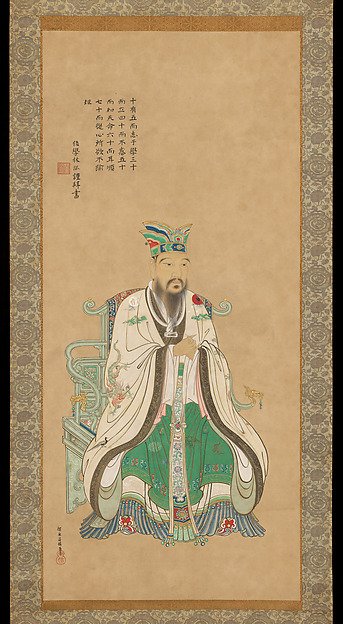
Confucius lived from 551 to 479 BCE, according to the traditional dates, in the state of Lu, in what is now Shandong, China. This was the late Spring and Autumn period. The Zhou kings retained prestigious titles, but regional rulers and powerful families competed for authority. Warfare and political rivalry raised a practical question: what could make a government worthy of loyalty? Confucius looked to the ceremonies, institutions and exemplary rulers of the Zhou past for resources to answer it.
Later biographies describe official service, travel among competing states, disappointment in rulers and a return to teaching. Their details need care: stories accumulated as his reputation grew. The Analects offers a less tidy portrait through short conversations, judgments, recollections and exchanges with students. It was compiled by followers over generations. We should not read it as a diary written by Confucius or assume that every saying has the same date.
Confucius and his followers; translated by James Legge (1861). Confucian Analects. Source · Public domain in the United States.
Analects 2.4
1. The Master said, 'At fifteen, I had my mind bent on learning. 2. 'At thirty, I stood firm. 3. 'At forty, I had no doubts. 4. 'At fifty, I knew the decrees of Heaven. 5. 'At sixty, my ear was an obedient organ for the reception of truth. 6. 'At seventy, I could follow what my heart desired, without transgressing what was right.'
In this remembered account, learning begins at fifteen and conduct comes into accord with desire at seventy. Other sayings value admitting ignorance and correcting faults. Confucius presents himself as someone still learning.
Confucius and his followers; translated by James Legge (1861). Confucian Analects. Source · Public domain in the United States.
Analects 1.1
1. The Master said, 'Is it not pleasant to learn with a constant perseverance and application? 2. 'Is it not delightful to have friends coming from distant quarters?' 3. 'Is he not a man of complete virtue, who feels no discomposure though men may take no note of him?'
Analects 2.17
The Master said, 'Yu, shall I teach you what knowledge is? When you know a thing, to hold that you know it; and when you do not know a thing, to allow that you do not know it;— this is knowledge.'
Analects 6.9
The Master said, 'Admirable indeed was the virtue of Hui! With a single bamboo dish of rice, a single gourd dish of drink, and living in his mean narrow lane, while others could not have endured the distress, he did not allow his joy to be affected by it. Admirable indeed was the virtue of Hui!'
Yan Hui, called Hui or Yen Hui in Legge’s translation, is a beloved student. His small allowance of food and uncomfortable dwelling do not prevent him from taking joy in learning. Confucius admires this steadiness, rather than treating poverty itself as a virtue. The contrast is with a life organized around gaining wealth and approval at any cost.
Nathan Smith / OpenStax. Introduction to Philosophy, §3.3: Classical Chinese Philosophy. Source · CC BY-NC-SA 4.0.
The Chinese concept of dao is another difficult-to-translate term. Often, it is interpreted as “way” or “path,” but in Confucius, it is just as frequently translated as “teaching.” One can see the goal of Confucius’s teaching as relating a way or pattern of behavior that could be adopted by careful students. The wisdom gained through reading and, more importantly, living according to the dao is a kind of natural awareness of what is good and right and a distaste for what is wrong. Confucius also recognizes that a rejection of materiality is a sign of one who follows the dao. He frequently cites poverty, the ability to enjoy simple foods, and a lack of concern for the trappings of wealth as signs of one who is devoted to the right path or right ethical teachings.
3. Stories of exemplary rulers
Confucian teaching often makes its point through stories of rulers who put public responsibilities before private advantage. Yao was remembered as choosing the worthy Shun to succeed him. Shun’s difficult family life became a test of filial conduct. Shun in turn entrusted rule to Yu, celebrated for controlling destructive floods. These are traditional accounts of the remote past, not securely documented biographies. They make merit, service and restraint visible in particular lives.
Confucius and his followers; translated by James Legge (1861). Confucian Analects. Source · Public domain in the United States.
Analects 8.18
The Master said, 'How majestic was the manner in which Shun and Yu held possession of the empire, as if it were nothing to them!'
Analects 8.19
1. The Master said, 'Great indeed was Yao as a sovereign! How majestic was he! It is only Heaven that is grand, and only Yao corresponded to it. How vast was his virtue! The people could find no name for it. 2. 'How majestic was he in the works which he accomplished! How glorious in the elegant regulations which he instituted!'
Analects 8.21
The Master said, 'I can find no flaw in the character of Yu. He used himself coarse food and drink, but displayed the utmost filial piety towards the spirits. His ordinary garments were poor, but he displayed the utmost elegance in his sacrificial cap and apron. He lived in a low mean house, but expended all his strength on the ditches and water-channels. I can find nothing like a flaw in Yu.'
Yu directs resources toward flood control while living modestly. The Duke of Zhou provides another model of public responsibility: tradition remembers him yielding authority after serving as regent for a young king. The Analects recalls Confucius dreaming of the Duke (7.5 in Legge’s numbering).

4. Ren, li and the cultivated person
Nathan Smith / OpenStax. Introduction to Philosophy, §3.3: Classical Chinese Philosophy. Source · CC BY-NC-SA 4.0.
The Confucian concept of de is closely related to moral virtue in the sense that de identifies characteristics of a person, understood to be formed through habitual action, that make it more likely the person will act in morally excellent ways. In Confucianism, the five constant virtues are ren, yi, li, zhi, and xin. Each of these terms is difficult to translate consistently, having varied meanings. Loose translations are sometimes given as follows: ren is benevolence, yi is righteousness, li is propriety, zhi is wisdom, and xin is trustworthiness. More broadly, ren means something like shared humanity, empathy, or care for others. Similarly, the institutionalized rituals of the Zhou dynasty are captured in the Chinese word li, which is translated as both propriety and ritual. Though Confucius emphasized the importance of ritual and tradition in daily practice, he also recognized that such actions are empty if they do not have a solid foundation in benevolence.
Ren means humaneness or benevolence: learning to take other people seriously and act with concern for them. Li includes formal ceremonies and the fitting ways people treat one another. Greeting a guest, mourning a parent and performing a public rite involve different actions, but all can express respect. Correct movements without concern for the people involved fall short.
John Mack, in Tim McKenzie, ed.. World Religions, Chapter 5: Confucianism. Source · CC BY-NC-SA 4.0.
Outward conformity to li is not enough. Inward motivation must also be present. In Confucianism, this inward motivation is called jen . Jen may be translated as “benevolence” or “compassion.” The Confucian observes li out of a spirit of jen . She engages in propriety because she is benevolent. Without jen , someone who engages in li is simply a conformist obeying rules of society but not in a virtuous way. In Confucianism, jen is the root behind four other virtues: justice, propriety, wisdom and faithfulness. A person who has jen will demonstrate these virtues, but a person who tries to exhibit these virtues without jen is merely putting on a show.
Confucius and his followers; translated by James Legge (1861). Confucian Analects. Source · Public domain in the United States.
Analects 3.3
The Master said, 'If a man be without the virtues proper to humanity, what has he to do with the rites of propriety? If a man be without the virtues proper to humanity, what has he to do with music?'
Analects 12.1
1. Yen Yuan asked about perfect virtue. The Master said, 'To subdue one's self and return to propriety, is perfect virtue. If a man can for one day subdue himself and return to propriety, all under heaven will ascribe perfect virtue to him. Is the practice of perfect virtue from a man himself, or is it from others?' 2. Yen Yuan said, 'I beg to ask the steps of that process.' The Master replied, 'Look not at what is contrary to propriety; listen not to what is contrary to propriety; speak not what is contrary to propriety; make no movement which is contrary to propriety.' Yen Yuan then said, 'Though I am deficient in intelligence and vigour, I will make it my business to practise this lesson.'
Legge renders ren as “perfect virtue” and li as “the rules of propriety.” The questions are practical: a ceremony can be faultlessly performed while the participants treat one another with contempt. Concern for others gives the form its ethical value.
The ideal learner is the junzi, often translated “exemplary person,” “gentleman” or, in Legge, “superior man.” The term had associations with social rank, but in the sayings moral achievement becomes decisive. A title or expensive education does not guarantee good character. A junzi learns to choose what is right, accept correction and earn trust. Historical texts usually imagine male students; modern interpreters often apply the ethical ideal to women and men alike.
Confucius and his followers; translated by James Legge (1861). Confucian Analects. Source · Public domain in the United States.
Analects 4.16
The Master said, 'The mind of the superior man is conversant with righteousness; the mind of the mean man is conversant with gain.'
Analects 4.17
The Master said, 'When we see men of worth, we should think of equalling them; when we see men of a contrary character, we should turn inwards and examine ourselves.'
Analects 4.24
The Master said, 'The superior man wishes to be slow in his speech and earnest in his conduct.'
Yi is doing what is right or fitting, even when profit points elsewhere. Zhi is the judgment needed to recognize it. Xin is trustworthiness: other people must be able to rely on one’s words. These virtues work together. A promise made to help someone cheat is not made good simply by being kept. An ethical person must judge both the promise and the action it requires.
5. Family, reciprocity and difficult loyalties

Confucian ethics begins with relationships in which people depend on one another. Xiao, filial respect or filial piety, includes care for living parents and remembrance after their deaths. It is more demanding than merely supplying food. Parents need to be treated as people deserving attention and respect. The sayings also require sincerity, not a performance staged to win a good reputation.
Confucius and his followers; translated by James Legge (1861). Confucian Analects. Source · Public domain in the United States.
Analects 2.7
Tsze-yu asked what filial piety was. The Master said, 'The filial piety of now-a-days means the support of one's parents. But dogs and horses likewise are able to do something in the way of support;— without reverence, what is there to distinguish the one support given from the other?'
| Relationship | Responsibilities emphasized in the tradition |
|---|---|
| Parent and child | Care, education and protection; filial respect and support. |
| Ruler and subject | Humane government and responsible service; loyalty carries expectations on both sides. |
| Husband and wife | Household responsibilities, historically assigned within a patriarchal hierarchy. |
| Older and younger siblings | Consideration and guidance; respect and assistance. |
| Friend and friend | Trustworthiness, mutual help and honest advice. |
The five relationships are a later summary, combining unequal family and political ties with friendship. Age, gender and office shaped their obligations. The ideal of mutual responsibility also operated within institutions of unequal power.
Respect did not always mean agreement. Remonstrate means to object or offer correction. The following passage allows a son to challenge a parent, but asks him to remain reverent even when punished. It therefore contains both a place for moral criticism and a severe expectation of obedience under pressure.
Confucius and his followers; translated by James Legge (1861). Confucian Analects. Source · Public domain in the United States.
Analects 4.18
The Master said, 'In serving his parents, a son may remonstrate with them, but gently; when he sees that they do not incline to follow his advice, he shows an increased degree of reverence, but does not abandon his purpose; and should they punish him, he does not allow himself to murmur.'
The next conversation concerns a son reporting his father’s theft. The ruler praises his honesty; Confucius praises protection within the family. The disagreement concerns what upright conduct requires when testimony conflicts with a family obligation.
Confucius and his followers; translated by James Legge (1861). Confucian Analects. Source · Public domain in the United States.
Analects 13.18
1. The Duke of Sheh informed Confucius, saying, 'Among us here there are those who may be styled upright in their conduct. If their father have stolen a sheep, they will bear witness to the fact.' 2. Confucius said, 'Among us, in our part of the country, those who are upright are different from this. The father conceals the misconduct of the son, and the son conceals the misconduct of the father. Uprightness is to be found in this.'
Shu, reciprocity, asks a person to consider others through reflection on their own experience. Zhong can mean doing one’s best or being loyal and conscientious. Together they place demands on how one serves others. The best-known statement of reciprocity appears in the primary reader under Legge’s numbering 15.23; many modern editions number it 15.24.
Confucius and his followers; translated by James Legge (1861). Confucian Analects. Source · Public domain in the United States.
Analects 15.23
Tsze-kung asked, saying, 'Is there one word which may serve as a rule of practice for all one's life?' The Master said, 'Is not RECIPROCITY such a word? What you do not want done to yourself, do not do to others.'
6. Books, music and education
John Mack, in Tim McKenzie, ed.. World Religions, Chapter 5: Confucianism. Source · CC BY-NC-SA 4.0.
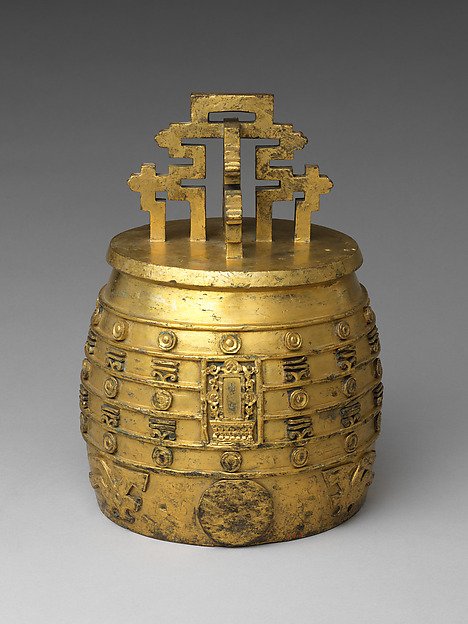
Confucian literature encompasses a vast array of texts that have been categorized into two primary groups: the Five Classics and the Four Books. The Five Classics are a collection of books that may predate Confucius, with unclear authorship and dates of writing. These texts may have existed in various forms before Confucius’ birth and were later compiled and edited. The Five Classics include:
Confucius may have played a role in compiling and editing some of these texts, but the extent of his involvement is unclear.
| Five Classics | What students encountered |
|---|---|
| Book of Changes (Yijing) | Divination and later reflection on change and order. |
| Book of Documents (Shujing) | Speeches and documents attributed to ancient rulers. |
| Book of Poetry / Odes (Shijing) | Songs used in education, ceremony and interpretation. |
| Book of Rites (Liji) | Accounts of ceremony, conduct and institutions. |
| Spring and Autumn Annals (Chunqiu) | A chronicle associated with Lu and traditions of moral judgment. |
The Four Books are the Analects, Mencius, Great Learning and Doctrine of the Mean. The latter two circulated within the Book of Rites. Zhu Xi’s editions and commentaries helped make the collection central to later schooling and examinations, centuries after Confucius.
Learning included poetry, history, music, ceremony and conduct. A poem might furnish language for expressing grief or advising a ruler. Music and shared rites trained participants to act with others rather than simply follow a private impulse. Reading was meant to alter how a student lived. The Great Learning expresses that ambition through a chain connecting the person, family and political community:
Traditional attribution to Confucius and Zengzi; translated by James Legge. The Great Learning, opening classical text. Source · Historical translation public domain; Wikisource transcription CC BY-SA 4.0.
The ancients who wished to illustrate illustrious virtue throughout the kingdom, first ordered well their own states. Wishing to order well their states, they first regulated their families. Wishing to regulate their families, they first cultivated their persons. Wishing to cultivate their persons, they first rectified their hearts. Wishing to rectify their hearts, they first sought to be sincere in their thoughts. Wishing to be sincere in their thoughts, they first extended to the utmost their knowledge. Such extension of knowledge lay in the investigation of things. Things being investigated, knowledge became complete. Their knowledge being complete, their thoughts were sincere. Their thoughts being sincere, their hearts were then rectified. Their hearts being rectified, their persons were cultivated. Their persons being cultivated, their families were regulated. Their families being regulated, their states were rightly governed. Their states being rightly governed, the whole kingdom was made tranquil and happy. From the Son of Heaven down to the mass of the people, all must consider the cultivation of the person the root of everything besides. It cannot be, when the root is neglected, that what should spring from it will be well ordered. It never has been the case that what was of great importance has been slightly cared for, and, at the same time, that what was of slight importance has been greatly cared for.
The Great Learning links public responsibility to a ruler’s conduct and household relationships. Whether a household provides an adequate model for governing a large state remains a question raised by its argument.
7. Government by example and public trust
John Mack, in Tim McKenzie, ed.. World Religions, Chapter 5: Confucianism. Source · CC BY-NC-SA 4.0.
Moreover, Mencius expanded and clarified many concepts introduced by Confucius, particularly regarding governance and ethics. He provided deeper insights into principles of government and morality, enhancing the understanding of Confucian teachings. Additionally, Mencius made a clear distinction between a feudal tyrant and a sage king. According to him, a feudal tyrant governs through coercion and superficial displays of benevolence, whereas a sage king rules with wisdom and genuine compassion. While the feudal tyrant oppresses his people, the sage king earns their loyalty and devotion through benevolent governance, winning their hearts rather than merely enforcing obedience through fear.
Beyond the family is the state. In Confucius’ day, China was divided into many small feudal kingdoms. Citizens, or subjects, of these kingdoms maintained loyalty to their rulers, and their rulers were expected to practice benevolence and mercy. Within society, each person must fulfill his or her li. When each person functions according to his or her social role, then society as a whole is balanced and harmonious.
Confucius and his followers; translated by James Legge (1861). Confucian Analects. Source · Public domain in the United States.
Analects 2.1
The Master said, 'He who exercises government by means of his virtue may be compared to the north polar star, which keeps its place and all the stars turn towards it.'
Analects 2.3
1. The Master said, 'If the people be led by laws, and uniformity sought to be given them by punishments, they will try to avoid the punishment, but have no sense of shame. 2. 'If they be led by virtue, and uniformity sought to be given them by the rules of propriety, they will have the sense of shame, and moreover will become good.'
Analects 12.7
1. Tsze-kung asked about government. The Master said, 'The requisites of government are that there be sufficiency of food, sufficiency of military equipment, and the confidence of the people in their ruler.' 2. Tsze-kung said, 'If it cannot be helped, and one of these must be dispensed with, which of the three should be foregone first?' 'The military equipment,' said the Master. 3. Tsze-kung again asked, 'If it cannot be helped, and one of the remaining two must be dispensed with, which of them should be foregone?' The Master answered, 'Part with the food. From of old, death has been the lot of all men; but if the people have no faith in their rulers, there is no standing for the state.'
Analects 12.11
1. The Duke Ching, of Ch'i, asked Confucius about government. 2. Confucius replied, 'There is government, when the prince is prince, and the minister is minister; when the father is father, and the son is son.' 3. 'Good!' said the duke; 'if, indeed; the prince be not prince, the minister not minister, the father not father, and the son not son, although I have my revenue, can I enjoy it?'
Rectifying names requires conduct to match a role’s responsibilities. Holding the title of ruler does not establish that one governs properly. The same demand applies to parents, children and ministers.
The idea of the Mandate of Heaven linked political legitimacy with moral responsibility. It could justify a dynasty, but it could also explain why a failing dynasty lost the right to rule. Mencius went further in defending the removal of a cruel ruler: someone who destroys benevolence and righteousness has forfeited the standing of a true king (Mencius 1B8). This is a challenge to tyranny within a hierarchical political outlook, rather than a statement of modern electoral democracy.
Confucian learning became important to government under the Han. The mature examination system developed much later, especially from the Sui and Tang onward, and expanded under the Song and later dynasties. Success could bring office and family prestige. Preparation demanded substantial resources; formal eligibility did not create equal access, and women were excluded from the main official examination route. The system rewarded textual learning and offered a route beyond purely hereditary office, while also enforcing an authorized curriculum. It ended in 1905.
8. Mencius and Xunzi: how do people become good?
Mencius, or Mengzi, lived in the fourth century BCE, after Confucius. Xunzi, another major Confucian thinker, worked mainly in the third century BCE. Neither was Confucius’s personal student. Their disagreement over human nature became one of the tradition’s most important debates. Both demanded education and sustained effort; they differed over what that effort develops or corrects.
Mencius asks us to imagine unexpectedly seeing a child about to fall into a well. The immediate alarm does not depend on hoping for payment, praise or friendship with the parents. He identifies this response as a beginning of humaneness. Other beginnings include shame at wrongdoing, respectful yielding, and the ability to approve or disapprove. These are starting points, not proof that everyone’s conduct is already good.
Mencius; translated by James Legge. The Works of Mencius, Book II, Part I. Source · Historical translation public domain; Wikisource transcription CC BY-SA 4.0.
Mencius said, 'All men have a mind which cannot bear to see the sufferings of others. 'The ancient kings had this commiserating mind, and they, as a matter of course, had likewise a commiserating government. When with a commiserating mind was practised a commiserating government, to rule the kingdom was as easy a matter as to make anything go round in the palm. When I say that all men have a mind which cannot bear to see the sufferings of others, my meaning may be illustrated thus: even now-a-days, if men suddenly see a child about to fall into a well, they will without exception experience a feeling of alarm and distress. They will feel so, not as a ground on which they may gain the favour of the child's parents, nor as a ground on which they may seek the praise of their neighbours and friends, nor from a dislike to the reputation of having been unmoved by such a thing. From this case we may perceive that the feeling of commiseration is essential to man, that the feeling of shame and dislike is essential to man, that the feeling of modesty and complaisance is essential to man, and that the feeling of approving and disapproving is essential to man. The feeling of commiseration is the principle of benevolence. The feeling of shame and dislike is the principle of righteousness. The feeling of modesty and complaisance is the principle of propriety. The feeling of approving and disapproving is the principle of knowledge. Men have these four principles just as they have their four limbs. When men, having these four principles, yet say of themselves that they cannot develop them, they play the thief with themselves, and he who says of his prince that he cannot develop them plays the thief with his prince. Since all men have these four principles in themselves, let them know to give them all their development and completion, and the issue will be like that of fire which has begun to burn, or that of a spring which has begun to find vent. Let them have their complete development, and they will suffice to love and protect all within the four seas. Let them be denied that development, and they will not suffice for a man to serve his parents with.'
Nathan Smith / OpenStax. Introduction to Philosophy, §3.3: Classical Chinese Philosophy. Source · CC BY-NC-SA 4.0.
Given that human beings are innately good, it remains for them to develop the appropriate knowledge of how to act on that goodness in order to become virtuous. In order to do so, Mencius encourages people to engage in reflection and the extension of their natural compassion for some to others. For instance, in one account, he tries to convince a king to care for his subjects by reminding the king of a time he felt compassion for an ox that was being led to slaughter. The reflection necessary for extending one’s compassion from those for whom one naturally feels compassion to others requires an awareness that is grounded in practical motivation. In this sense, Mencius holds that virtue is the result of knowledge grounded in the caring motivations and relations that individuals have with one another. He locates this grounding in a process of reflection that, he says, is the natural function of the heart.
The king’s compassion for an ox is selective: he substitutes a sheep that he has not seen. Mencius does not say that sparing one animal proves the ruler is governing well. He asks why the ruler does not extend that concern to the people. This move from a familiar feeling to wider responsibilities is central to his teaching. The primary reader also includes Ox Mountain, a story in which repeated cutting and grazing destroy a forest. Its barren appearance hides what could grow with care. Mencius uses the image to argue that damaged conduct need not reveal a person’s original capacities.
Nathan Smith / OpenStax. Introduction to Philosophy, §3.3: Classical Chinese Philosophy. Source · CC BY-NC-SA 4.0.
By contrast with Mencius, Xunzi held that human beings have an innately detestable nature but that they have the capacity to become good through artifice—that is, by acquiring traits and habits through deliberate action. Unlike Mencius, Xunzi did not believe that goodness came from reflection on one’s innate tendency toward compassion. Rather, he held that one’s innate emotional attachments would lead one to harmful behavior toward others, but through teaching in accordance with Confucian principles, one can become virtuous and ultimately transform those innate tendencies into something beneficial for humankind. This difference in perspective led Xunzi to emphasize the importance of external forces to guide behavior. He thought that the best guide toward virtue was the rituals that were handed down by ancient sages. Along these lines, Xunzi emphasizes the importance of music for developing an appreciation for ritual. Ultimately, rituals are the signposts that help mark the way, which flows from the constant and enduring guidance of heaven. Here, Xunzi returns to Confucius’s appreciation for tradition (Goldin 2018).
“Artifice” here means deliberate human work. Xunzi argues that untrained desires produce conflict and that teachers, rites and practice can change those habits. His account gives education a task even when it judges human nature badly. Mencius locates the beginnings of goodness within ordinary responses; Xunzi emphasizes the work that creates good conduct.
9. Neo-Confucianism: study, the world and moral action
Wikipedia contributors. Neo-Confucianism. Source · Contributor history · CC BY-SA 4.0.
Neo-Confucianism (Chinese: 宋明理學; pinyin: Sòng-Míng lǐxué, often shortened to lǐxué 理學, literally "School of Principle") is the cultural revival of Confucianism as an ethical, social, and religious system, which dominated Chinese philosophy from the 13th through the 19th century. Although its origin lies in the Tang dynasty, it was fully developed during the Song dynasty under the formulations of Zhu Xi (1130–1200), the tradition's central figure. Zhu, alongside Cheng Yi and Cheng Hao, comprises the dominant Cheng–Zhu school, in opposition to the later Lu–Wang school led by Wang Yangming and Lu Xiangshan.
Buddhist and Daoist teaching had changed Chinese intellectual and religious life. Confucian thinkers responded by developing more systematic accounts of the world and human nature. They criticized rival teachings while also learning from them. The Song renewal was not a simple return to a sixth-century-BCE classroom. Its writings, academies and commentaries created new ways of being Confucian.
Zhu Xi (1130–1200) connected moral cultivation with li, the principles or patterns by which things are intelligible, and qi, the vital material processes through which things exist. This li (理, principle) is a different Chinese word from li (禮, ritual propriety), despite identical unmarked English spelling. For Zhu Xi, disciplined study, reflection and the investigation of things helped a learner recognize principle and overcome selfish distortions. This investigation included texts and human affairs; it should not simply be equated with modern experimental science.
Zhu Xi taught quiet sitting alongside study and practice. His Family Rituals also organized ceremonies of coming of age, marriage, mourning and ancestral remembrance. Philosophy and household observance meet in the work of the same teacher.
Wang Yangming (1472–1529) emphasized the moral awareness of the heart-mind and the unity of knowing and acting. To know that a parent deserves care while persistently refusing to help is, on this view, to fall short of genuine moral knowing. Learning requires action, rather than simply collecting correct statements. Wang challenged important features of Zhu Xi’s approach without abandoning the Confucian demand for cultivation. Further context: Stanford Encyclopedia of Philosophy.
Confucian learning also developed in Korea, Japan and Vietnam. In Korea, Joseon institutions gave Neo-Confucian scholarship and family rites a particularly strong place. Japanese thinkers adapted and disputed Chinese teachings in their own political and social circumstances. Vietnamese Confucian education likewise served court and examination institutions. These histories produced distinct debates and practices, not identical copies of one timeless Chinese system.
10. Heaven, ancestors and ceremonies
Tian, Heaven, can name the sky, a source of moral authority, or the larger order within which human life takes place. Confucian thinkers did not all explain it in the same way. Some passages speak of Heaven as giving a mission or protecting a teacher; later thinkers develop accounts of cosmic order and moral nature. Reducing every use to a personal creator, or every use to an impersonal natural law, removes differences that the texts preserve.
Traditional attribution to Zisi; translated by James Legge. The Doctrine of the Mean. Source · Historical translation public domain; Wikisource transcription CC BY-SA 4.0.
What Heaven has conferred is called The Nature; an accordance with this nature is called The Path of duty; the regulation of this path is called Instruction. The path may not be left for an instant. If it could be left, it would not be the path. On this account, the superior man does not wait till he sees things, to be cautious, nor till he hears things, to be apprehensive. There is nothing more visible than what is secret, and nothing more manifest than what is minute. Therefore the superior man is watchful over himself, when he is alone. While there are no stirrings of pleasure, anger, sorrow, or joy, the mind may be said to be in the state of Equilibrium. When those feelings have been stirred, and they act in their due degree, there ensues what may be called the state of Harmony. This Equilibrium is the great root from which grow all the human actings in the world, and this Harmony is the universal path which they all should pursue. Let the states of equilibrium and harmony exist in perfection, and a happy order will prevail throughout heaven and earth, and all things will be nourished and flourish.
“Mean” refers to a fitting expression of feeling. Anger at cruelty can be appropriate; anger directed at someone innocent is excessive or misplaced. The Doctrine of the Mean connects such judgments with its larger account of harmony.
Confucius and his followers; translated by James Legge (1861). Confucian Analects. Source · Public domain in the United States.
Analects 11.11
Chi Lu asked about serving the spirits of the dead. The Master said, 'While you are not able to serve men, how can you serve their spirits?' Chi Lu added, 'I venture to ask about death?' He was answered, 'While you do not know life, how can you know about death?'
Analects 1.9
The philosopher Tsang said, 'Let there be a careful attention to perform the funeral rites to parents, and let them be followed when long gone with the ceremonies of sacrifice;— then the virtue of the people will resume its proper excellence.'
The reply about death gives priority to responsibilities among the living; it does not make ancestral rites disappear. The Analects also values funeral and sacrificial ceremonies. Families may use ancestral tablets, make offerings and remember names and deeds. Such practices express continuing bonds across generations. Participants can understand the ancestors’ presence and the purpose of offerings differently. These rites belong to wider Chinese and East Asian religious life, not exclusively to people who identify as Confucian.
Confucius himself became a focus of ceremonial honor. Temples, schools and academies displayed images or tablets and held offerings accompanied by music and dance. Qufu, his traditional home, contains the Temple of Confucius, the Kong family mansion and the cemetery associated with his descendants. Their long history shows how the teacher’s memory became attached to buildings, lineage, government and ritual. UNESCO’s account of the Qufu complex provides further historical context.

Wikipedia contributors. Confucianism. Source · Contributor history · CC BY-SA 4.0.
Chinese folk religious temples and kinship ancestral shrines may, on peculiar occasions, choose Confucian liturgy (called 儒; rú or 正統 (zhèngtǒng; 'orthopraxy') led by Confucian ritual masters (禮生; lǐshēng) to worship the gods, instead of Taoist or popular ritual. "Confucian businessmen" (儒商人; rúshāngrén, also "refined businessman") is a recently "rediscovered" concept defining people of the economic-entrepreneurial elite who recognise their social responsibility and therefore apply Confucian culture to their business.
Confucius’s birthday is marked in some places with ceremonies honoring him as a teacher. September 28 is associated with observances in Taiwan, but dates and arrangements vary. Qingming, usually in early April, is a time for tending graves and making family offerings. It follows a solar seasonal marker, rather than being another name for the Lunar New Year. Household ceremonies surrounding birth, marriage and death also vary with region, class, other religious commitments and modern law. There is no single checklist that every Confucian family follows.
11. Inheritance, criticism and modern lives
Confucian family ideals operated within patriarchal institutions. Restrictions on women’s education and authority coexisted with the work of learned women as writers and teachers. Modern interpreters disagree over which inherited roles can be revised and which should be rejected.
The abolition of the examinations in 1905 and the fall of the Qing dynasty in 1911–1912 weakened institutions that had sustained Confucian learning. Early twentieth-century reformers criticized its association with hierarchy, gender inequality and political conservatism. During the Cultural Revolution, beginning in 1966, Confucius and Confucian institutions came under intense attack. Temples, objects and family traditions suffered disruption. The political and social history differed across mainland China, Taiwan, Hong Kong and other East Asian societies.
Later decades brought restored sites, renewed study and public ceremonies. A household remembering ancestors, a scholar defending humane government and a state-sponsored ritual can invoke Confucius for different purposes.
John Mack, in Tim McKenzie, ed.. World Religions, Chapter 5: Confucianism. Source · CC BY-NC-SA 4.0.
Today, Confucianism continues to influence the values, beliefs, and practices of millions of people around the world, particularly in China, Korea, Japan, and Vietnam. Its teachings remain a powerful force in shaping the moral and ethical fabric of East Asian societies, and its impact can be seen in many aspects of modern life, from education and politics to art and literature.
In North America, migration has carried family traditions, ancestral remembrance and the study of Chinese classics into new settings. Confucian influence often appears within families and cultural organizations without separate congregational membership. Academic and religious experiments have also developed. The “Boston Confucians,” associated with scholars including Tu Weiming and Robert Cummings Neville, have asked how Confucian cultivation can be practiced beyond an exclusively Chinese setting. Neville has described himself as both Confucian and Christian. This is one form of modern reception, rather than a description of all Chinese Americans. Harvard Pluralism Project: Boston Confucianism.
Confucian writers often stress education and fulfillment of roles; early Daoist texts question imposed standards and the pursuit of office. Their traditions also share practices and vocabulary. Chinese communities have drawn on both, together with Buddhism.
12. Reading and discussion
The primary reader contains four complete books of the Analects and additional conversations, the child-at-the-well and Ox Mountain passages from Mencius, and openings of the Great Learning and Doctrine of the Mean. Their different forms allow arguments to develop beyond isolated sayings. primary reader
- Compare Analects 2.3 and 12.7. What can punishment accomplish, and what does a ruler need beyond fear?
- Use two examples to explain why correct ritual conduct alone does not establish good character.
- Compare the parent-and-child dispute in 4.18 with the sheep-theft conversation in 13.18. Which loyalties should have limits?
- How do the child at the well and Ox Mountain support different parts of Mencius’s account of human nature? How might Xunzi respond?
- What responsibilities connect learning, family life and government in the Great Learning? Where might that chain prove difficult?
- Choose an image or ceremony from this chapter. What does it add to an account based only on philosophical sayings?
- Which inherited practices could modern Confucians retain, reinterpret or reject when defending equality?
Primary readings
Read the primary texts for Chapter 8. This separate page contains the assigned passages, translation credits and reading questions.